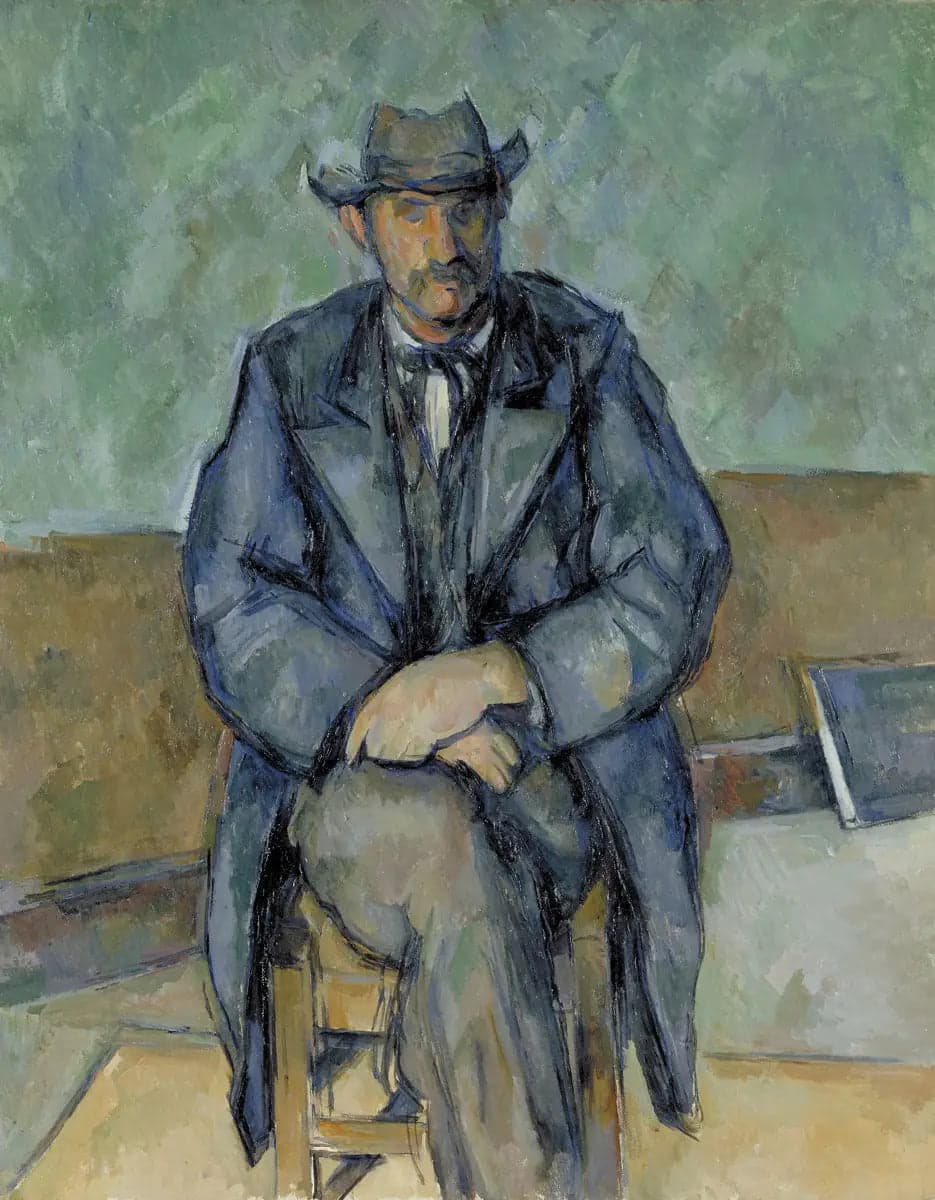
Portrait of a Peasant
- Original dimensions
- 73.7 x 92.7 cm
- Museum
- National Gallery of Canada
- Year
- 1905
Scene depicted
In this canvas , Cézanne captures the dignity and simplicity of a peasant, evoking a silent story of labor and resilience. The posture, the face, and the clothing of the man become poignant symbols of the hard work of those who live in harmony with the land. A composition where nature and man meet, offering an authentic and profound vision of rural life.
Historical context
Created in 1905, this painting emblematic of Paul Cézanne comes to life in the artistic context of the late 19th century, as the Impressionist movement evolves towards more structured forms of representation. In Montreal, at the National Gallery of Canada , this canvas finds its place in a prestigious collection, offering a unique glimpse into the visual legacy of an artist who shaped modern art through his innovative vision.
Place in the artist's career
The Portrait de paysan represents an essential period in Cézanne's career, marking his evolution towards a mature style. When viewed alongside canvases such as La Montagne Sainte-Victoire and Les Joueurs de cartes, one perceives a progression towards a controlled abstraction, while preserving the intimate relationship with the subject and the environment.
Anecdote
Paul Cézanne once stated: “I want to render nature with the right tone, as if I were in the presence of God.” It was during a walk in the heart of Auvergne, in the soft light of a spring morning, that he crossed the gaze of a peasant. This chance encounter fueled his inspiration for the masterpiece that is the Portrait de paysan, anchoring an emotional force in every brushstroke.