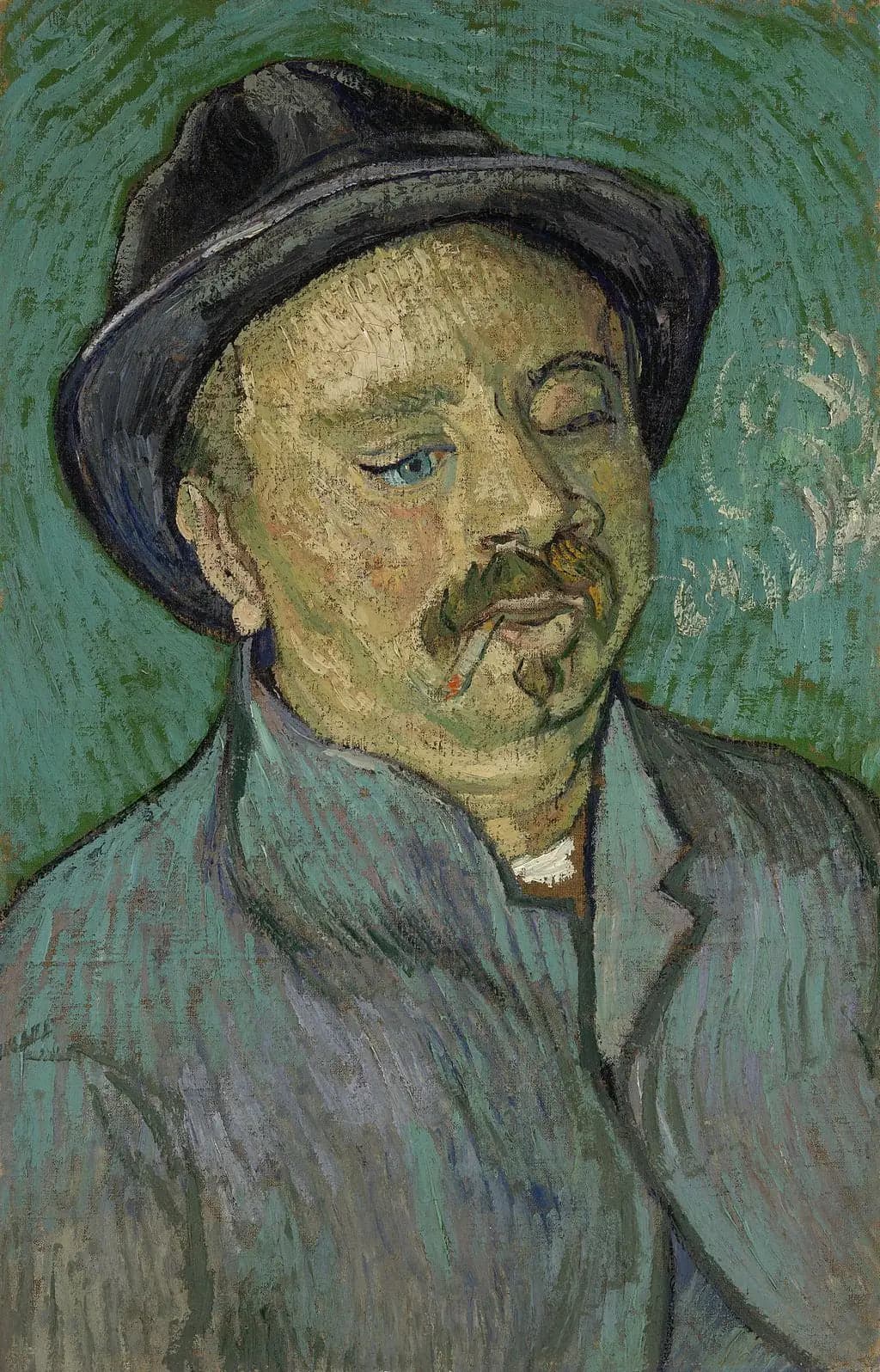
Portrait of a One-Eyed Man
- Original dimensions
- 36.5 x 56.5 cm
- Museum
- Rijksmuseum
- Year
- 1889
Scene depicted
This painting features a man whose unique eye intrigues and moves. The art of Vincent van Gogh reveals itself here in the penetrating gaze of his subject, evoking suffering, solitude, but also a certain form of resilience. The bold use of colors and shapes encapsulates a personal story, transcending time and space.
Historical context
Created in 1889, in Saint-Rémy-de-Provence , this painting is part of the post-impressionist movement. At that time, Vincent van Gogh was undergoing a deep personal crisis, transformed into artistic power. The painting is now located in the prestigious Rijksmuseum in the Netherlands, an iconic place for art lovers.
Place in the artist's career
The Portrait of a one-eyed man is situated during a period of maturity in van Gogh's artistic career. At the crossroads of his stylistic imprint, it echoes other iconic paintings such as The Sunflowers and The Starry Night , testifying to an impressive evolution both technically and emotionally.
Anecdote
“I do not paint what I see, I paint what I feel.” This quote resonates with the evocative power of this masterpiece. Imagine Vincent, on a cool spring morning, captivated by the troubling expression of a man met in a peaceful alley. This fleeting encounter nourishes his pictorial quest, thus forging the soul of the painting we admire today.