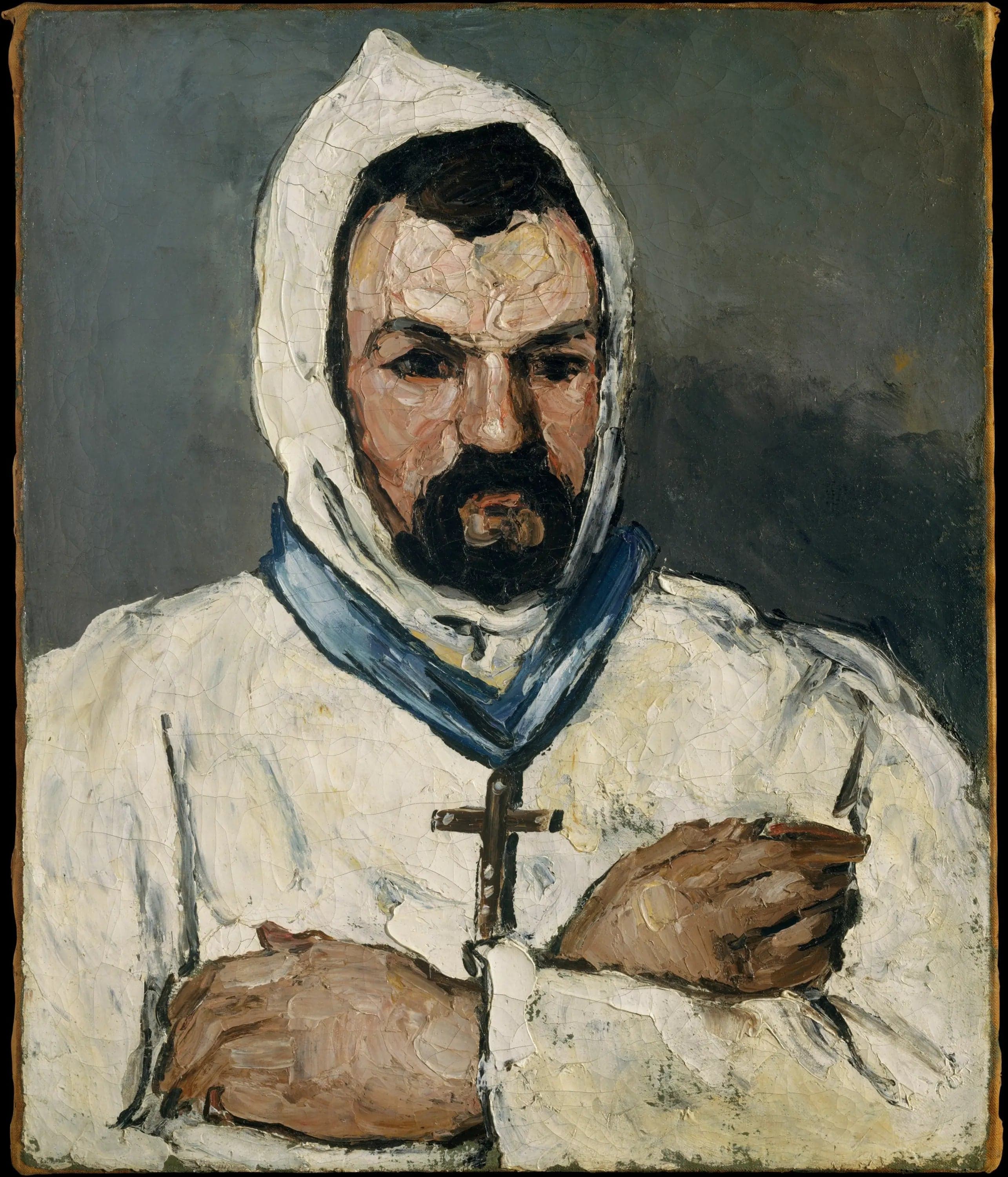
Portrait of a Monk
- Original dimensions
- 54.6 x 65.1 cm
- Museum
- Metropolitan Museum of Art
- Year
- 1866
Scene depicted
The painting “Portrait of a Monk” is an introspective work that depicts the tranquility and reflection of a monk in meditation. The subject, immersed in silent contemplation, seems to invite the viewer to share this mystical pause. This momentary spiritual surge is captured by Cézanne with a delicacy and strength that transcend the ages.
Historical context
Created in 1866, this painting emblematic comes from the charming city of Aix-en-Provence, in the heart of French Provence. Belonging to the post-impressionist movement, this canvas undeniably unique finds its place in an artistic context where Cézanne, a leading figure, redefined the codes of painting . Today, this exceptional painting resides at the Metropolitan Museum of Art , a sanctuary of art in New York, where it continues to captivate visitors with its imposing dimensions of 54.6 by 65.1 cm.
Place in the artist's career
Essential occupation in Cézanne's artistic journey, this painting marks a turning point. Establishing itself as one of his promising beginnings, it paves the way for his later works such as “The Montagne Sainte-Victoire” and “The Card Players.” Each of these compositions testifies to the stylistic evolution of the maestro, consolidating his reputation as a precursor of modernism.
Anecdote
“Art is a way to get closer to the beauty of the ordinary.” This reflection from Cézanne transports us to a morning bathed in light, as he crosses the thoughtful face of a monk in a peaceful alley. Echoes of this encounter resonate in the painting “Portrait of a Monk,” where each brushstroke carries a deep, almost palpable emotion.