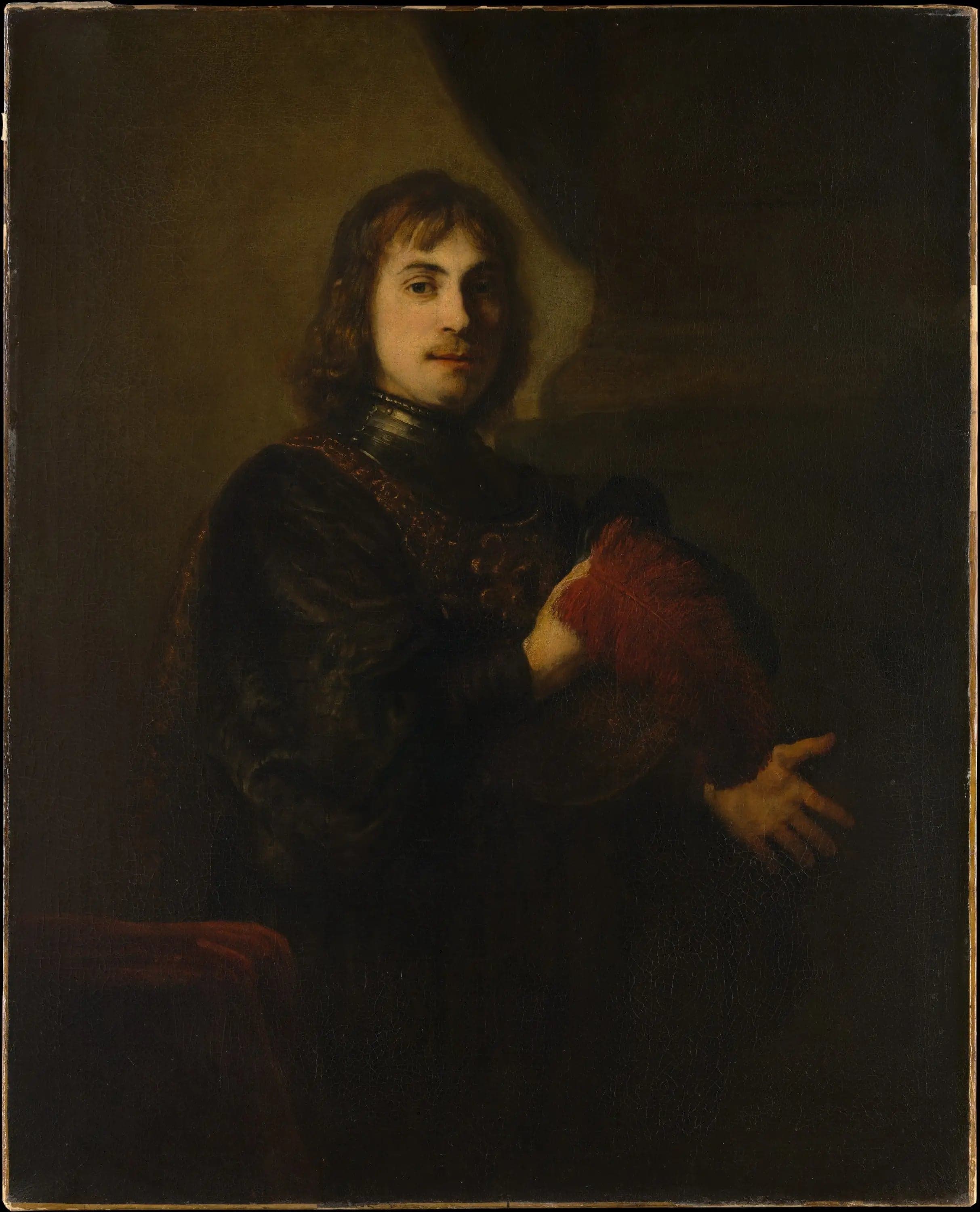
Portrait of a man with a breastplate and a feathered hat
- Original dimensions
- 98.4 x 121.3 cm
- Museum
- Metropolitan Museum of Art
- Year
- 1640
Scene depicted
This painting reveals a man of imposing stature, dressed in a sparkling breastplate, topped with a hat adorned with feathers, which evokes not only the status of its wearer but also the tumultuous period of the Thirty Years' War. The man's posture, firm and full of determination, conveys the bravery of the time, while the dark background accentuates the protagonist, creating a portrait of unparalleled emotional intensity.
Historical context
This painting , created in 1640, finds its roots in the city of Amsterdam, the true intellectual and cultural heart of the United Provinces of the time. Rembrandt , an iconic figure of the Baroque , elaborates with this canvas a representation of rare psychological depth, powerfully illustrating the innovative techniques of chiaroscuro.
Place in the artist's career
The painting “Portrait of a Man with a Breastplate and a Feathered Hat” is situated at the very heart of Rembrandt 's artistic maturity. After early works like “The Night Watch,” and before his later compositions marked by deep introspection, this canvas bears witness to a perfect mastery of pictorial techniques. The evolution of his style is evident in this canvas as well as in “The Jewish Wanderer,” which addresses similar themes from an even more austere angle.
Anecdote
In his words, Rembrandt said: “Light is the key to my art.” One April morning, as he gazed at the horizon of an Amsterdam floating in fog, he met the gaze of a young man, whose soul and thoughts were illustrated by the shining breastplate that covered him. It was this encounter that inspired this masterpiece , a canvas where the brilliance of light seems to converse with shadow, revealing the noble character of the subject.