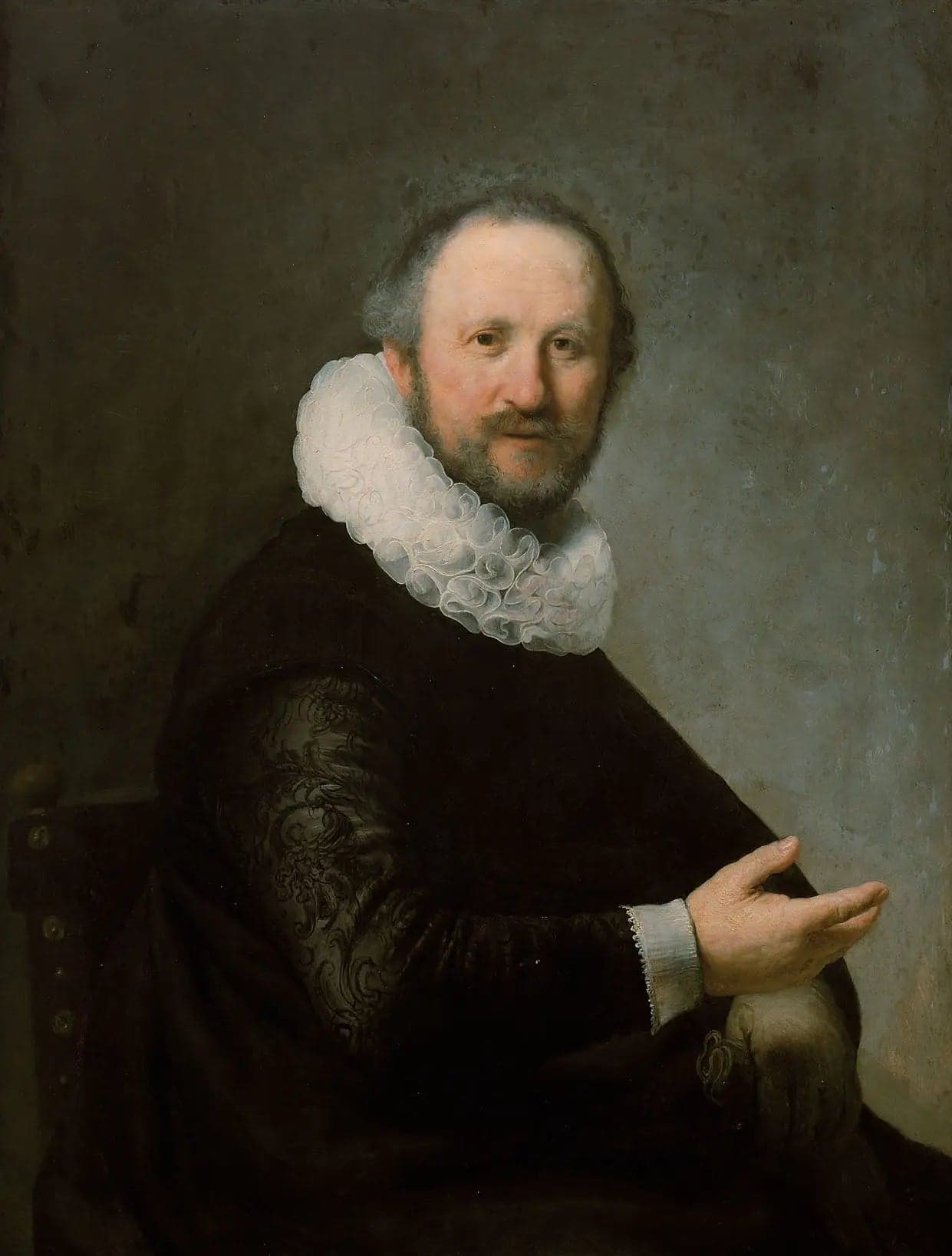
Portrait of a Man.
- Original dimensions
- 45.5 x 64 cm
- Museum
- National Gallery of Art
- Year
- 1633
Scene depicted
This canvas depicts a man whose penetrating gaze seems to transcend time. The composition, both intimate and captivating, invites the observer to dive into the mind of the portrayed. Rembrandt succeeds in conveying a muted atmosphere, a poignant sensitivity, orchestrating a silent encounter between the viewer and the subject, a frozen moment, charged with emotions.
Historical context
Created in 1633 in the historic city of Amsterdam, in the heart of the Netherlands, this painting is an iconic example of the baroque movement. At that time, Rembrandt was already known for his mastery of light and shadow, and the canvas you are discovering today is a tangible proof of his artistic genius. Currently on display at the National Gallery of Art , this pictorial work measures 45.5 x 64 cm, capturing the essence of a vibrant and culturally rich era.
Place in the artist's career
Inscribed in the career of Rembrandt , Portrait of a Man illustrates a stylistic turning point, where the artist explores the psychological depths of his characters. Alongside The Night Watch and Self-Portrait at the Age of 63 , this painting marks his evolution towards a more nuanced understanding of light and shadow, testifying to his creative boldness and artistic maturity.
Anecdote
“I paint with light, as if it could be touched” could have been said by Rembrandt during his creation of this masterpiece . Inspired by the morning light filtering through the windows of his studio, perhaps on a spring morning, he managed to capture the intensity of a gaze, the authenticity of a face encountered in a quiet alley. This deep and fleeting connection still resonates today through the canvas .