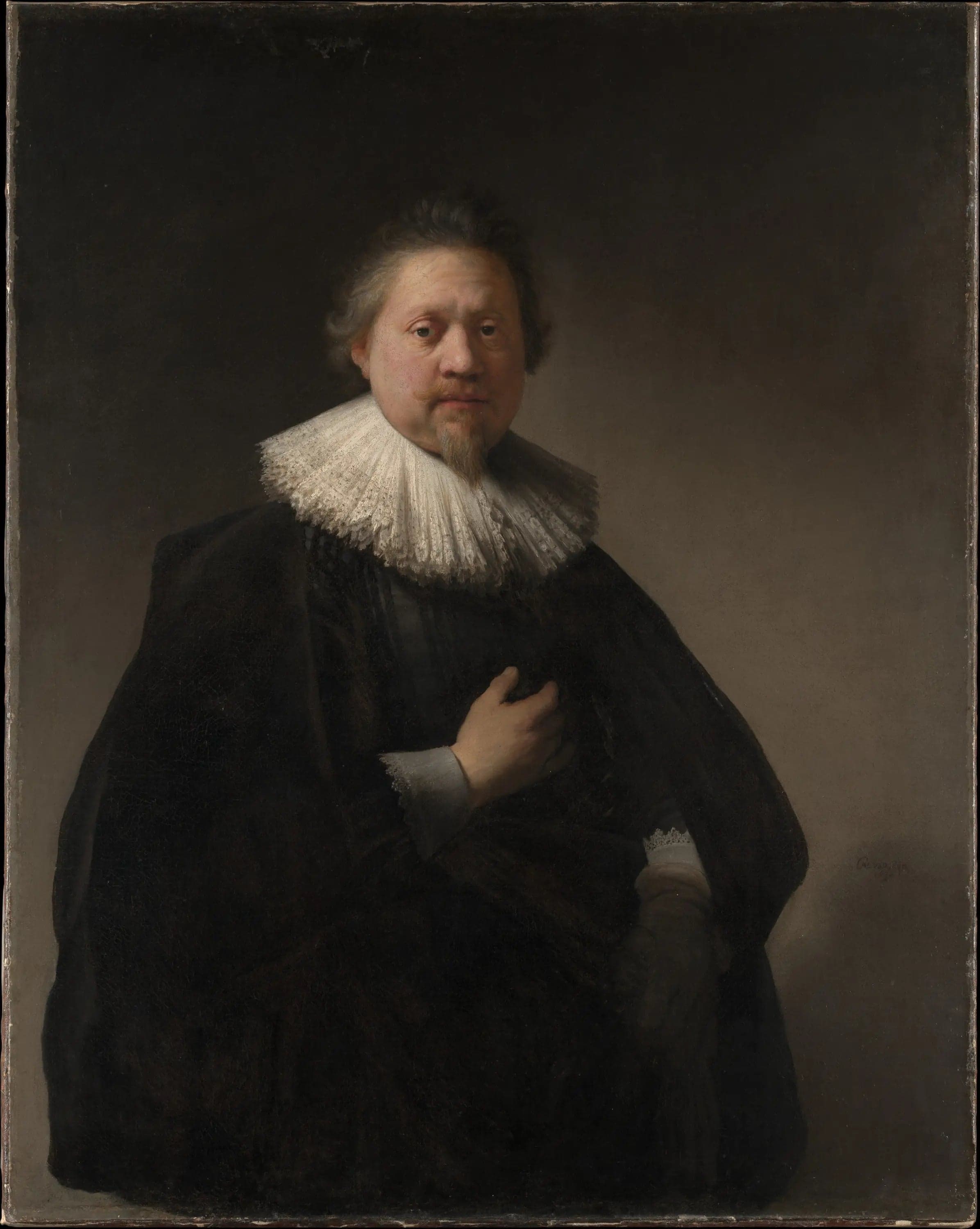
Portrait of a man, probably a member of the Van Beresteyn family
- Original dimensions
- 88.9 x 111.8 cm
- Museum
- Metropolitan Museum of Art
- Year
- 1632
Scene depicted
This painting, a true masterpiece, features a man standing, dressed in a dark suit, with subtle light caressing his face. Rembrandt succeeds in conveying a profound humanity, a palpable introspection, allowing the viewer to dive into the thoughts and emotions of the character. The dramatic lighting that characterizes this painting enhances the effect of reality, making every detail more vivid.
Historical context
This iconic painting was created in 1632, in Amsterdam, as part of the Dutch baroque movement. At that time, art was flourishing in a city that was both a major cultural and commercial center. The painting , currently housed at the Metropolitan Museum of Art in New York, testifies to the artistic legacy of Rembrandt and his unique skill in capturing the human soul through his portraits.
Place in the artist's career
This painting fits into a pivotal period of Rembrandt's career, marked by striking portraits. Alongside other creations like "The Anatomy Lesson of Dr. Tulp" and "The Night Watch," one can observe a stylistic evolution towards a greater mastery of light and shadow.
Anecdote
"Every face has a story to tell." This quote, which Rembrandt might have uttered one spring morning while walking through a bustling alley, perfectly evokes his artistic approach. It is undoubtedly a face encountered, imbued with dignity, that inspired this pictorial work , surrounding the subject with an irresistible emotional intensity.