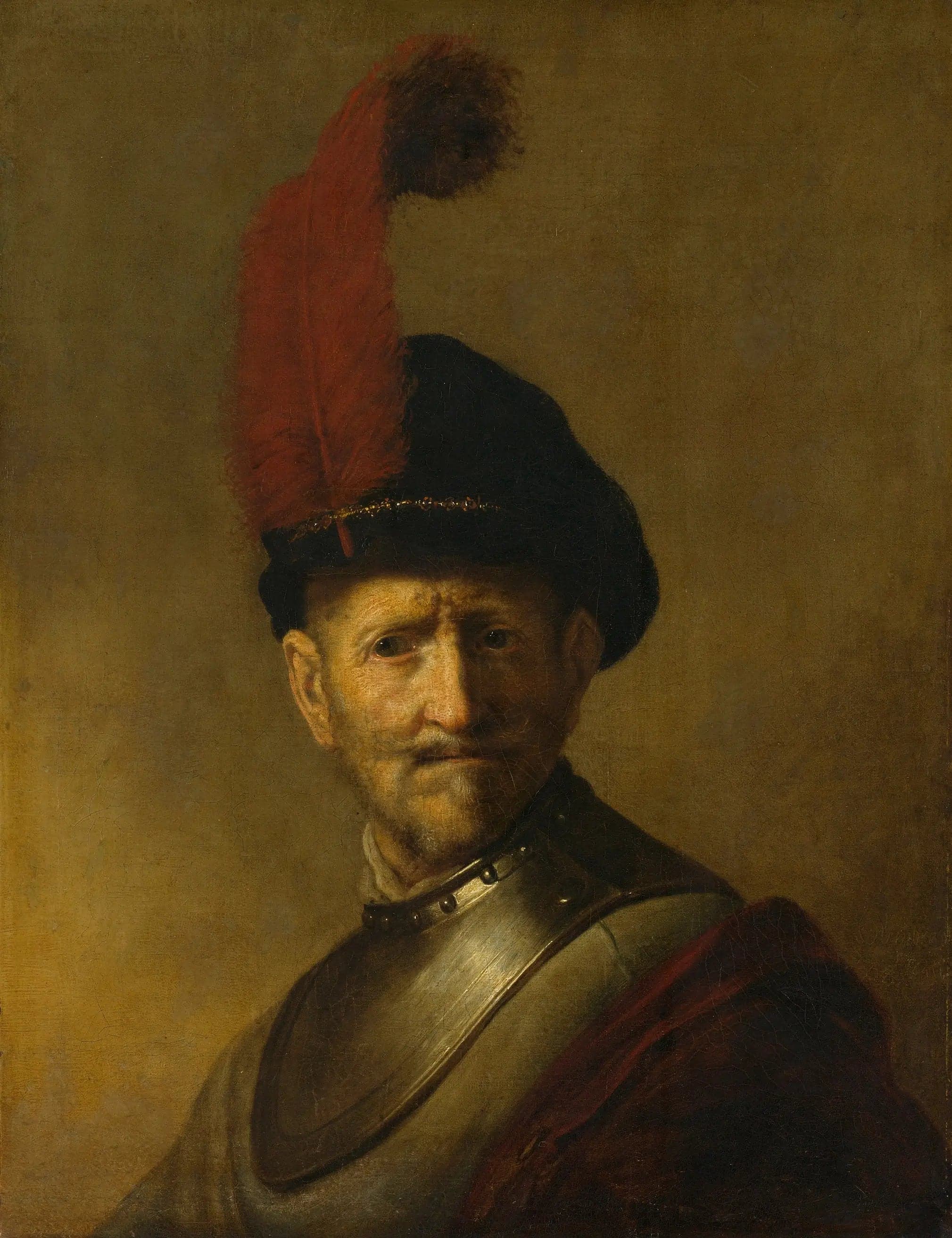
Portrait of a man, perhaps Rembrandt's father, Harmen Gerritsz van Rijn
- Original dimensions
- 49 x 62.5 cm
- Museum
- Rijksmuseum
- Year
- 1634
Scene depicted
The painting unveils the imposing figure of a man, presumed to be the father of the artist, Harmen Gerritsz van Rijn. Rembrandt , with his mastery of chiaroscuro, draws our gaze towards the depth of his subject's character. The painting , rich in details and textures, immerses us in an atmosphere of tenderness and respect, sharing the essence of the father-son relationship filled with memories and values.
Historical context
Created in 1634 in Amsterdam, this painting masterfully executed is at the heart of the baroque period, an artistic movement imbued with realism and emotion. The canvas resides today at the Rijksmuseum , where it attracts admirers from around the world. With dimensions of 49 x 62.5 cm, this canvas represents not only a man but also an era when painting asserted itself as a means of intimate and social revelation.
Place in the artist's career
This painting marks a crucial period in the career of Rembrandt , symbolizing the transition from the illuminating to the golden age of his artistic production. It stands alongside other iconic pictorial works such as “The Night Watch” and “The School of Athens.” Together, these paintings trace the stylistic evolution that will shape the genius of one of the greatest masters of art.
Anecdote
“Every face tells a story. I only reveal it.” This quote resonates deeply when contemplating the masterpiece that is this painting . Imagine a spring morning in the studio of Rembrandt , where the soft light illuminates the shadows of the faces he encounters, the life confidences that the artist is about to immortalize with passion.