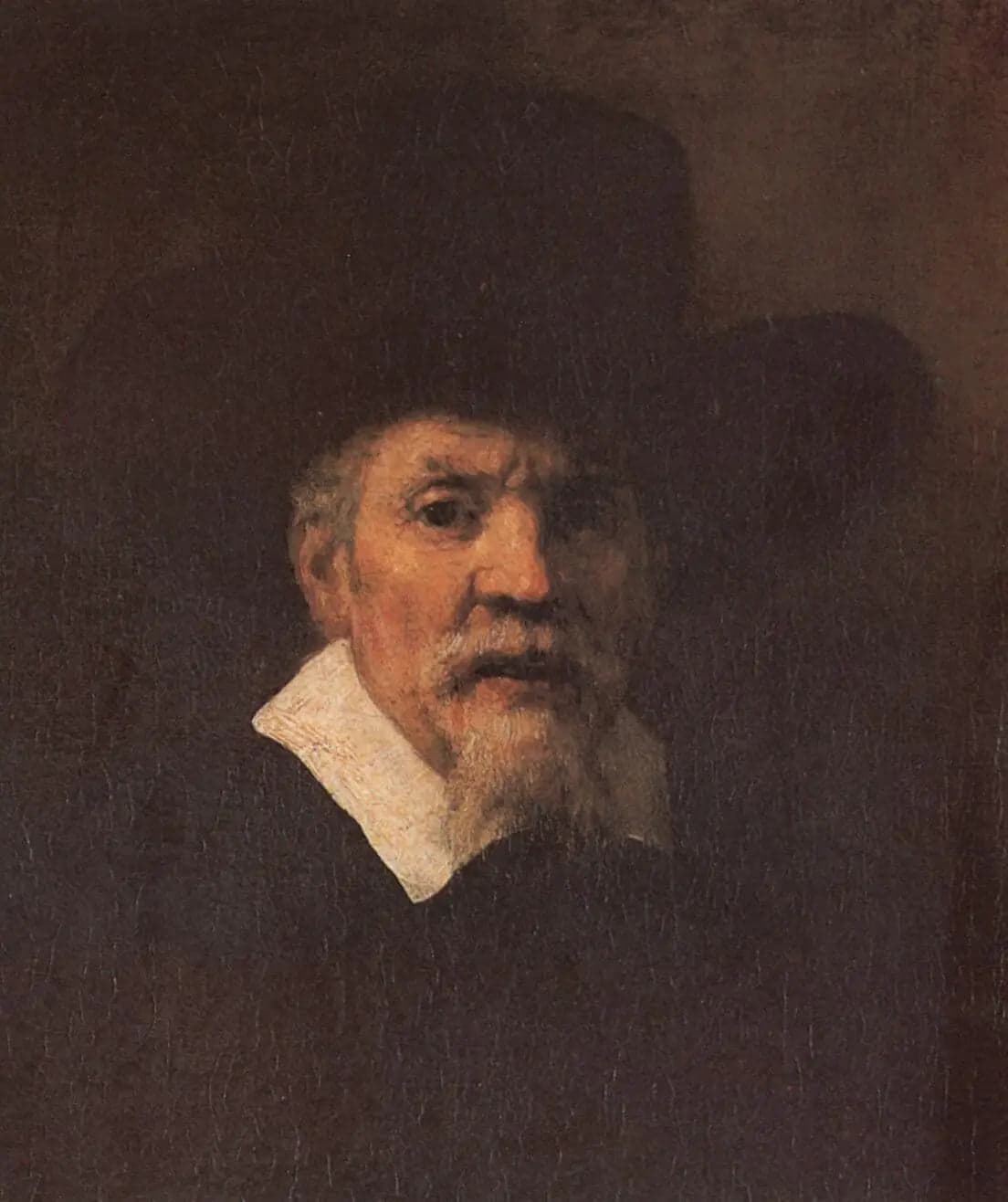
Portrait of a man, perhaps Arnout Tholincx
- Original dimensions
- 63 x 76 cm
- Museum
- Jacquemart-André Museum
- Year
- 1656
Scene depicted
This painting depicts the portrait of a man whose features are marked by time, revealing a deep personality and a gaze filled with stories. His posture, both solemn and relaxed, engages the viewer in a reflection on life, wisdom, and the trials faced. The play of shadows, subtle and powerful, enriches the melancholic atmosphere of the painting.
Historical context
The year 1656 marks a turning point in the history of art, in the heart of Amsterdam, where Flemish painting of the Baroque period reaches its peak. The city, then a vibrant cultural center, is the cradle of this remarkable canvas signed by Rembrandt , a master of shadow and light. This painting, now preserved at the Jacquemart-André Museum, invites introspective contemplation, capturing a moment frozen in time.
Place in the artist's career
This canvas , emblematic of the artistic maturity of Rembrandt , is part of a period of renewal where the master refines his technique. Through works like “The Night Watch” and “The Anatomy Lesson of Dr. Tulp,” we observe how his approach to light and human expressions evolves, making this portrait a significant milestone in his journey.
Anecdote
“Light is the very heart of a work,” said Rembrandt , somewhere in his studio bathed in golden light. Let’s imagine an April morning, the sweet scent of candle wax floating in the air. He locks eyes with a man, a model already known: Arnout Tholincx. This fleeting moment becomes the spark of a masterpiece that transcends time.