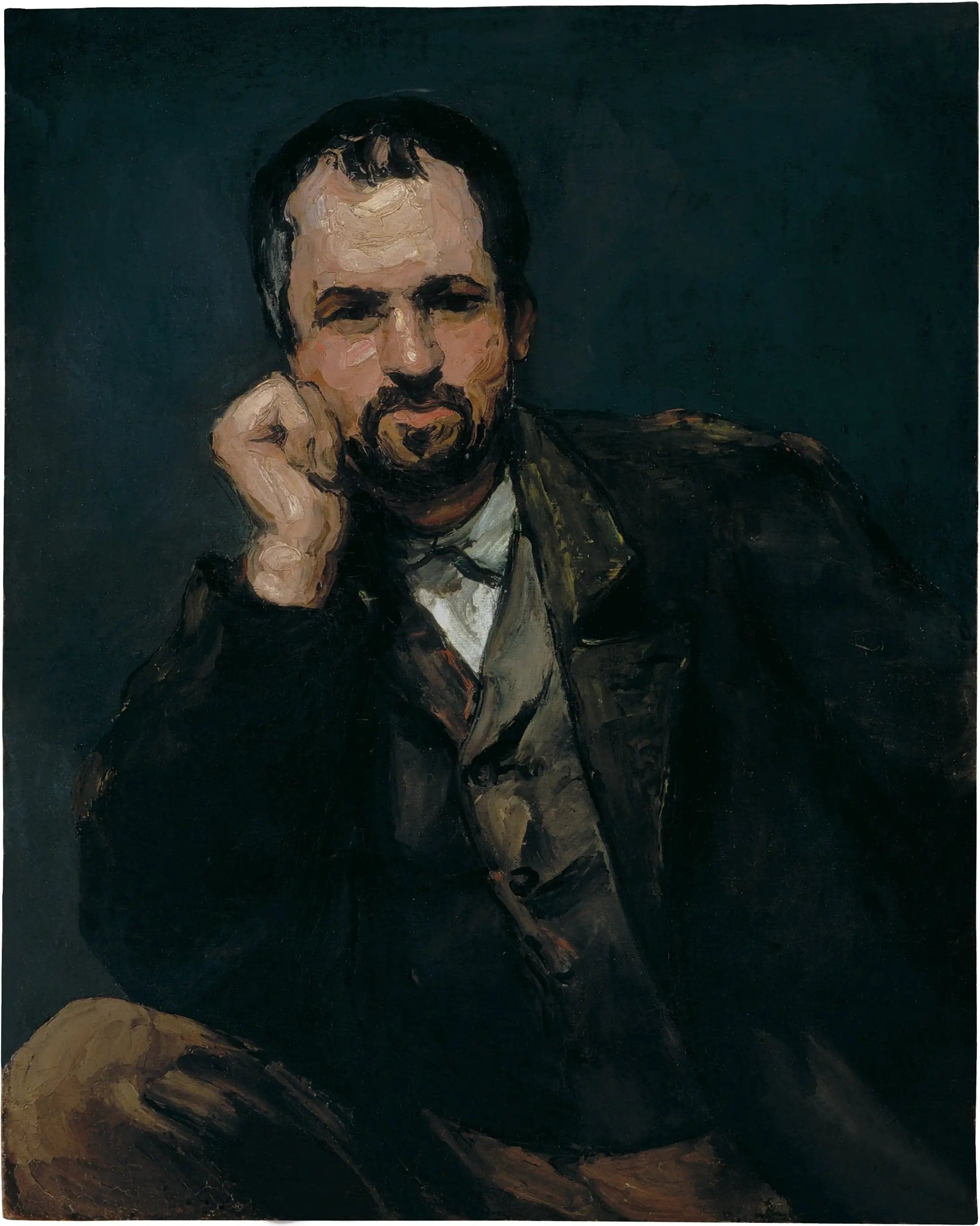
Portrait of a Man
- Original dimensions
- 66 x 81.5 cm
- Museum
- Oskar Reinhart Museum "Am Römerholz"
- Year
- 1866
Scene depicted
The painting “Portrait d'homme” stands out for the psychological depth of the represented character. The subject, whose identity remains veiled, exudes a mysterious aura. The nuances of his posture evoke a gentle melancholy, as if this painting were the reflection of a moment suspended in time, a silent introspection inviting the viewer to shared contemplation.
Historical context
Created in 1866, this painting emanates from the artistic effervescence of the city of Aix-en-Provence, the cradle of a post-impressionist movement of which Paul Cézanne would become one of the leaders. This painting, currently preserved at the Oskar Reinhart Museum, represents a turning point in the artist's journey and already denotes a mastery of volumes and forms. The richness of his artistic heritage reveals itself in every brushstroke of this work.
Place in the artist's career
“Portrait d'homme” is an integral part of Cézanne's early stylistic explorations. It positions itself between the early portraits, such as “The Man with the Cap” and the series of famous “apples,” marking a transition towards a more assertive mastery of color and forms. This pictorial work testifies to the constant evolution of the artist, in search of a more authentic and inner representation.
Anecdote
“Color is my true language,” Cézanne reportedly declared while contemplating the mysterious face he was about to immortalize. It was a golden light-filled April morning when the artist encountered his subject in a quiet alley. This fleeting inspiration would give birth to a masterpiece of vibrancy, a feeling of eternity captured in the canvas .