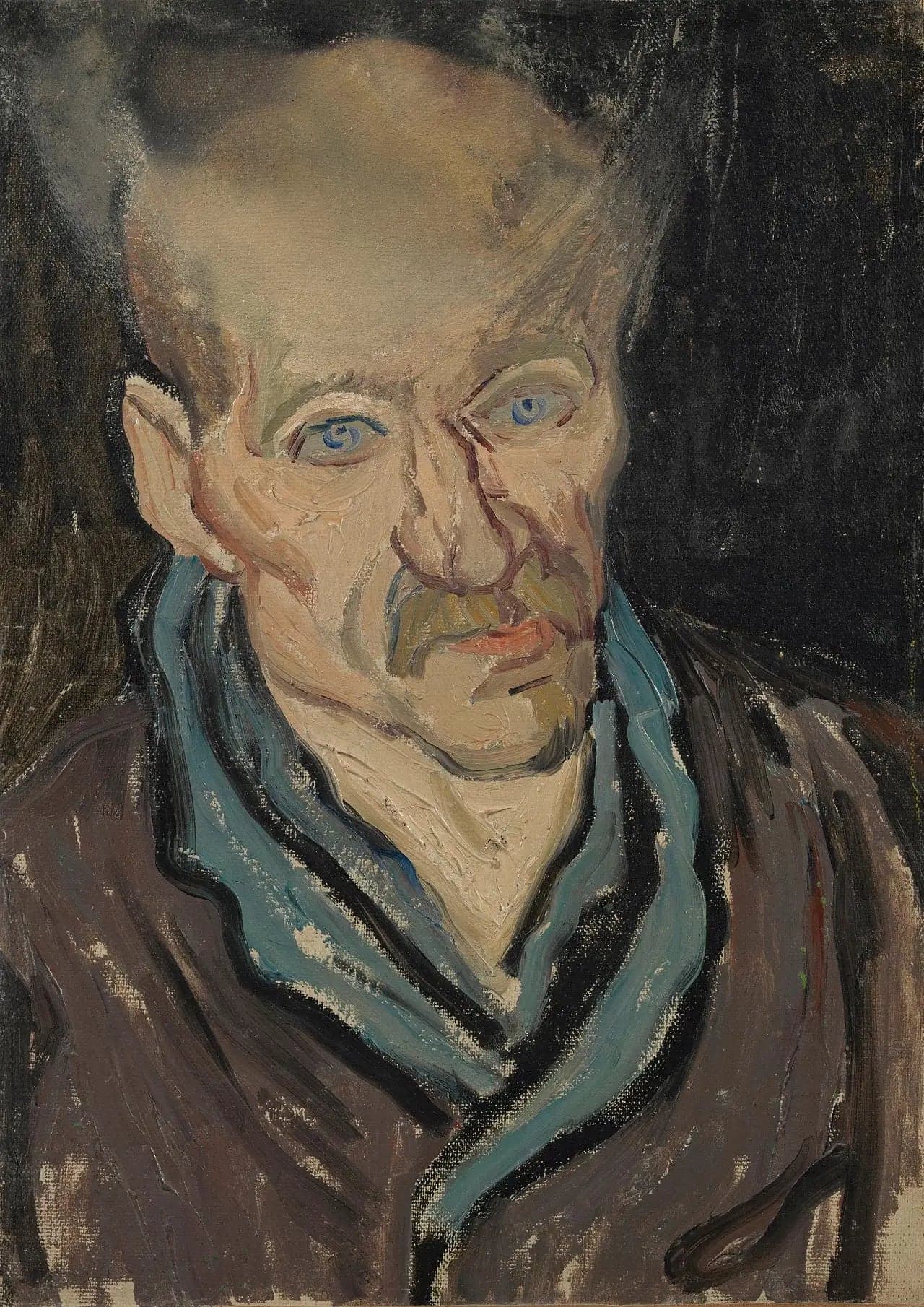
Portrait of a Man
Scene depicted
The painting “ Portrait of a Man” by Vincent van Gogh reveals a face imbued with delicacy and depth. This pictorial work offers a penetrating gaze that seems to question the viewer. The marked features and colorful nuances of the painting convey the complex emotions of the individual, thus creating a timeless connection between the artist and the world.
Historical context
Precisely created in 1889 in Saint-Rémy-de-Provence , this painting is an integral part of the post-impressionist movement, which explores emotions more than objective reality. This canvas is currently displayed at the Van Gogh Museum , where it continues to evoke the essence of its creator's inner struggles. Its dimensions, 23.5 x 32.5 cm, are a testament to the intimacy that emanates from this masterpiece.
Place in the artist's career
Inscribed in a period of maturity, this painting illustrates a strong stylistic evolution characteristic of Vincent. It stands at the crossroads of his artistic path, just like other notable works such as “The Sunflowers ” and “ The Starry Night ”, where raw emotion becomes omnipresent, testifying to a quest for meaning through his canvas .
Anecdote
“I do not need to see a flower, I can contemplate the sun in its color,” Vincent might have said, illustrating his quest to capture the soul of faces. It is in the calm of a spring morning, surrounded by the beauty of lavender fields, that he would have found inspiration for the portrait , an intimate moment captured through his passionate art.