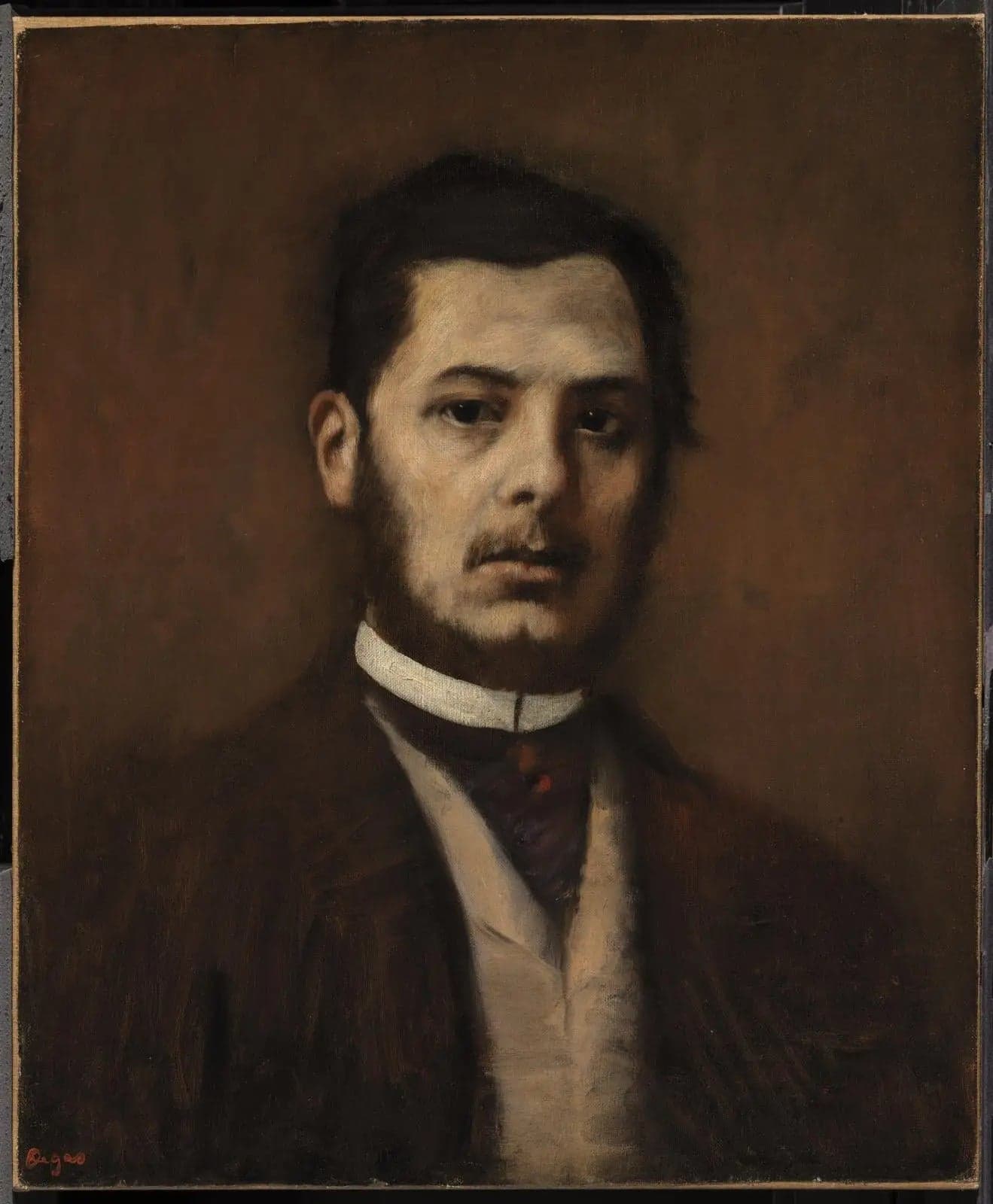
Portrait of a Man
- Original dimensions
- 45.4 x 55.2 cm
- Museum
- Museum of Fine Arts Boston
Scene depicted
The painting presents a man with a thoughtful face, floating in an atmosphere of contemplation. In this canvas , the delicately sketched features and skillfully placed shadows open a window to the human soul. The composition exudes emotional intensity, revealing a captivating psychological depth that only a master can achieve.
Historical context
Created in Paris in the last quarter of the 19th century, the painting "Portrait of a Man" is emblematic of realism and impressionism , two artistic movements that shaped Degas's career. This canvas is now housed in the Museum of Fine Arts Boston , reflecting the vibrant life of the Belle Époque, a time when light and color took on a new dimension.
Place in the artist's career
This portrait sits at the heart of Edgar Degas's career, marking a stylistic turning point in his exploration of human emotions. Alongside famous works such as "The Fourteen-Year-Old Dancer" and "The Dancers," "Portrait of a Man" demonstrates his skill in capturing the complexity of the human psyche through moving portraits.
Anecdote
Edgar Degas once confided: "Painting is a tool of romance." This masterpiece was inspired on a bright morning, as he glimpsed a man with a deep gaze, lost in thought. This fleeting encounter captured the very essence of life, transforming the ordinary into a painting of striking beauty.