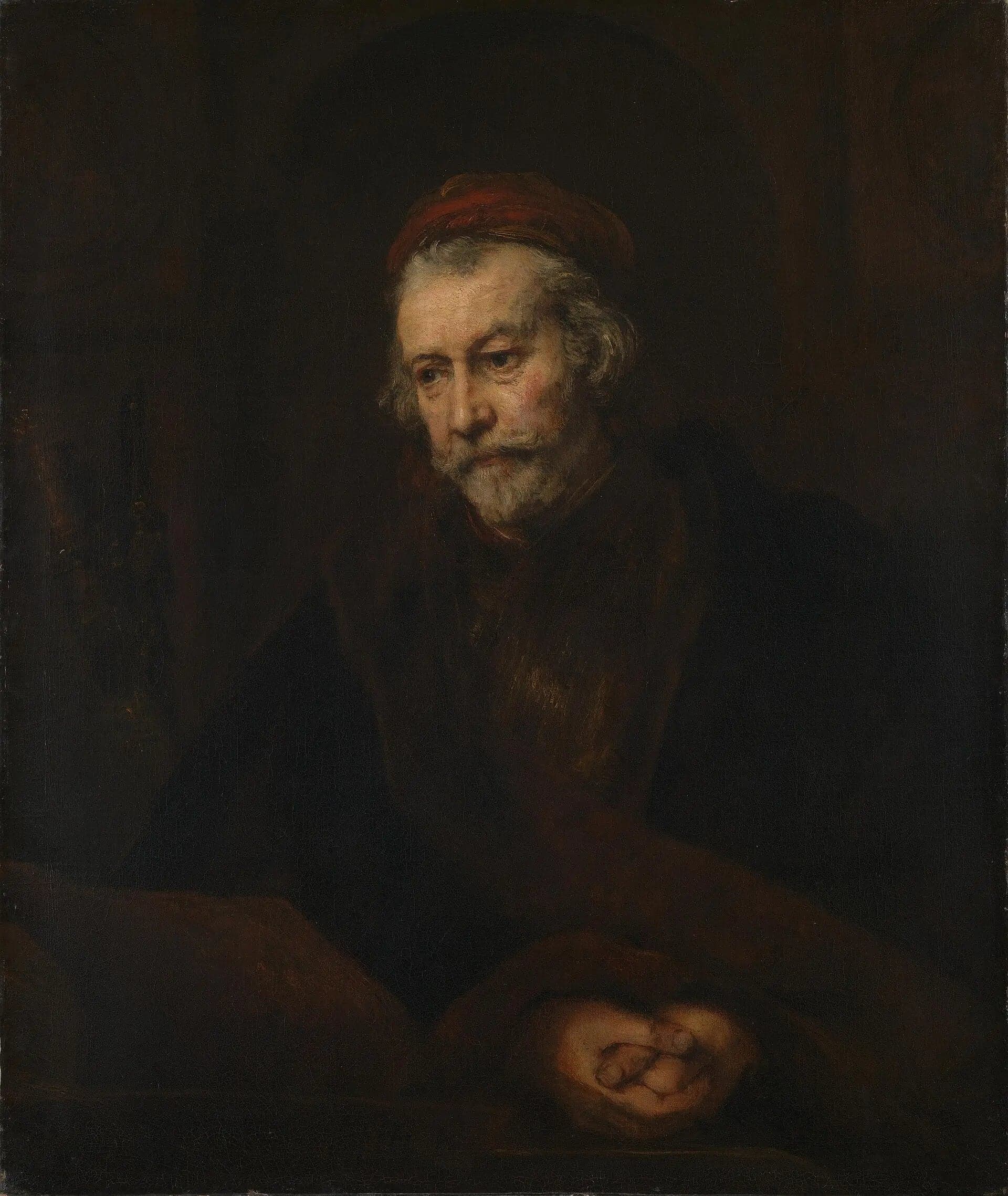
Portrait of a Man as Apostle Paul
- Original dimensions
- 85.5 x 102 cm
- Museum
- National Gallery
- Year
- 1659
Scene depicted
In this painting , Rembrandt depicts a character who, with captivating intensity, evokes wisdom and humanity. The Apostle Paul, emblematic of faith and reflection, seems both in dialogue with the viewer and lost in thought, adding an introspective dimension to the pictorial work that invites meditation.
Historical context
Created in 1659, this masterful painting was born in Amsterdam, one of the artistic hubs of the Baroque era. A member of the artistic movement known for its play of light and psychological portraits, the painting serves as a poignant testament to the Dutch cultural heritage of that time. Currently housed in the National Gallery, this canvas measures 85.5 x 102 cm.
Place in the artist's career
This painting sits at a decisive crossroads in Rembrandt's career, marking a period of deep stylistic exploration. When compared to other works such as “The Night Watch” and “The Anatomy Lesson of Dr. Tulp,” it becomes evident that this canvas represents an evolution towards greater introspection and an increased mastery of light effects.
Anecdote
“I see my subject as I see the morning light illuminating a face,” Rembrandt might have declared one day, inspired by a particular glow during a morning walk. This fleeting moment nourished the artist's creative spirit, bringing this canvas to life, leading him to capture the emotional depth of the masterpiece .