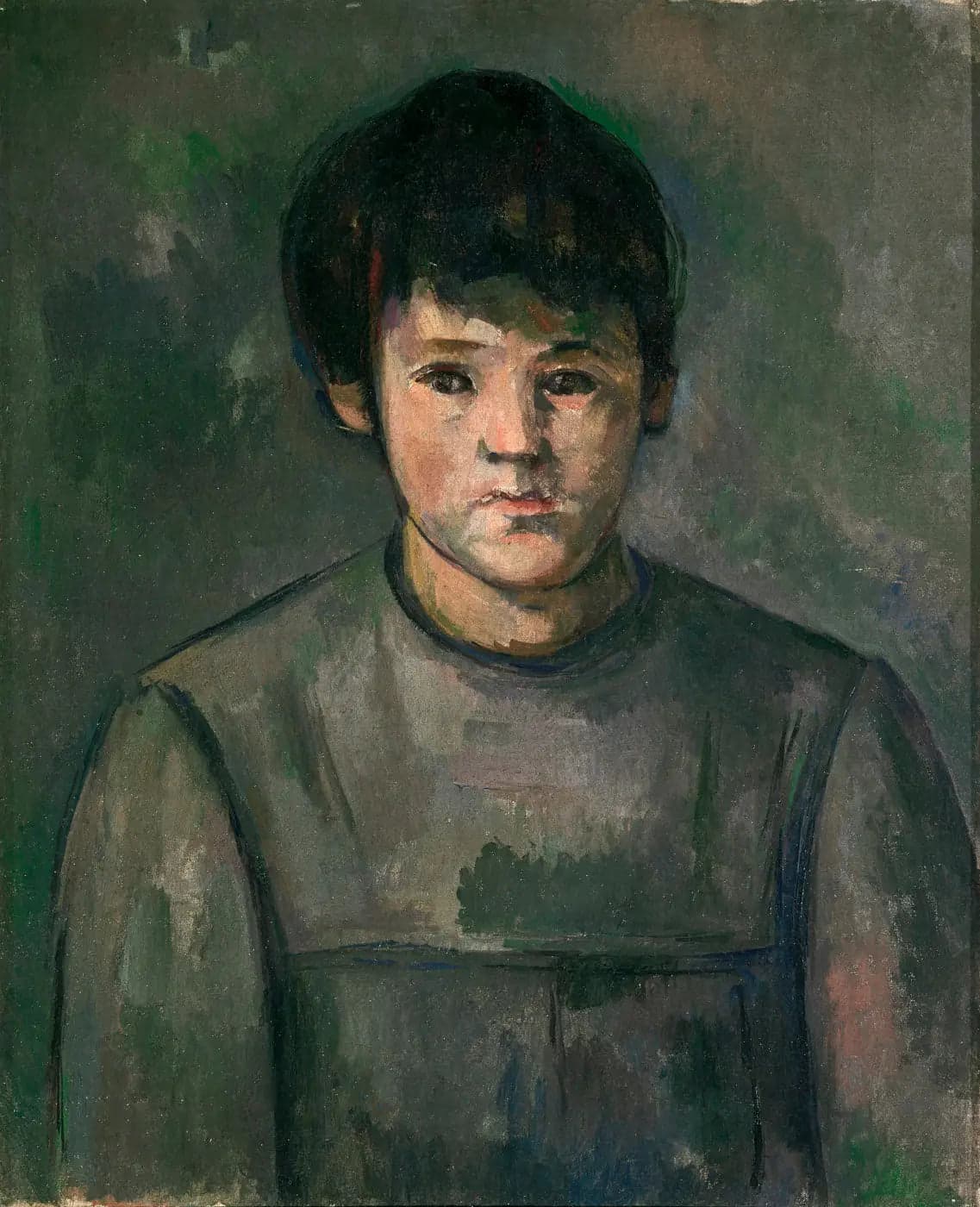
Portrait of a little girl
- Original dimensions
- 46 x 56 cm
- Museum
- musée Zambaccian
- Year
- 1896
Scene depicted
The canvas “Portrait de fillette” depicts a young child dressed in a delicate dress, her face illuminated by a soft and warm light. The innocent and purified features, projected onto the canvas, evoke a deep tenderness. The artist uses light to envelop the figure, creating an atmosphere of intimacy and serenity. Cézanne invites us to contemplate this moment of emotion frozen in time.
Historical context
Created in 1896, this painting emblematic is at the heart of the artistic effervescence of the late 19th century in Aix-en-Provence, the cradle of Cézanne's work. Made within the framework of the impressionist movement, the canvas stands out for its approach to the subject and its delicate nuances. Today, this canvas precious rests at the musée Zambaccian in Buenos Aires, where it continues to move visitors.
Place in the artist's career
This painting represents a turning point in Cézanne's career, at the crossroads of his artistic journey. After works like “Les Joueurs de cartes” or “La Montagne Sainte-Victoire”, the composition of “Portrait de fillette” stands out for its technical refinement as well as a more intimate exploration of human expressions, marking a sublime culmination of his pictorial mastery.
Anecdote
“Each face is a painting in itself, revealing the soul of a fleeting moment.” This inspired quote from Cézanne accompanies the memory of a bright morning in his garden. It is there, in the shade of an old linden tree, that he discovered the face of a little girl who would become the central subject of this masterpiece , capturing both innocence and depth.