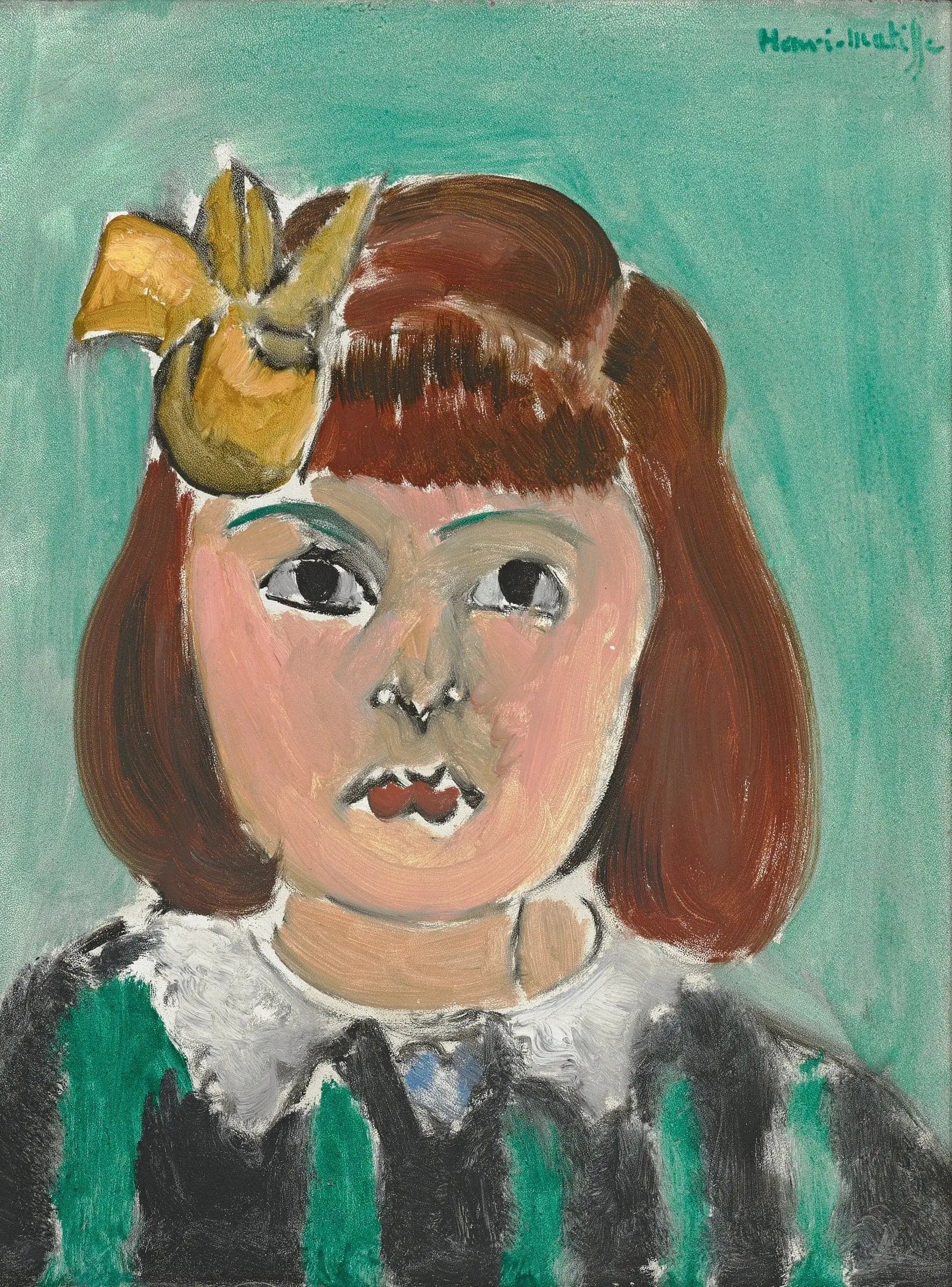
Portrait of a Little Girl
- Original dimensions
- 26 x 34.3 cm
- Museum
- High Museum of Art
- Year
- 1916
Scene depicted
The painting "Portrait de petite fille" reveals an innocent gaze, imbued with curiosity and serenity. In this beam of vibrant colors, the artist manages to convey the very essence of childhood: purity, sweetness, and a palpable intimacy. The composition, marked by an apparent simplicity, transports the observer into a universe where each nuance tells a unique story of joy and contemplation.
Historical context
This painting , created in 1916, emerges from a tumultuous period, during which the artist, in the city of Nice, managed to capture the innocence of a lost childhood. This historical moment is inscribed in the wake of Fauvism , a bold and colorful movement that challenged the artistic conventions of the time. Currently housed at the High Museum of Art , this work is a true gem sculpted from the ephemeral.
Place in the artist's career
This painting constitutes one of the highlights of Matisse's career, situated after his early Fauvist works. In parallel, one can mention "La Danse" and "La Musique", which share the same chromatic boldness, but diverge in their expressiveness to arrive at this probity of emotions that characterizes the "Portrait de petite fille".
Anecdote
“Painting is a surge of life, an escape from reality.” Henri Matisse recalls the sweet spring morning when inspiration appeared to him, before the face of a little girl, illuminated by the light of the first rays of sunshine. This encounter will mark the evocative power of this masterpiece , a moment frozen for eternity.