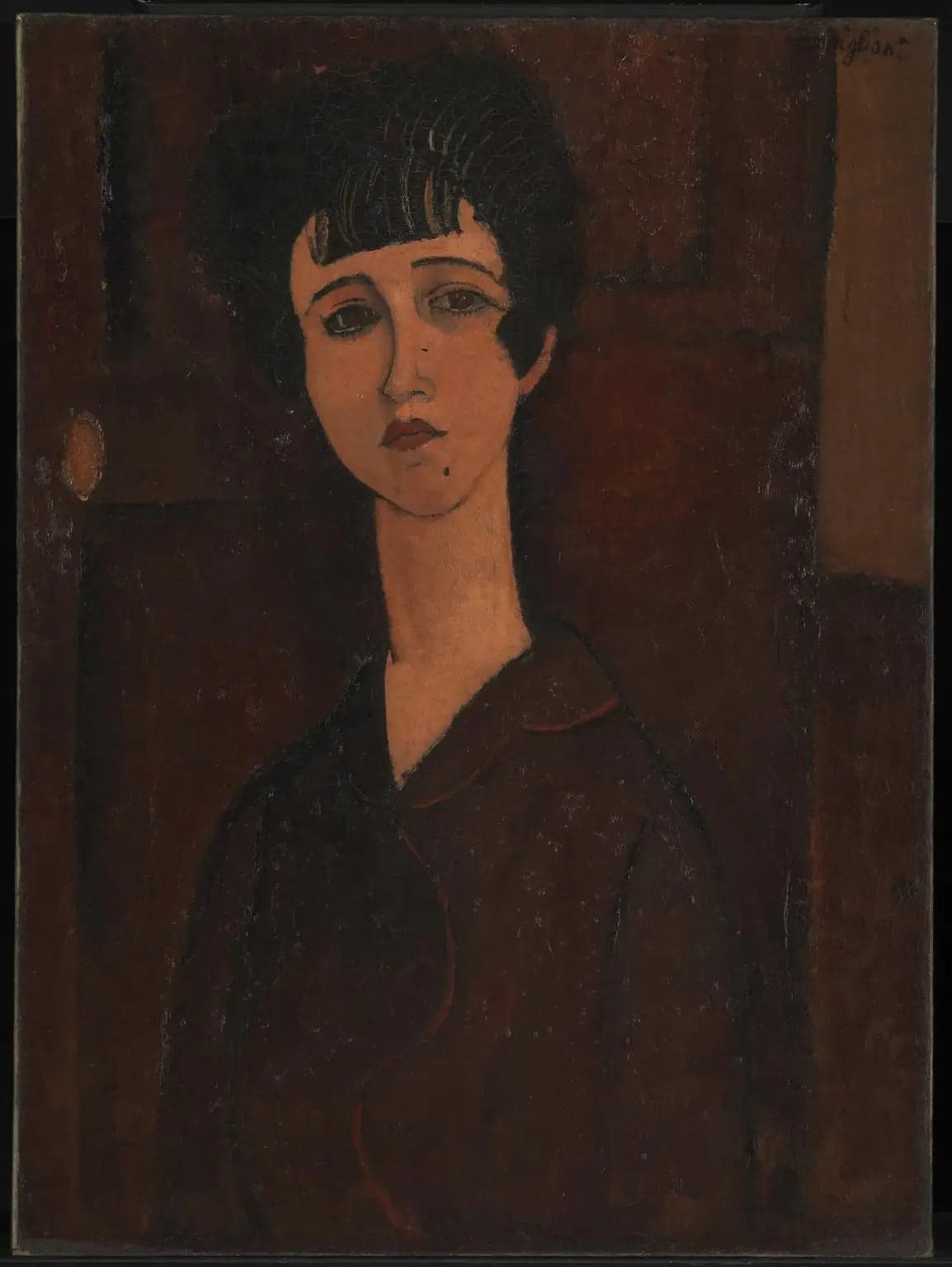
Portrait of a Girl
- Original dimensions
- 80.6 x 59.7 cm
- Museum
- Tate
- Year
- 1917
Scene depicted
In this painting , Modigliani captures the innocence and beauty of a young girl, with her elongated features and her gaze lost in contemplation. The choice of shapes and colors creates an atmosphere that is both peaceful and mysterious, a testament to universal human emotions.
Historical context
Created in the bustling city of Paris in 1917, this painting is part of the Cubism and Post-Impressionism movements. It was a time when art was rapidly evolving, reflecting social and cultural upheavals. The canvas , currently displayed at the Tate , a famous institution, pays tribute to the avant-garde spirit of its time.
Place in the artist's career
This masterpiece represents a key period in Modigliani's career, where his technique reaches its peak. Unlike his earlier works such as “Reclining Nude” and “Seated Woman,” this canvas reveals a refined mastery of shapes and colors that defines his unique style.
Anecdote
“Beauty lies in the soul that one sees beyond the face,” Modigliani is said to have remarked while painting this work of art . Imagine him, one spring morning, in the heart of a studio bathed in soft light, capturing the subtlety of a youthful smile, bringing this magnificent canvas to life.