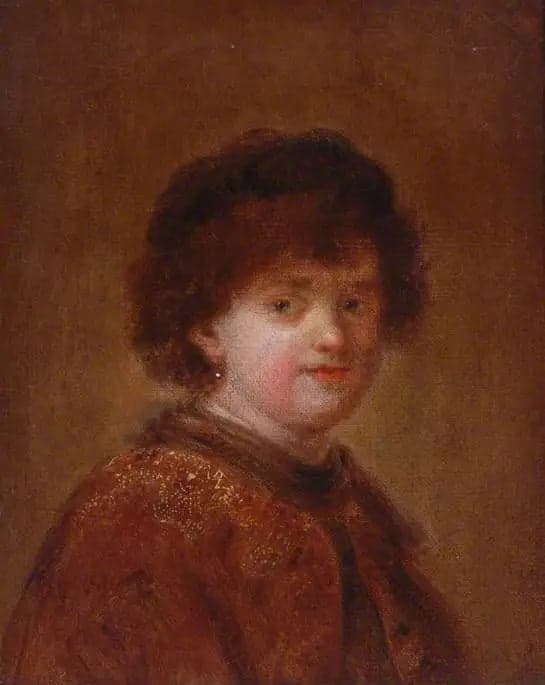
Portrait of a Boy
- Original dimensions
- 20 x 24.5 cm
- Museum
- Bowes Museum
Scene depicted
In this canvas , Rembrandt remarkably depicts the face of a boy with a mysterious and expressive gaze. The nuances of colors and the play of light create an intimate atmosphere, inviting the viewer to dive into the innocence captured by the artist. Every detail evokes the moment of a silent conversation between the subject and the artist, making this pictorial work deeply emotional.
Historical context
Created in the 17th century, the painting titled Portrait of a Boy is situated at the heart of the Dutch golden age, within the city of Amsterdam. Revealing an artistic movement rich in emotions, this canvas embodies the genius of Rembrandt , a true master of light and shadow. Today, it is preserved at the Bowes Museum, where it fascinates visitors with its depth and humanity.
Place in the artist's career
The painting Portrait of a Boy marks a turning point in Rembrandt's career, marking a stylistic peak. At this time, he begins to explore the play of light and shadow more boldly, visible in other canvases such as The Night Watch and The Anatomy Lesson of Dr. Tulp . These works illustrate a true maturity in his style and reinforce the greatness of his legacy.
Anecdote
Rembrandt once declared: "Light is the brush of the soul." On a spring morning, he reportedly crossed the gaze of a young boy in a narrow alley in Amsterdam. This fleeting encounter inspired this masterpiece by capturing the innocence and curiosity of childhood. This fleeting moment still imbues the painting with its timeless beauty today.