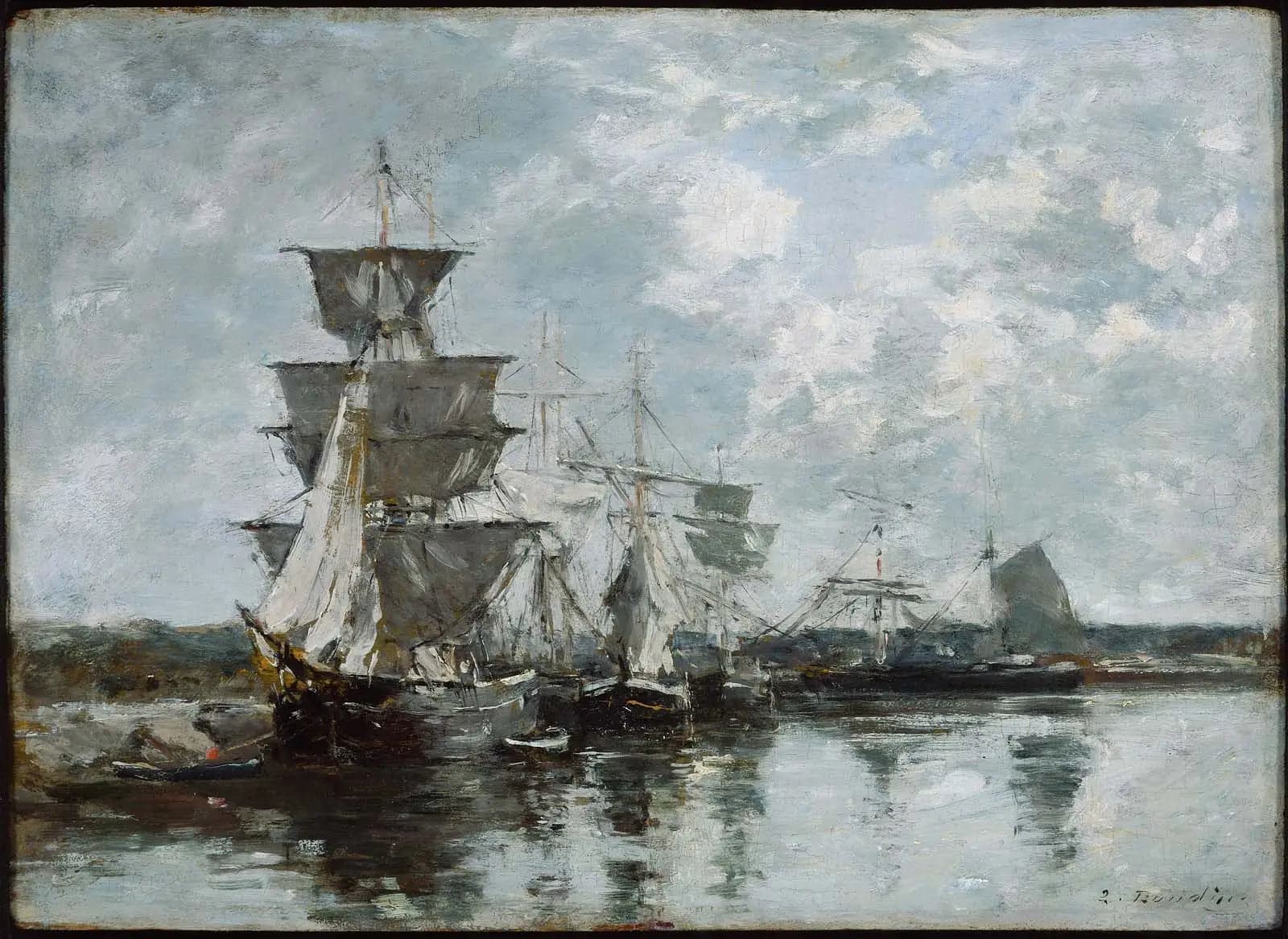
Port Scene
- Original dimensions
- 32.4 x 24.1 cm
- Museum
- Bristol City Museum & Art Gallery
- Year
- 1873
Historical context
Created in 1873, during the height of the Impressionist period, the painting Scène de port by Eugène Boudin is rooted in the charming port of Honfleur, in Normandy. This painting, now preserved at the Bristol City Museum & Art Gallery, bears witness to the beginnings of an artistic movement that would revolutionize the perception of light and color in art. The Impressionist movement, of which Boudin is a precursor, is characterized by rapid brush strokes and plays of light, thus capturing ephemeral moments of beauty.
Place in the artist's career
The third major work after “Le Dejeuner sur l'herbe” and “Les Plages de Trouville,” Scène de port represents a period of maturity where Boudin perfectly adopts Impressionist techniques. Unlike his painting “Plage de Trouville” which celebrates tranquility, this painting captures the clamor and vibrant colors of maritime life, reflecting his evolution towards more vibrant compositions.
Anecdote
“I seek to capture the moment when light dances on the water,” said Boudin when discussing his inspiration. That morning, in the bustling port, he felt the magic of light reflecting on the white sails of the boats. This pictorial work reveals the unique harmony between human activities and the whims of nature, a call to slow down and appreciate the moment.