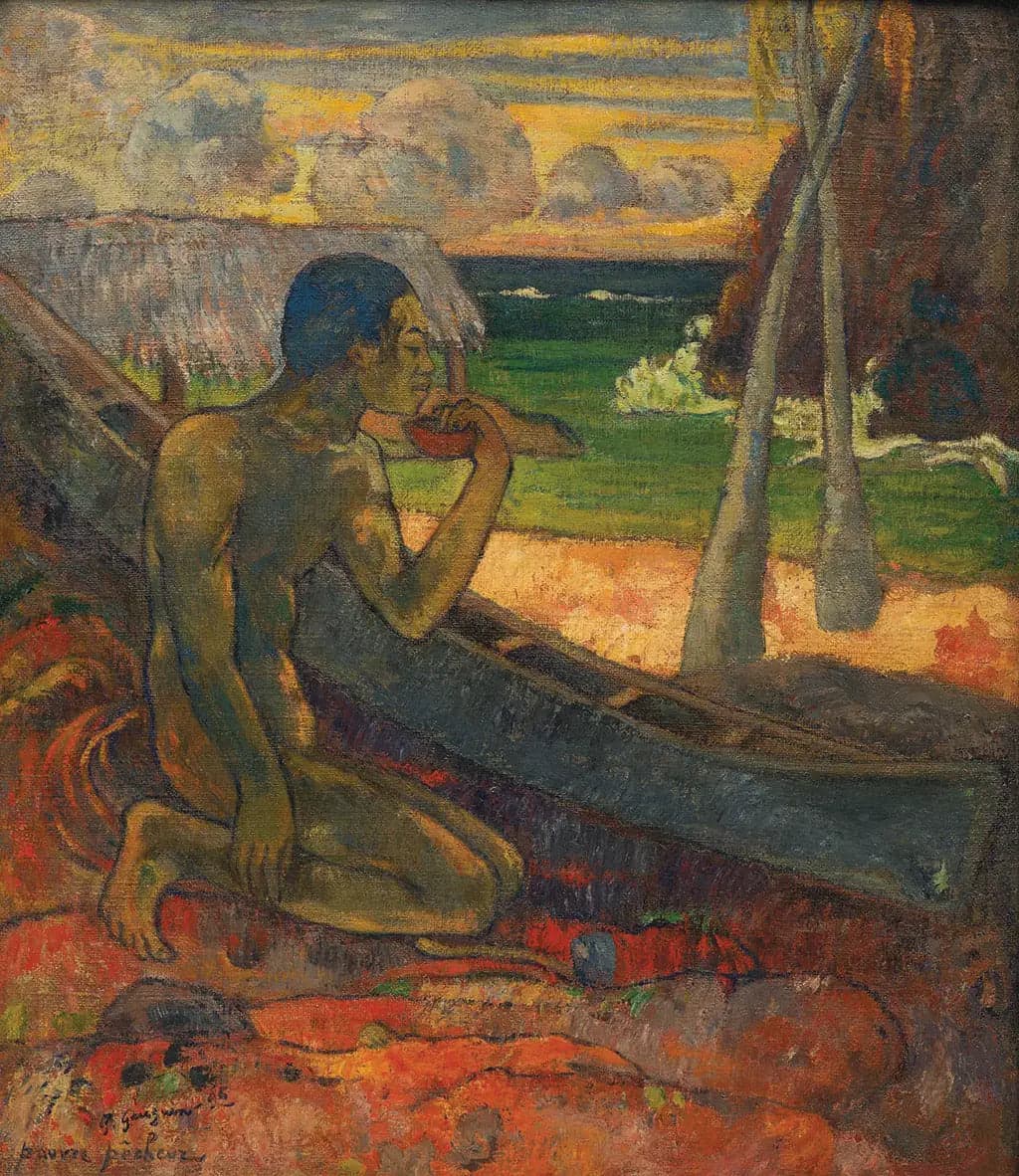
Poor Fisherman
- Original dimensions
- 66 x 74 cm
- Museum
- São Paulo Art Museum
- Year
- 1896
Scene depicted
The painting depicts a solitary fisherman, sitting on a rock, surrounded by the tumultuous waves of the ocean. A poignant contrast between the raw power of nature and human vulnerability. The work tells the silent struggles of a life of labor, that of a man who draws his survival from the wonders and dangers of the water, inviting each viewer to contemplate their own relationship with nature and effort.
Historical context
Created at the end of the 19th century, this painting is part of the post-impressionist movement, a fascinating period where the artist Paul Gauguin sought new horizons. The canvas reflects a lived reality, from the peaceful shores of Brittany to the soul of a people battered by time. Currently, the painting rests at the São Paulo Art Museum , where it continues to inspire entire generations.
Place in the artist's career
Poor Fisherman is a masterpiece that sits between Gauguin's explorations of themes of exoticism and his reflections on human suffering. Compared to works such as The Vision After the Sermon and The Source, this masterpiece testifies to the evolution of his narrative and visual style, marking a turning point towards expressionism .
Anecdote
“Art is a lie that allows us to discover the truth.” This quote from Gauguin summarizes his artistic approach. Imagine him, on a sunny morning, wandering the coasts, captivated by a fisherman with a face marbled by fatigue. This fleeting moment, this canvas full of humanity was born from this encounter, connecting the artist to a deep essence, the daily life that reveals often forgotten stories.