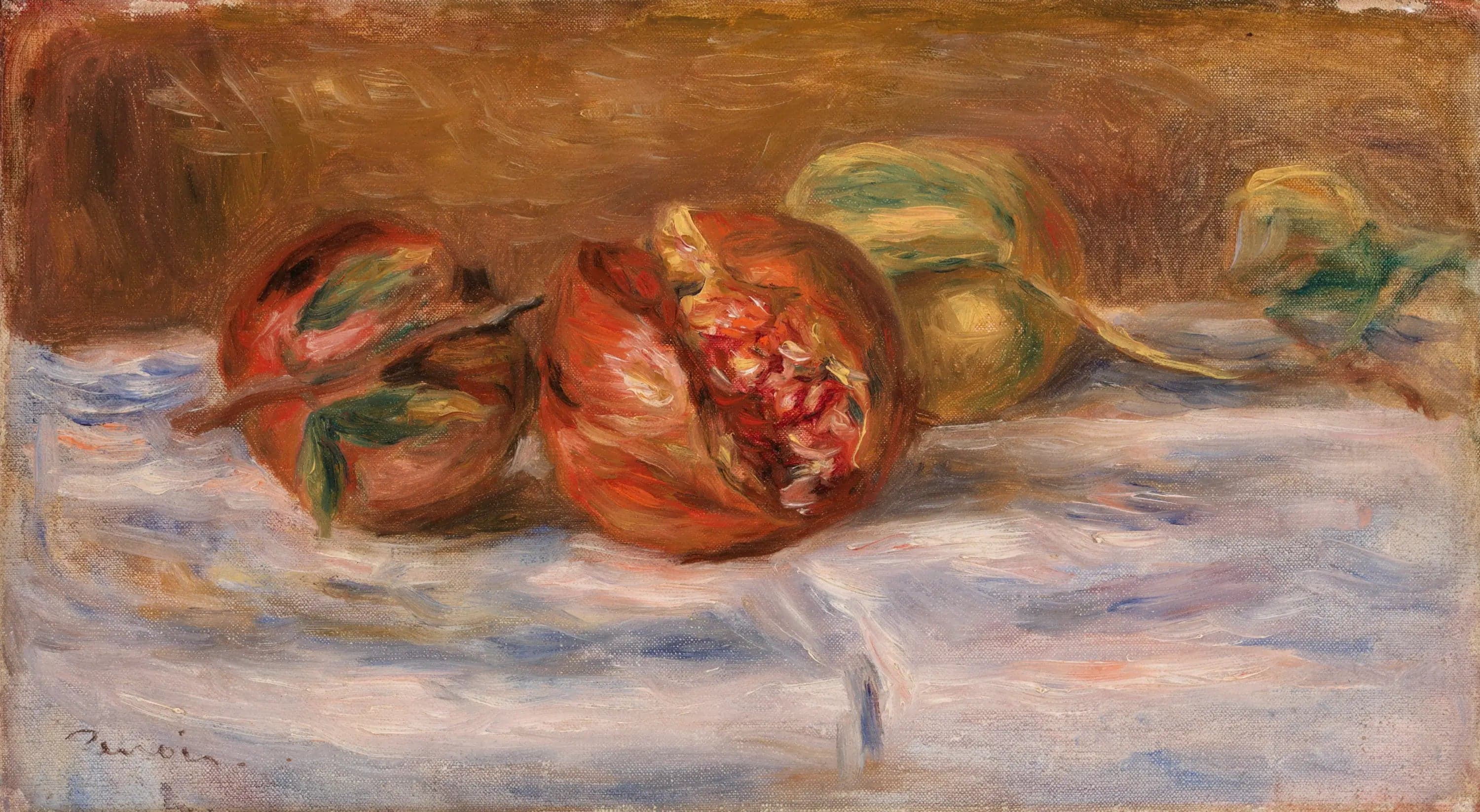
Pomegranates - Pierre
- Original dimensions
- 46.5 x 27 cm
- Museum
- Barberini Museum
- Year
- 1913
Scene depicted
In this exquisite painting, Renoir immortalizes a delicate composition of juicy pomegranates resting on a light background. Each fruit, rendered with refined precision, evokes a quintessence of nature. The contrast between the hues of the pomegranate skin and the softness of their flesh creates an immersion that invites contemplation of the ephemeral beauty of plant life.
Historical context
Created in 1913, in the enchanting setting of pre-war Europe, the painting "Pomegranates" is part of the Impressionist movement, a trend that redefined the artistic perception of light and colors. This canvas is currently housed at the Barberini Museum , a recognized institution in Potsdam, Germany, resonating with the cultural heritage of the region.
Place in the artist's career
"Pomegranates" symbolizes a period of maturity in Renoir's career, where he fully exploits the richness of light on everyday objects. Alongside other masterpieces like "Luncheon of the Boating Party" and "The Bathers," this painting shows the evolution towards more intimacy and softness, affirming the poetic power of nature.
Anecdote
"Beauty is everywhere, you just have to know how to see it," Renoir declared, drawing his inspiration from the simple moments of life. When he captured these pomegranates, a soft morning light filtered through the branches, infusing the air with a sweet fragrance. This original emotion is reflected in the vibrant strength of the painting .