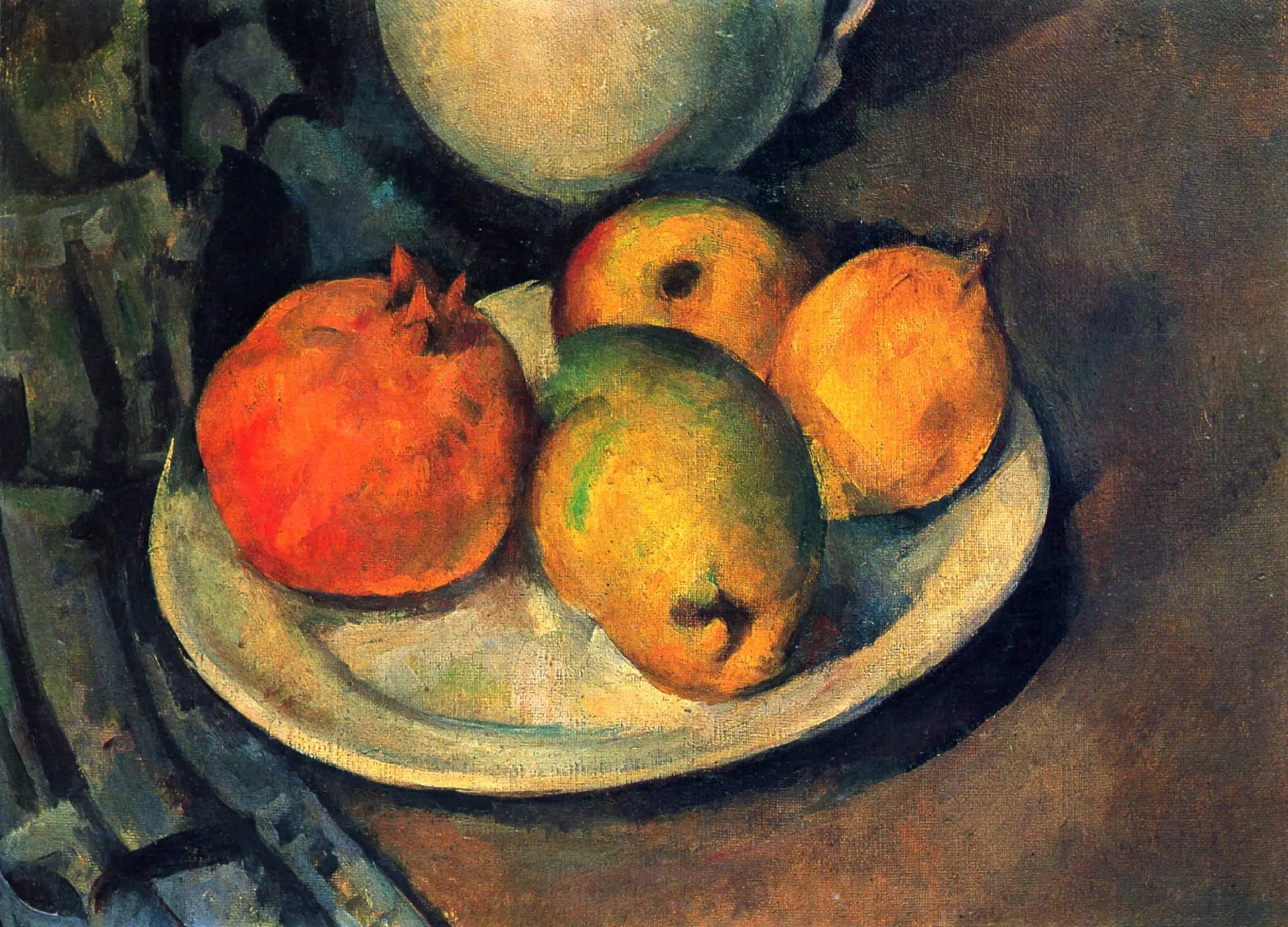
Pomegranate and pears on a plate
- Original dimensions
- 36 x 27 cm
- Museum
- Not specified
- Year
- 1885
Scene depicted
In this striking scene, the fruits are delicately arranged on a plate, illustrating a moment of serenity and harmony. Cézanne beautifully captured the shiny texture of the pomegranates and the softness of the pears, making this painting a true invitation to appreciate the beauty of simple things. The way he plays with light and shadows enhances the realism and intensity of colors, making this pictorial work a celebration of nature.
Historical context
Created in 1885, this iconic painting by Paul Cézanne belongs to the post-impressionist movement, which emerged in France at the end of the 19th century. In a time when light and color became pillars of artistic expression, Cézanne elevated still life to a respected form of art. Although the painting does not have a specific museum, it remains etched in memory due to its stylistic innovation and its particular brilliance.
Place in the artist's career
“Grenade et poires dans une assiette” marks a significant milestone in Cézanne's career, reflecting his quest to render the essence of objects. This painting sits between his early works, such as “Still Life with Apples and Biscuits,” and his later masterpieces like “The Large Bathers.” In doing so, it reveals the evolution of his technical approach, moving from a more rigid style to a more expressive and free composition.
Anecdote
“Nature is an open book that never ceases to inspire me,” Cézanne is said to have remarked while contemplating the display of fruits on his table one spring morning. This quote resonates strongly in light of the brilliance of his composition, capturing the golden light of day and the freshness of the neighboring orchard, like a delicate echo of the life surrounding him.