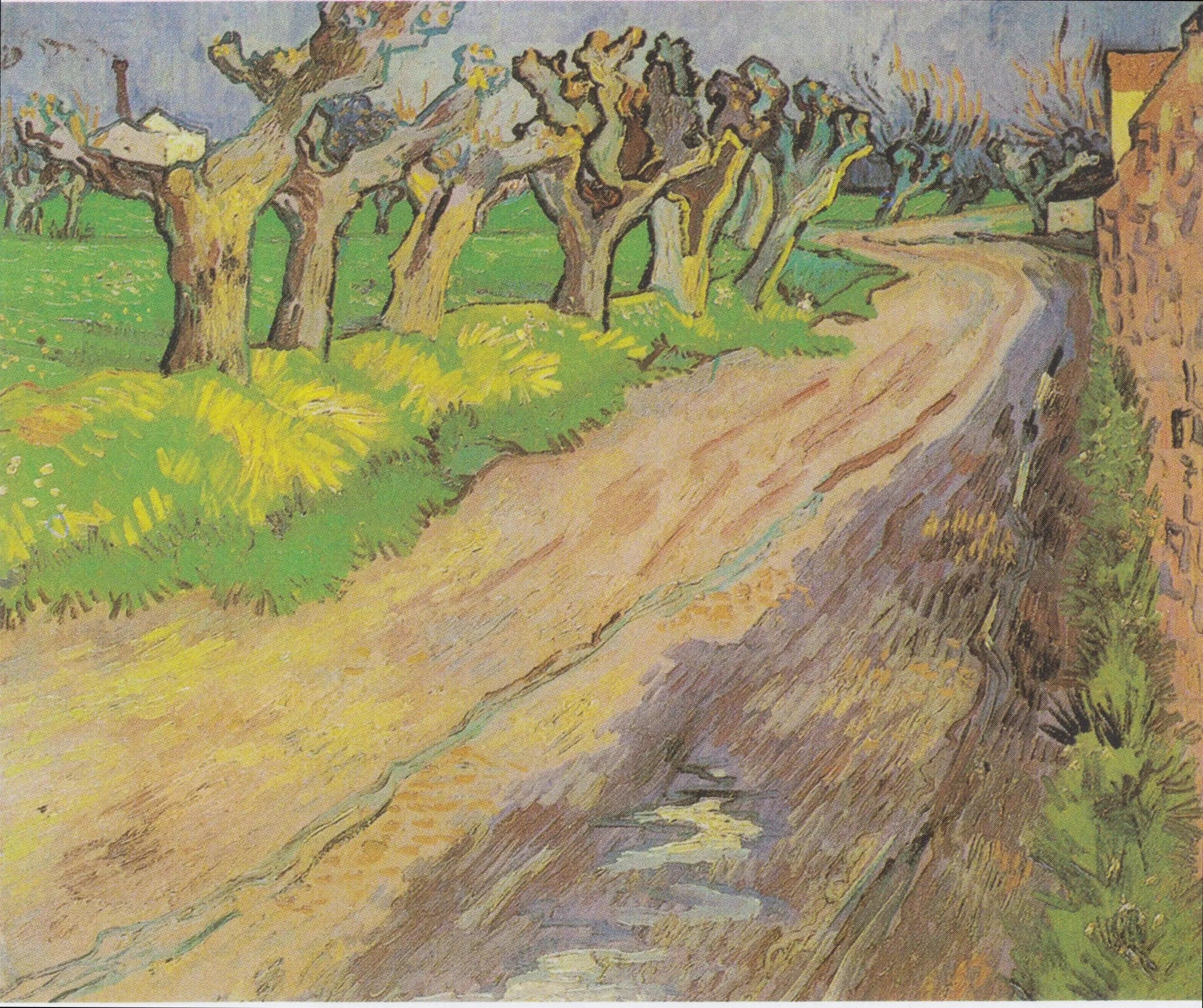
Pollarded Willows
Scene depicted
The painting "Pollard Willows" tenderly depicts the flexibility of the willows, leaning over a sparkling stream. This canvas immerses us in a sanctuary of peace, inviting contemplation. The play of light, filtered through the leaves, reveals the serenity of a suspended moment. The work tells us of the harmony of natural elements, creating a dialogue between the tree and its reflection.
Historical context
Created in 1889, the painting "Pollard Willows" by Vincent van Gogh emerges from a vibrant artistic context in Arles , France. In the midst of the post-impressionist period, this canvas not only illustrates the artist's technical skill but also reflects the sweetness of life in an era where nature and art merge. Currently, this painting is part of the Stávros Niárchos Collection , measuring 65 x 55 cm.
Place in the artist's career
"Pollard Willows" stands as one of the perfect examples of Van Gogh's maturity, bridging the gap between his promising beginnings and his stylistic peak. In comparison with " The Starry Night " and " The Sunflowers ", this painting reflects the evolution of his approach to color and light, marking a turning point towards harmony and serenity.
Anecdote
Van Gogh once stated: "I aspire to paint the very essence of things." In this idyllic place, one spring morning, he admires the gentle whisper of the pollard willows, symbols of life and resilience. This moment of awakening is palpable in the painting , marking the crucial stage of the creation of this masterpiece .