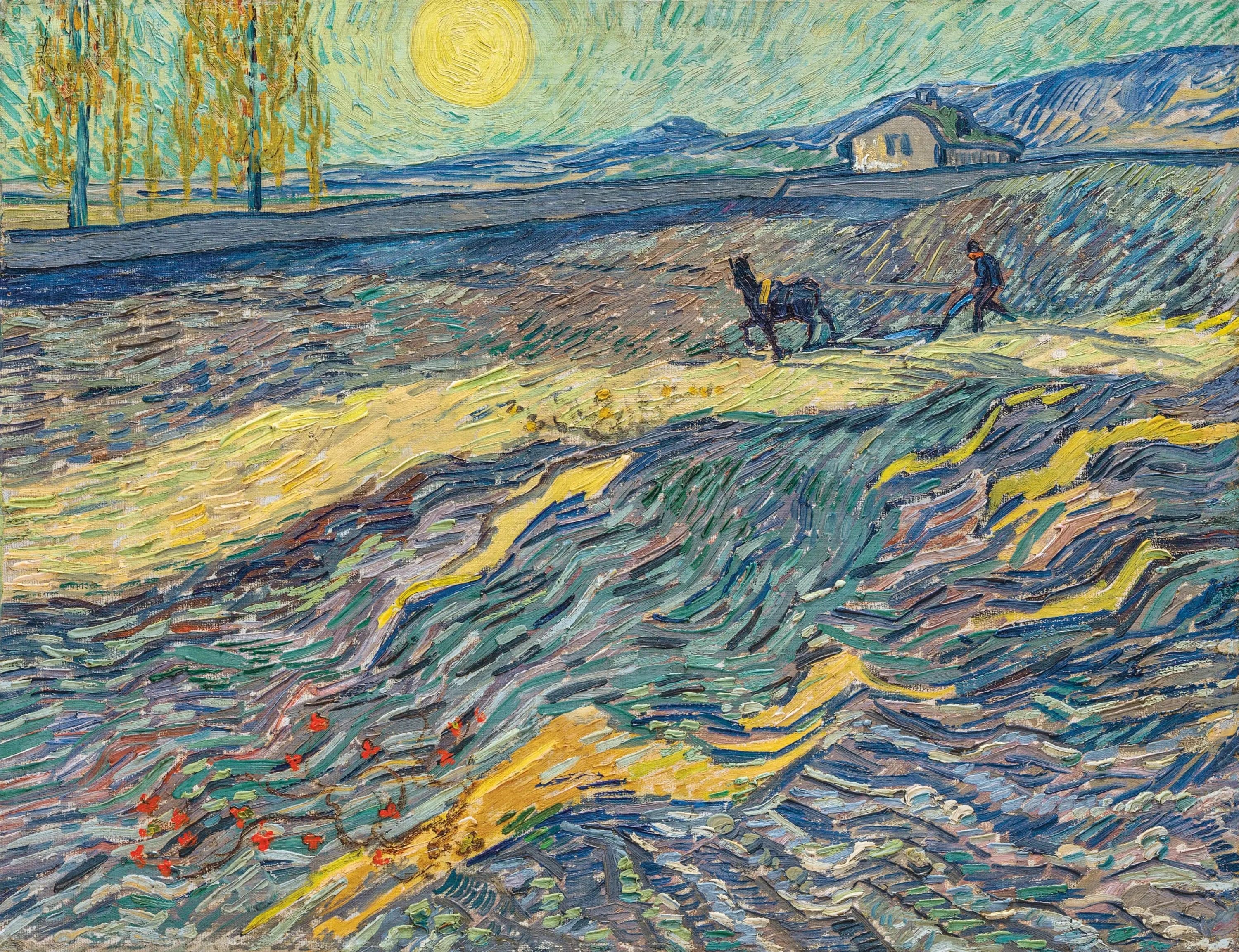
Ploughman in a Field
- Original dimensions
- 64.9 x 50.3 cm
- Museum
- Not specified
- Year
- 1889
Scene depicted
In this canvas , a man, an emblematic figure of the peasant, dedicates himself to his task, his face focused and determined. The vast fields, illuminated by a golden light, unfold around him, highlighting the harmony between man and earth. The earthy and vibrant colors of this painting immerse the viewer in a moment of serenity and devotion to nature. This simple scene reflects the daily struggles and efforts, immortalized by the magic of art.
Historical context
Created in 1889, during his stay in Saint-Rémy-de-Provence , this painting is part of the post-impressionist movement, fascinating for its bold use of vibrant colors and energetic brushstrokes. The canvas evokes a time when art was breaking free from conventions, where nature became a subject of raw and sincere emotion. The work is the result of an intense period of creation, and although it is not housed in a specific museum, it reflects Van Gogh's personal and artistic struggles.
Place in the artist's career
This painting , created during a tumultuous period in Van Gogh's life, marks the artist's movement towards a more personal exploration of forms and colors. In parallel with works like “ The Sunflowers ” and “ The Starry Night ”, one can see how Van Gogh gradually refined his technique, developing a more emotive and expressive approach. “Ploughman in a Field” stands out as a masterpiece heralding the power of the upcoming expressionism.
Anecdote
“It seems to me that every piece of land hides a beauty to be captured.” These words from Vincent van Gogh evoke the very essence of this pictorial work , born from a sunny morning where the ploughman worked his field, under a Mediterranean sky. This canvas , full of life, is a witness to the struggles and simple joys of rural life, capturing the essence of a fleeting moment still vibrant in our memories.