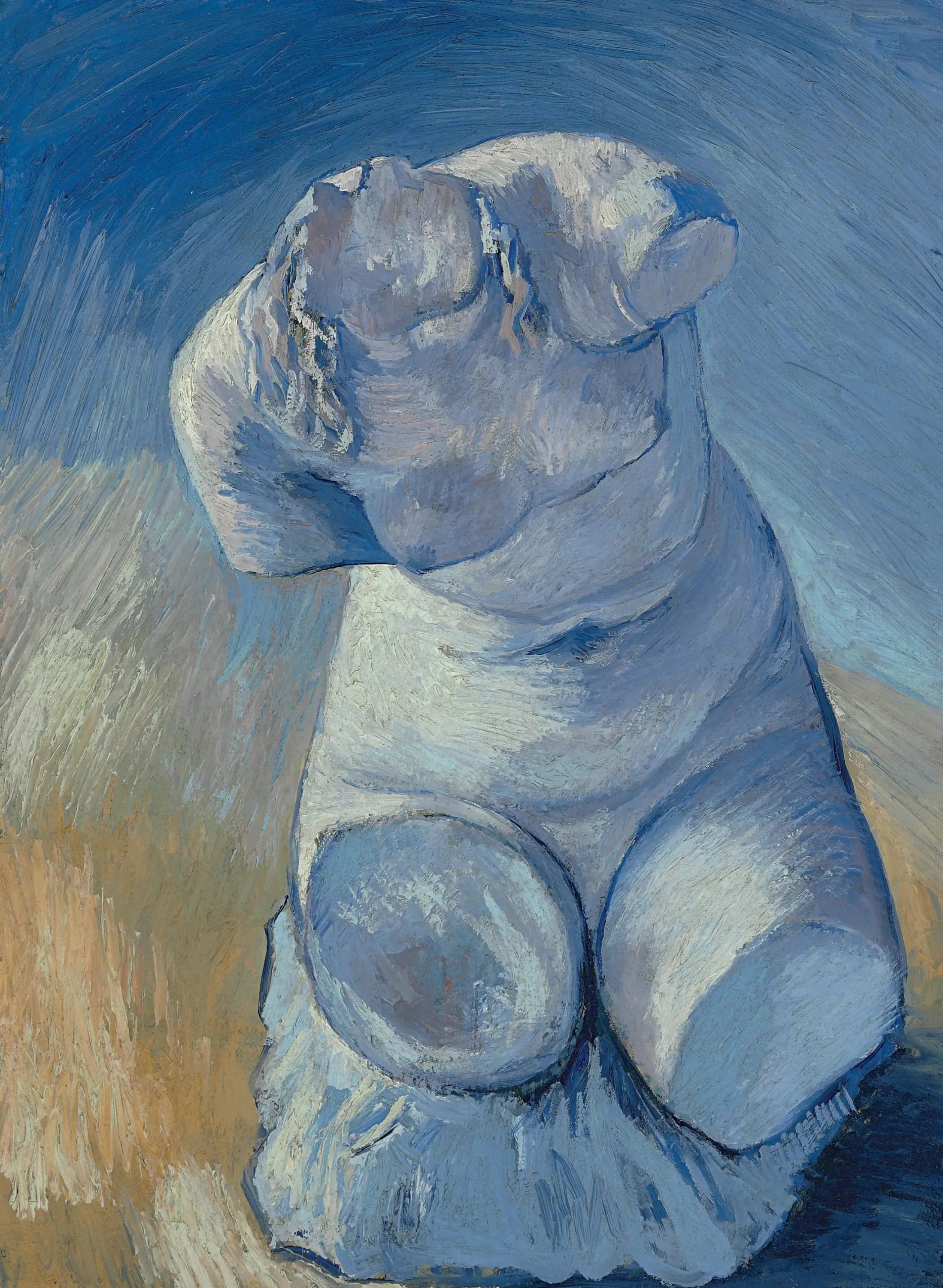
Plaster statuette: Torso of a woman, face view
Scene depicted
This canvas reveals the sensuality and grace of a woman, her posture highlighting the subtle and delicate beauty of the human body. The torso of the woman, captured from a unique angle, invites the viewer to feel the melancholy and fragility of existence, reflecting the artist's concerns about human nature.
Historical context
Created in 1887, this painting emblematic finds its origin in Paris , at the heart of an impressive artistic movement. During this period, Vincent van Gogh immerses himself in the influences of the avant-garde, while seeking to capture the beauty of inner life and human emotions. Today, the canvas is preserved at the Menard Art Museum , with dimensions of 54.1 x 73 cm, testifying to its importance.
Place in the artist's career
The painting “Plaster Statuette: Torso of Woman, Face View” marks an important milestone in Van Gogh's career, where he begins to assert his unique style. This masterpiece fits perfectly between two of his famous canvases : “ The Sunflowers ” and “ The Starry Night ,” showing a technical evolution towards unparalleled emotional depth.
Anecdote
“The inner beauty of a person reveals itself through light,” Van Gogh might have said while referring to his canvas . One sweet spring morning, as he wandered through the Parisian alleys, a face he encountered inspired him to create this poignant representation. It is this fleeting encounter that gave birth to a pictorial work full of softness and strength.