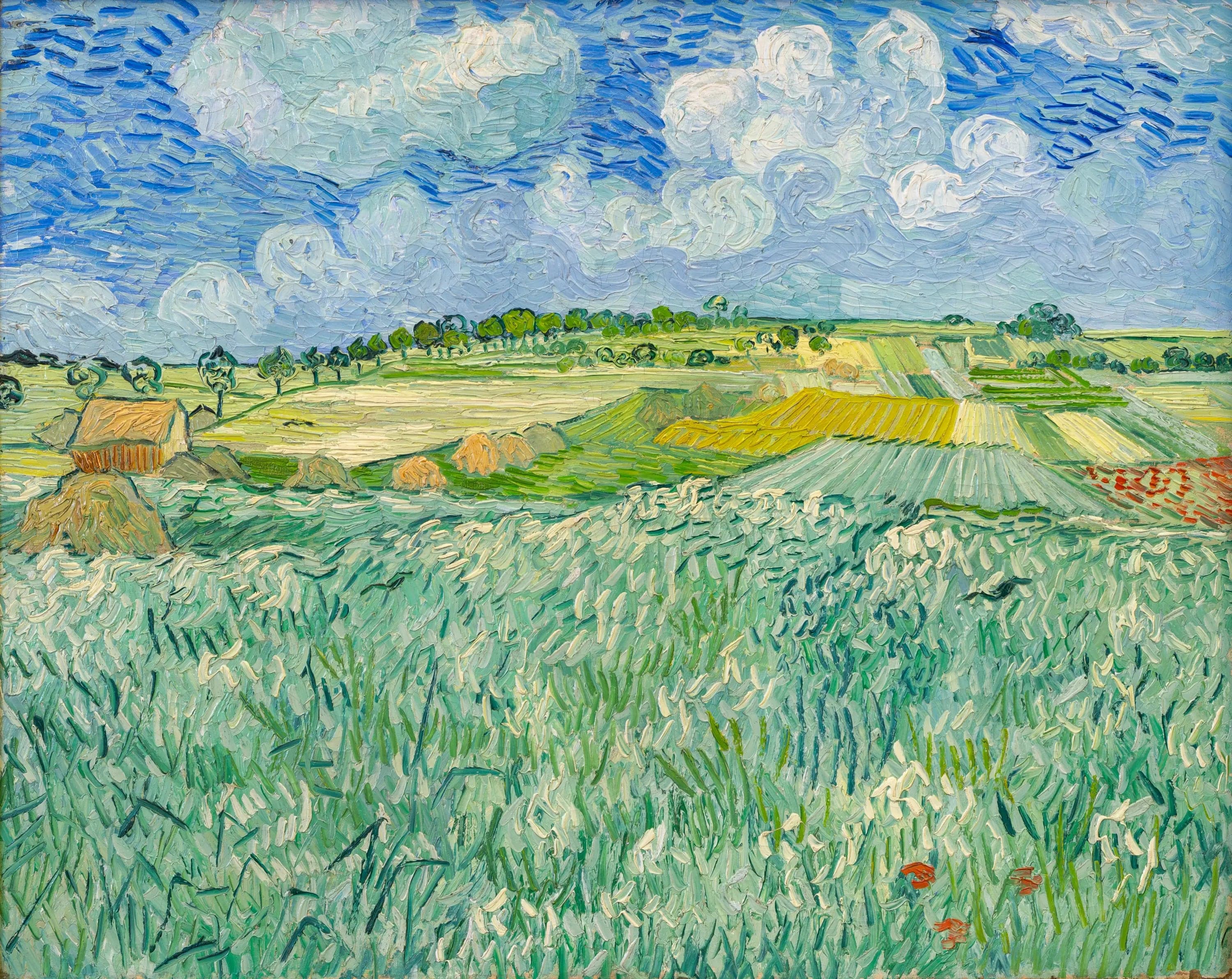
Plain near Auvers
Scene depicted
In the painting Plaine près d'Auvers , Van Gogh transports us to a vibrant and dynamic rural landscape . The fields, with their rich texture and shimmering colors, testify to the fleeting beauty of nature. The shadows dance with the wind, paying tribute to this painting that captures the free and wild spirit of the French countryside.
Historical context
Created in 1890, the painting emblematic Plaine près d'Auvers finds its roots in Auvers-sur-Oise , a charming commune nestled in the Île-de-France region. This work is part of the post-impressionist movement, characterized by expressive brushstrokes and a bold use of color. Currently, this canvas is preserved at the Alte Pinakothek, a prestigious museum in Munich. Its impressive dimensions of 92 x 73.5 cm capture the eye and imagination.
Place in the artist's career
Plaine près d'Auvers represents a crucial phase in Van Gogh's career, marking an artistic maturity. Compared to other paintings like The Starry Night and The Wheat Field with Crows , a stylistic evolution is observed. This work illustrates his transition towards greater abstraction and deeper emotional intensity.
Anecdote
“I wish that my paintings convey the emotion I felt while painting them.” Reflecting on this inspiring phrase from Vincent van Gogh , let’s think back to the bright moment during the creation of Plaine près d'Auvers . One spring morning, as the first rays of sunlight bathe the plain in golden light, Van Gogh immerses himself in the serenity of the landscape , thus forging the essence of his masterpiece .