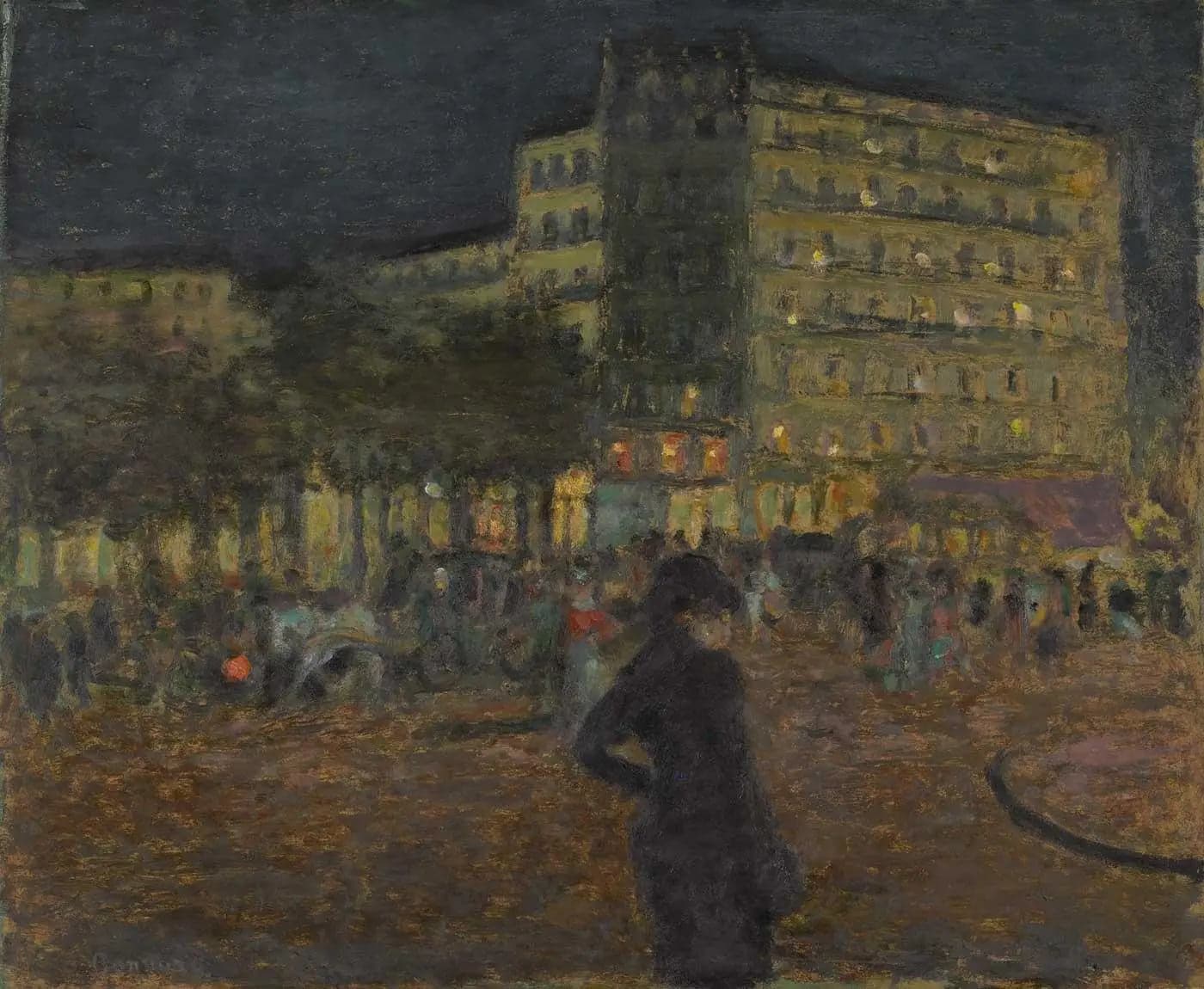
Place Pigalle
- Original dimensions
- 47.5 x 31.5 cm
- Museum
- Hiroshima Art Museum
- Year
- 1905
Scene depicted
The scene illustrated in the painting "Place Pigalle" is an authentic encounter between urban life and nature. Here, human figures blend with Parisian architecture, creating a colorful ballet where one can sense the laughter, conversations, and even the intoxicating scents of nearby bistros. Bonnard succeeds in encapsulating this fleeting moment, transforming a simple street into a visual poem.
Historical context
Created in the heart of Paris in 1905, the painting "Place Pigalle" is part of the Nabi movement, which reconnects with the sensitivity and intimacy of art. Through this canvas , Pierre Bonnard captures a unique atmosphere, vibrant with the life of Paris at the time, while showcasing a modern and bold approach. Currently housed at the Hiroshima Art Museum , this painting measuring 47.5 x 31.5 cm is a window into a bygone era.
Place in the artist's career
"Place Pigalle" represents a pivotal moment in Bonnard's career, illustrating his evolution towards a more personal and bold style. Compared to his earlier works like "The Luncheon" and his later compositions such as "The Terrace," this painting is a testament to his stylistic and emotional quest, reflecting a growing mastery.
Anecdote
"Each canvas is a story, and Place Pigalle whispers the secrets of its alleys." These words resonate with Bonnard's passion for capturing fleeting moments, like that spring morning when he encountered a sweet face. The painting evokes the echoes of a vibrant Paris, flooded with light, each brushstroke vibrating with authentic emotion.