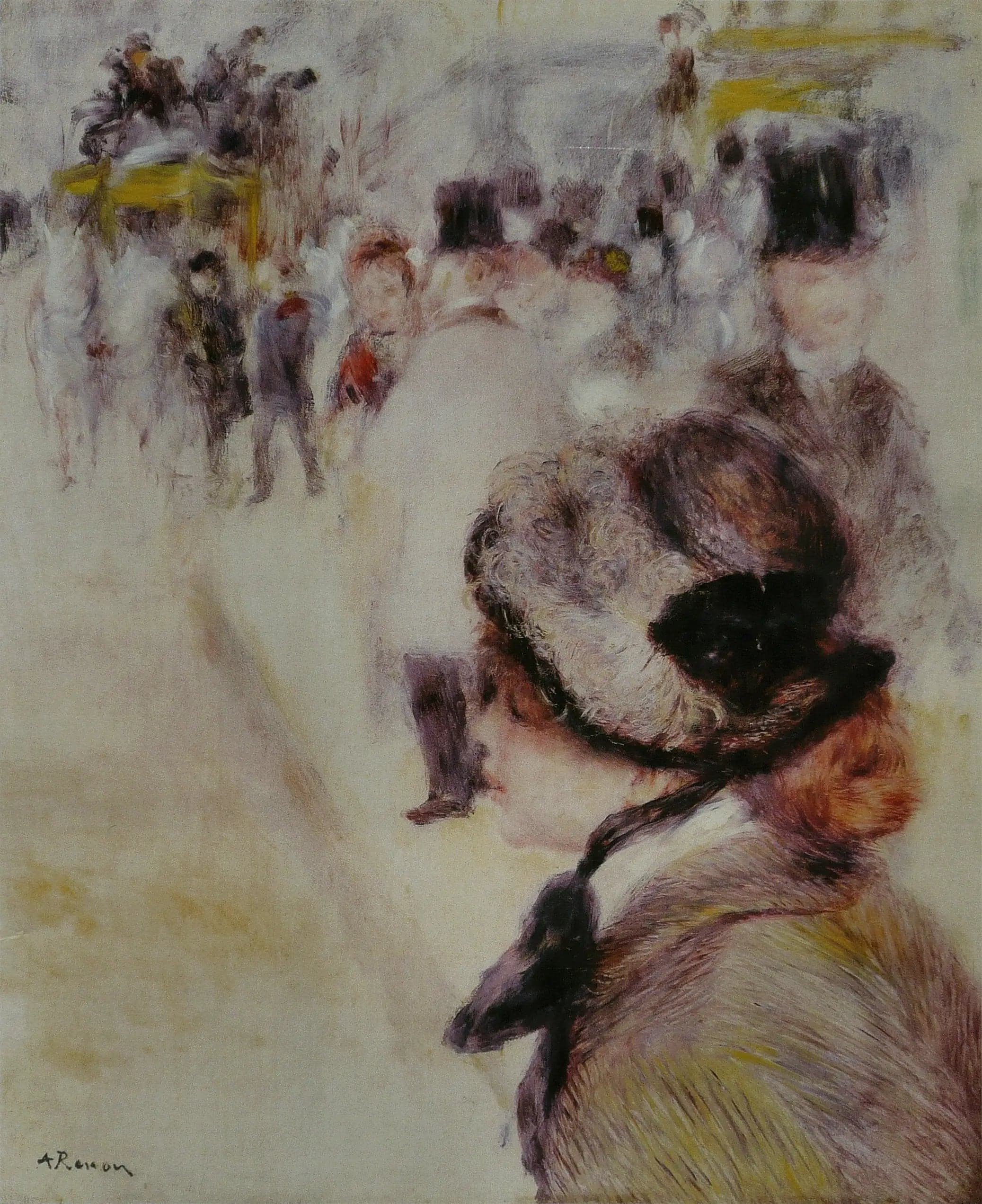
Place Clichy - Pierre
- Original dimensions
- 54 x 65 cm
- Museum
- Fitzwilliam Museum
- Year
- 1880
Scene depicted
The painting represents a lively scene of the famous Place Clichy in Paris, an iconic crossroads, where laughter, conversations, and the sounds of urban life blend together. Renoir captures blurred silhouettes, top hats, and dancing dresses, creating an atmosphere of effervescence. The viewer's gaze is drawn along with the characters, immersing into this dance of city life.
Historical context
Created in 1880, in Paris, the painting titled La Place Clichy is part of the Impressionist movement, which captures the essence of daily life on canvas. At the heart of this vibrant era, where the modern world was emerging, Renoir immortalizes a scene imbued with human warmth. Today, this painting is part of the prestigious collection of the Fitzwilliam Museum , where it continues to identify its impact on art and culture.
Place in the artist's career
La Place Clichy is situated at the heart of Renoir's career, freely between the beginning of his artistic quest and his periods of success. This painting bears witness to the evolution of his style, alongside other notable works such as Bicycle Balloon and Young Girls at the Piano , marking a transition towards a more intense brightness and refined sensitivity.
Anecdote
“Beauty lies in the details of everyday life, and each glimmer of light tells a story.” In these words, Renoir captures the essence of his masterpiece . Inspired by a sunny morning, he strolls through the streets of Paris, crossing familiar and unknown faces, a moment suspended in time that will nourish the emotion of La Place Clichy .