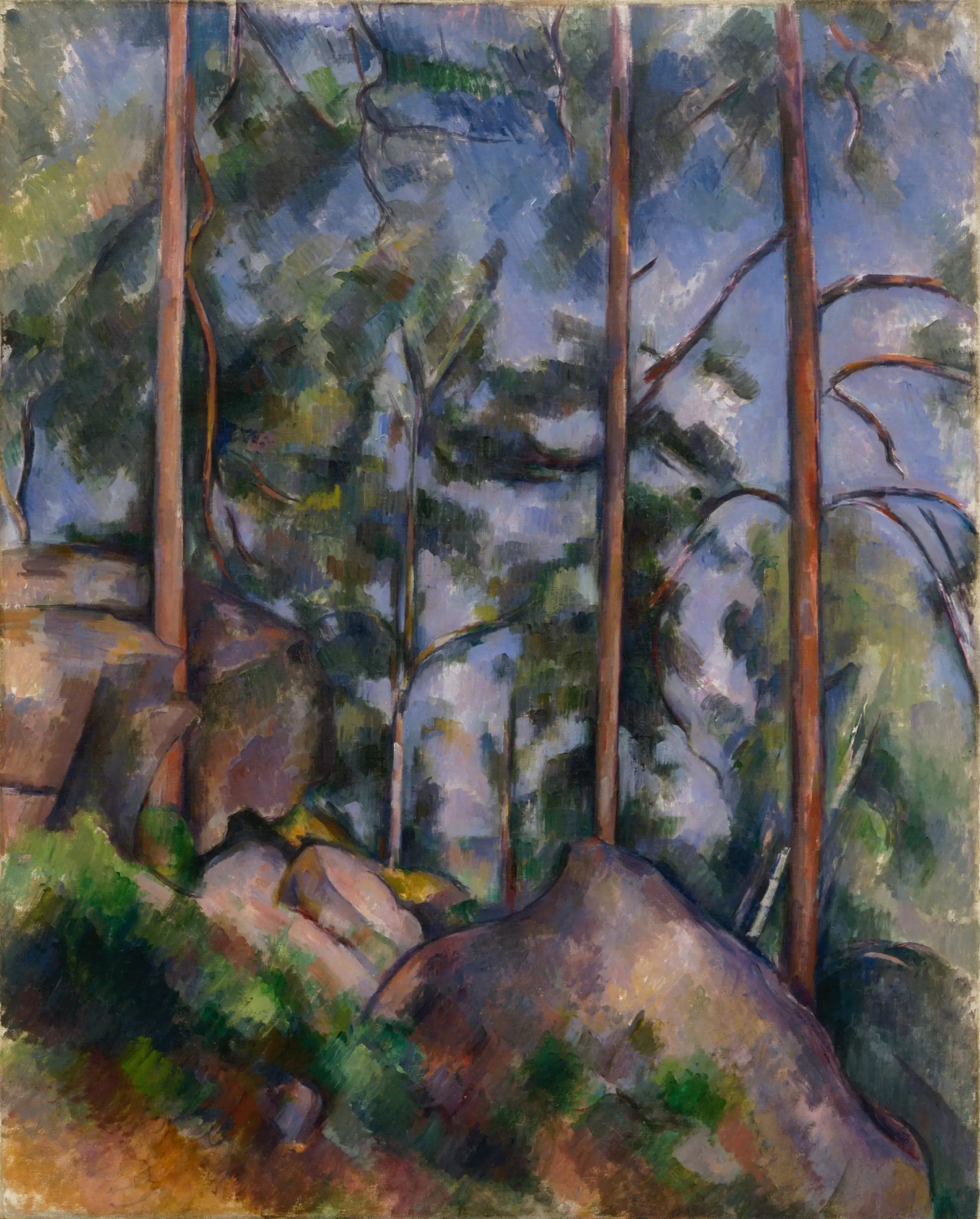
Pines and Rocks, Fontainebleau
- Original dimensions
- 65.4 x 81.3 cm
- Museum
- Museum of Modern Art
- Year
- 1897
Scene depicted
This pictorial work depicts a lush landscape, where the pines rise proudly above a ground of rocks smoothed by time. Observing this scene, one can almost hear the gentle rustling of leaves, savor the fresh scent of resin, and feel the sunlight filtering through the branches. The composition not only seeks to pay homage to the natural beauty of the site but also illustrates Cézanne's relentless pursuit to capture a moment of eternity.
Historical context
Created in 1897, the painting "Pines and Rocks, Fontainebleau" is set in a period where Paul Cézanne evolves within a vibrant artistic landscape. This canvas , emblematic of the French landscape, evokes the town of Fontainebleau, famous for its majestic natural scenery and picturesque rocks. Today, this painting is carefully preserved at the Museum of Modern Art, a sanctuary of modern masterpieces, where it attracts admiration from visitors around the world.
Place in the artist's career
"Pines and Rocks, Fontainebleau" is situated at a major turning point in Cézanne's career, marking a more assertive quest for a personal and authentic visual language. Alongside other paintings such as "The Montagne Sainte-Victoire" and "The Card Players," this canvas embodies the evolution of his style, oscillating between impressionism and formal construction.
Anecdote
"Nature is my greatest mistress. It inspires every brushstroke." Paul Cézanne may have expressed this sentiment during one of his morning walks in the verdant peace of Fontainebleau. In a soothing silence, every nuance of light in the trees materializes in his painting , capturing the essence of his state of mind in the masterpiece that is this canvas .