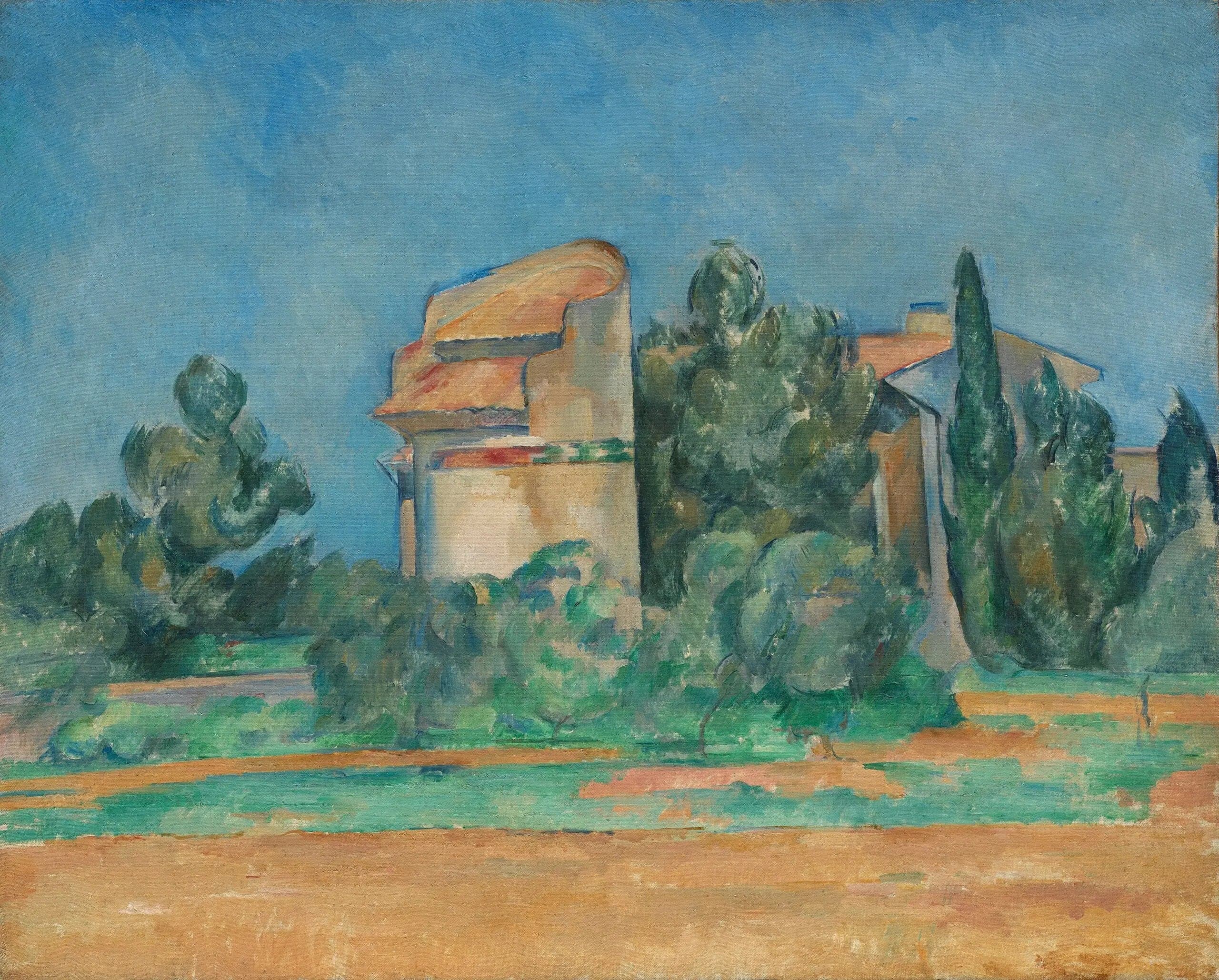
Pigeonnier of Bellevue
- Original dimensions
- 80 x 55 cm
- Museum
- Kunstmuseum Basel
- Year
- 1890
Scene depicted
This painting reveals a scene of peaceful rurality, a dovecote of beauty, nestled in a verdant landscape. The wandering gaze over the composition evokes suspended time. Poetic forms and warm colors intertwine to create a serene atmosphere, where the harmony of nature soothes the soul. The canvas conveys an awareness of beauty and tranquility, inviting each viewer to immerse themselves in it.
Historical context
Created in 1890, this painting is emblematic of the post-impressionist movement, reflecting a time when the perception of the natural world was undergoing significant change. Located in Basel, this work is now preserved at the Kunstmuseum, a sanctuary for art enthusiasts. The canvas is not only a testament to Cézanne's expertise but also a window into his pictorial universe, where each dimension, 80 x 55 cm, tells a story of intimacy.
Place in the artist's career
Inscribed in the artistic maturation of the artist, this painting represents the transition from an impressionist style to a more geometric and structured construction. With other paintings such as Les Grandes Baigneuses and La Montagne Sainte-Victoire , Cézanne reveals his evolution towards a more personal and reflective visual language, making Pigeonnier de Bellevue a centerpiece of his artistic quest.
Anecdote
“Painting must be an adventure, an exploration of light,” said Cézanne. Imagine him wandering through the sunlit streets of Provence, enchanted by the morning's softness. Each brushstroke captured a glimmer, a vibration, a light. Through the masterpiece that is Pigeonnier de Bellevue , he translated this relentless quest for visual harmonies, paying homage to his passion for nature.