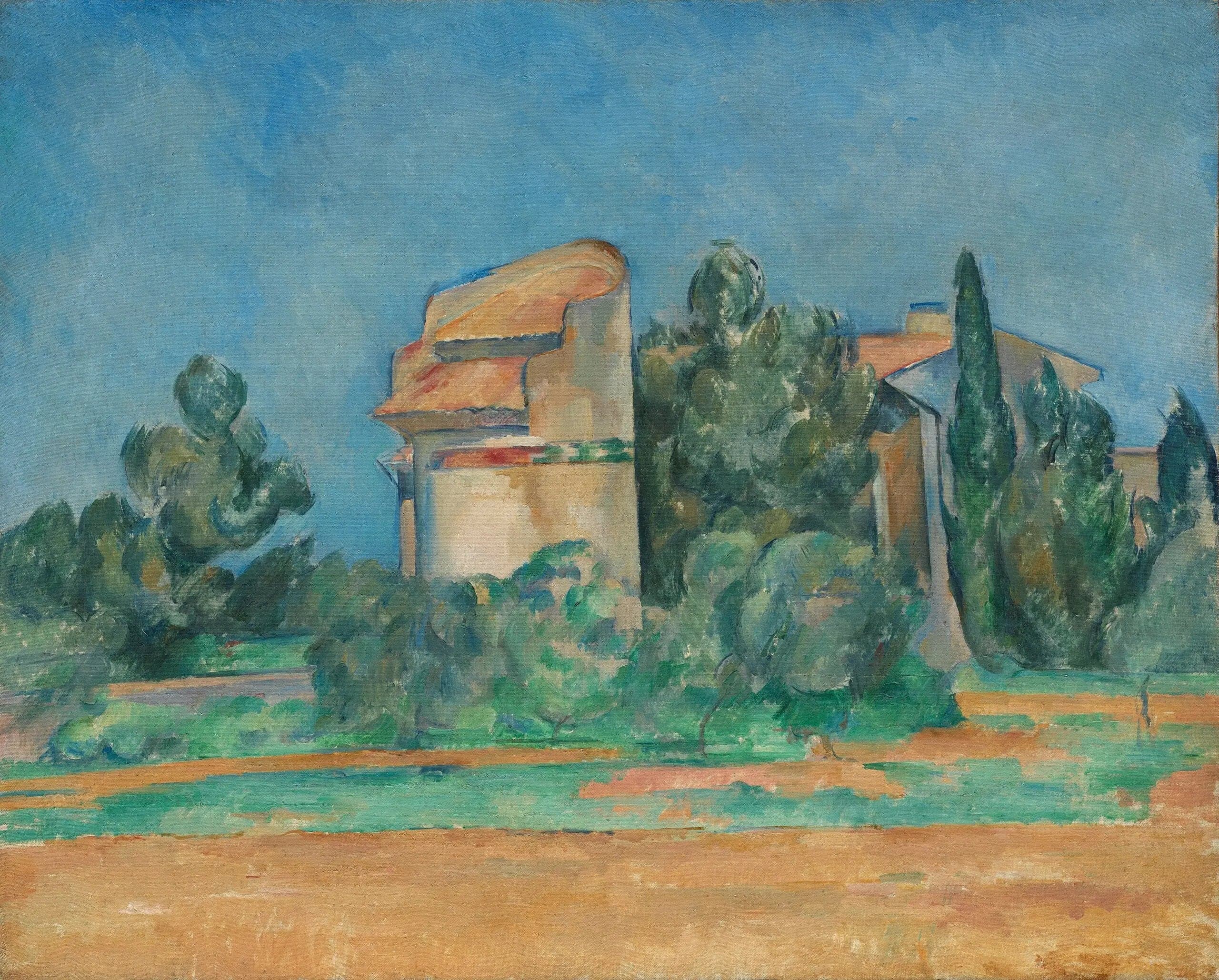
Pigeonnier of Bellevue
- Original dimensions
- 81.5 x 65.6 cm
- Museum
- Cleveland Museum of Art
- Year
- 1890
Scene depicted
This painting depicts a period dovecote, bathed in a tranquil atmosphere. The composition skillfully arranges geometric shapes, evoking a serenity that contrasts with the tumult of urban life. Cézanne depicts clean structures surrounded by a lush garden, where nature reclaims its rights in a peaceful dialogue with architecture.
Historical context
Created in 1890, in the heart of Provence, this painting brilliantly illustrates the Impressionist movement initiated by Cézanne. The painting, currently housed at the Cleveland Museum of Art , is an open window to a privileged moment in art history, where light and forms blend to give birth to an iconic pictorial work. The dimensions of this masterpiece make it a captivating focal point, inviting exploration of its fascinating details.
Place in the artist's career
“Pigeonnier de Bellevue” is part of a period of creative maturity for Cézanne, alongside works such as “The Large Bathers” and “Mont Sainte-Victoire.” This painting marks a turning point, where the artist's vision asserts itself, blending abstraction and reality in a personal and unprecedented way.
Anecdote
“Nature is my greatest teacher.” These words resonate through time, recalling the inspiration Cézanne found in his morning walks, where each ray of sunshine illuminated the landscapes. The painting “Pigeonnier de Bellevue” is a reflection of these fleeting moments, capturing the essence of a spring atmosphere bathed in soft light.