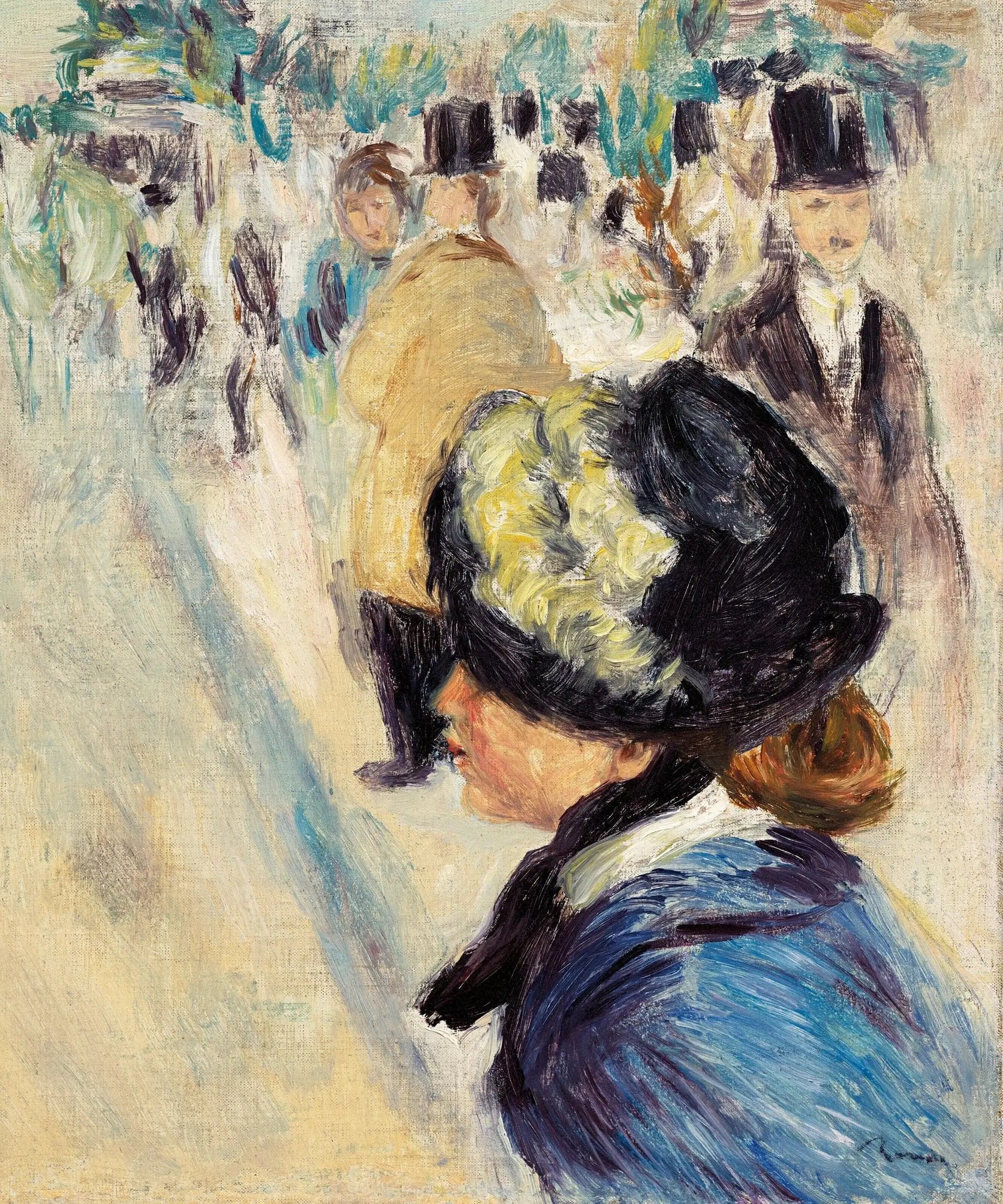
Pigalle Square - Pierre
- Original dimensions
- 25.5 x 32.7 cm
- Museum
- Not specified
- Year
- 1880
Scene depicted
In “La place Pigalle,” Renoir immerses us in the heart of a Parisian life scene, where conviviality and joy blend with the bursts of daylight. The characters, animated by the excitement of the moment, become bearers of stories. The painting evokes a melody of laughter and whispers, an invitation to savor the carefreeness of warm summer days.
Historical context
Created in 1880, during a vibrant Parisian summer, this painting offers an intimate glimpse into the popular place Pigalle, a crossroads of pleasure and flourishing art in Paris. This iconic painting is part of the Impressionist movement, where light and color reign supreme. The canvas reflects the lively life of the French capital, capturing the spirit of the time like no other and serving as a vehicle for an invaluable artistic heritage.
Place in the artist's career
This painting stands as a pivotal moment in Renoir's career, a turning point where his style asserts itself. In parallel, works such as “Luncheon of the Boating Party” and “Dance at Bougival” reveal the evolution of his Impressionist approach, skillfully blending vibrant compositions and lively narratives.
Anecdote
“Beauty lies in the ephemeral,” Renoir might have said, as he observed, one sunny morning, the dance of shadows and lights on the canvas . Through this painting , he captures not only the atmosphere of this place but also the evanescence of Parisian pleasures, a moment stolen from eternity.