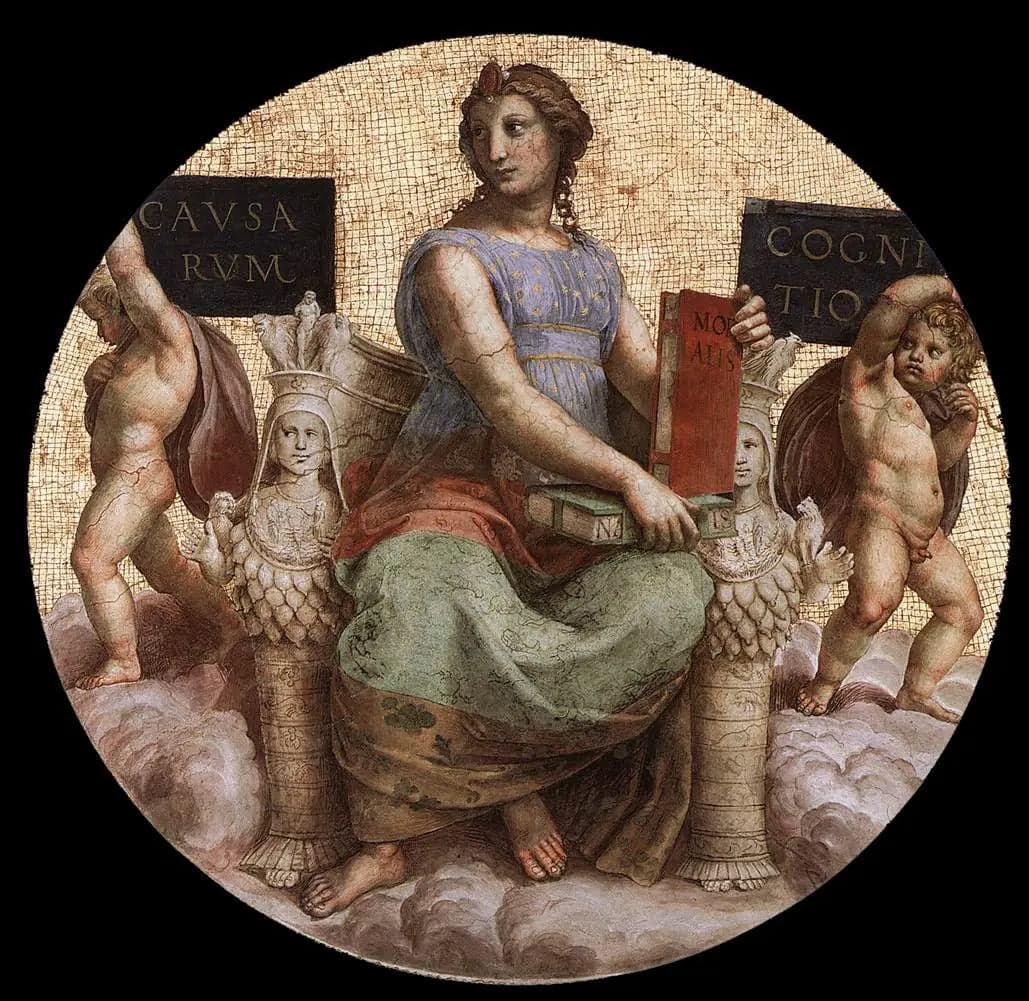
Philosophy
- Original dimensions
- 180 x 180 cm
- Movement
- High Renaissance
- Museum
- Vatican museums
- Year
- 1508
Scene depicted
In this pictorial work , Raphael brings together iconic figures of ancient thought and the Renaissance . Socrates, Plato, and Aristotle take center stage in a harmonious composition, discussing the nature of knowledge. This canvas illustrates idealism and humanism, challenging future generations to revisit philosophy as a living art.
Historical context
Created in 1508 in Rome, this painting is the perfect reflection of the cultural richness of the High Renaissance . It emerges from an environment where art, science, and philosophy merged. The canvas is now located in the Vatican museums , testifying to its historical and artistic importance. Its monumental dimensions make it a work that permeates space and spirit.
Place in the artist's career
This painting symbolizes a stylistic peak in Raphael 's career, marking a period of artistic maturity after his early forays. Alongside works such as "The Sistine Madonna" and "The School of Athens," we see a technical and emotional evolution that captures the genius of the master.
Anecdote
Raphael once said: "Art is the reflection of the soul, and every canvas I create is a window into the spirit of humanity." Imagine him, on a gentle spring morning, contemplating the Tiber, inspired by the facets of a vibrant intellectual life, laying the foundations for a masterpiece that transcends time.