Philosophy
- Original dimensions
- 111.76 x 200.66 cm
- Museum
- Museum of Fine Arts Boston
Scene depicted
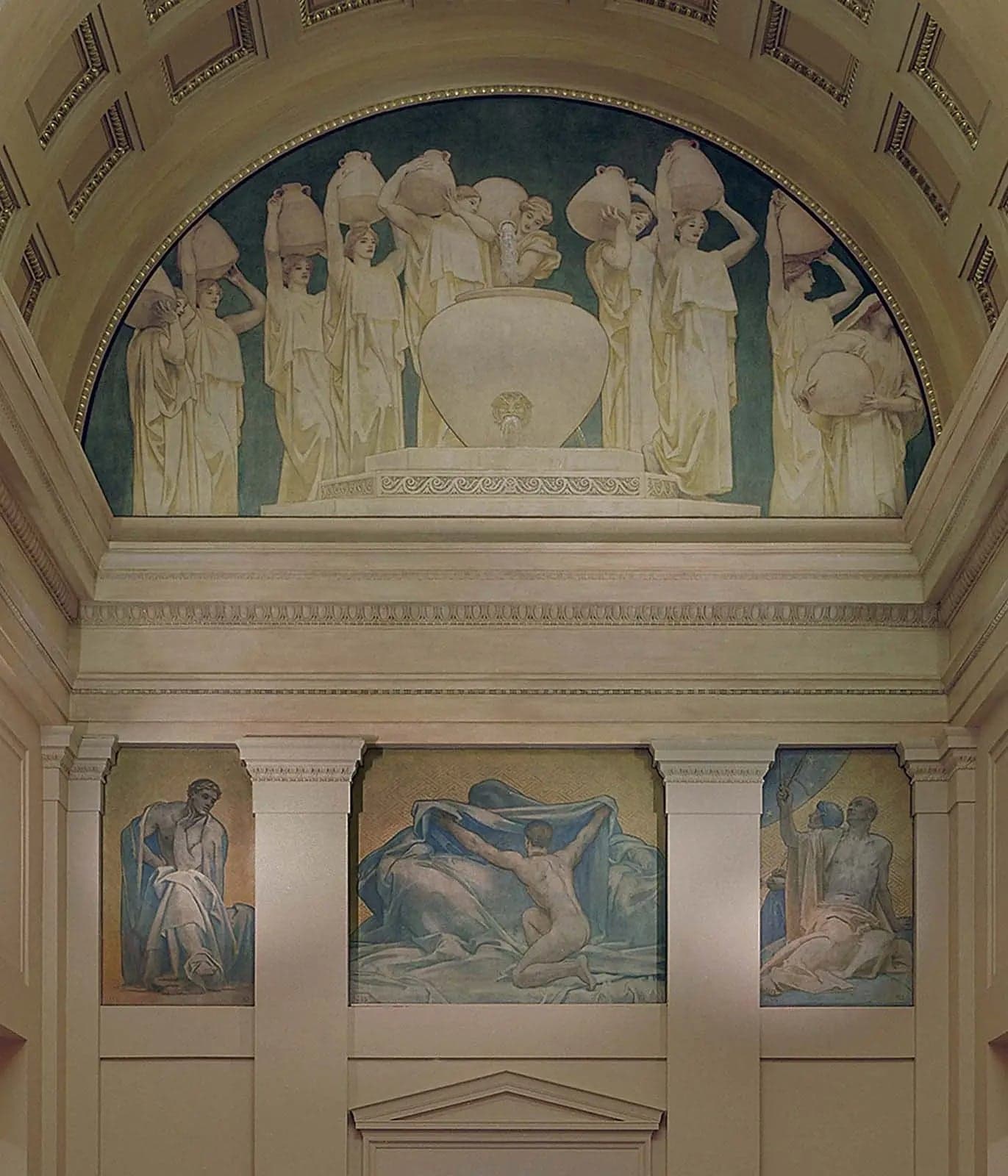
The canvas “Philosophy” depicts a gathering of intellectuals, immersed in heated discussions. Each character, representing a facet of knowledge, is skillfully arranged, creating a dynamic that invites the viewer to ponder the debates that shake humanity. This canvas resonates with intellect, forcing reflection on knowledge and its power.
Historical context
Created at the end of the 19th century, in the vibrant city of Boston, this painting embodies the peak of the Impressionist movement, where politics and culture intertwined to give birth to an era of artistic renewal. Displayed at the Museum of Fine Arts Boston , this canvas measuring 111.76 x 200.66 cm brilliantly illustrates the quest for beauty and the depth of human thought, capturing a unique moment in the history of art.
Place in the artist's career
Positioned at a crossroads in the career of John Singer Sargent , “Philosophy” echoes his previous canvases such as “Carnation, Lily, Lily, Rose” and “Portrait of Madame X” — both milestones that showcase his phenomenal technical evolution, transitioning from striking realism to unprecedented expressive fluidity.
Anecdote
“Light is the soul of a composition ,” Sargent is said to have declared. This quote resonates particularly with the genesis of the masterpiece “Philosophy,” inspired by a sunny afternoon, where the reflection of rays on the walls adorned with books evokes an atmosphere of serenity and discovery. It is this moment of introspection that nourished the evocative power of the painting .