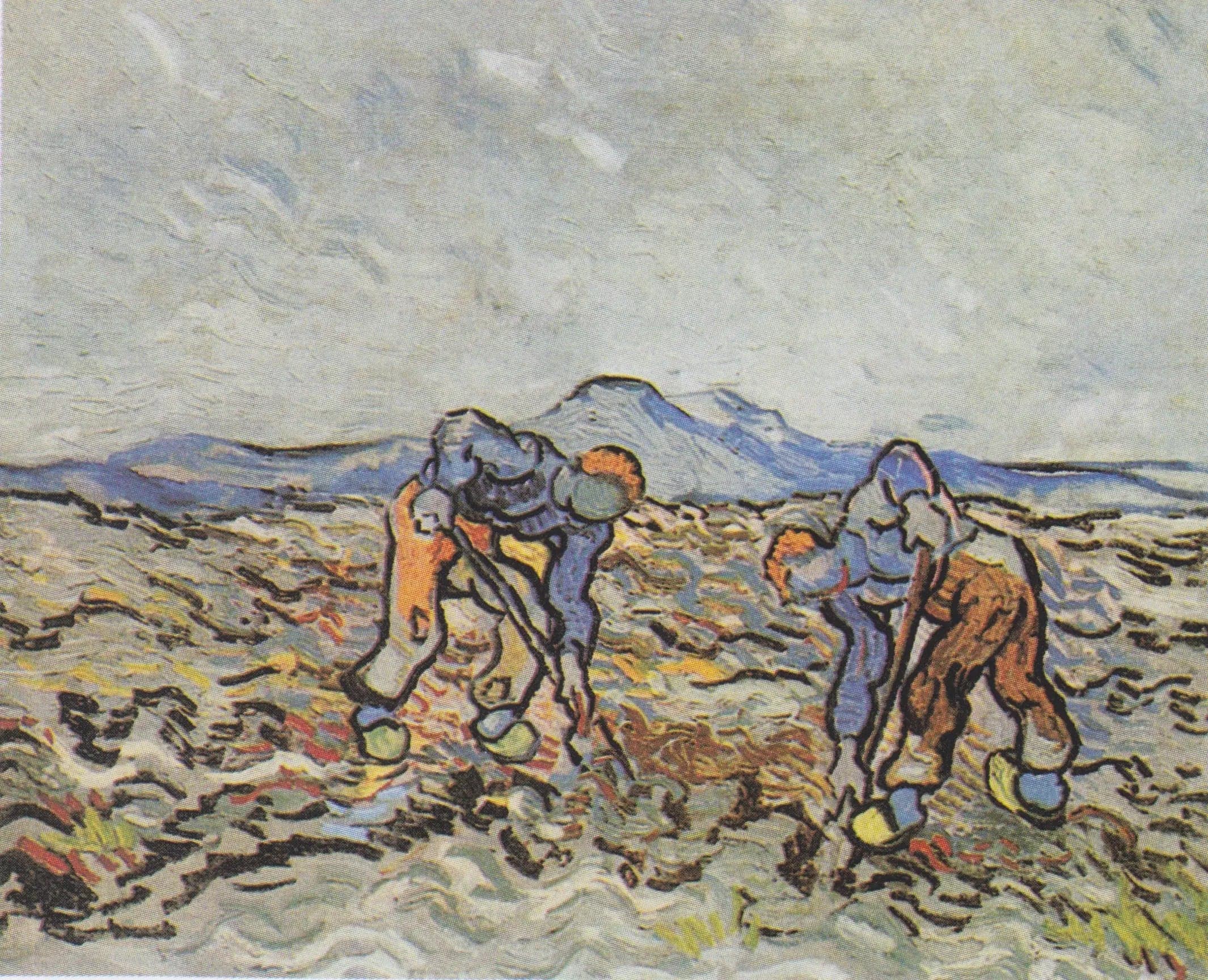
Peasants Gathering Potatoes
Scene depicted
In this pictorial work , the characters are depicted in full action, bending reverently to harvest the fruits of their labor. The scene portrays a harmony between man and nature, a silent dance where each gesture is laden with meaning and effort. The attention to detail highlights the dignity and tenacity of the peasants, defying the whims of agricultural life.
Historical context
Created in 1890, in Saint-Rémy-de-Provence , this painting is emblematic of the post-impressionist movement. Immersed in a rich historical context, this canvas reflects rural life and the peasant spirit at a time when art began to move away from academic conventions. Currently, the painting is held in an unspecified collection. Its dimensions, measuring 40.5 x 32 cm, give it an intimate and comforting presence.
Place in the artist's career
This painting marks a turning point in Van Gogh's career, illustrating his evolution towards a more authentic representation of human feelings through landscapes and daily life. In parallel, other paintings such as " The Starry Night " and " The Sunflowers " testify to an increasingly advanced technique and a sensitivity to light and color, revealing invaluable artistic maturity.
Anecdote
Vincent van Gogh once stated: “Nature does not simply reproduce, it produces.” This profound reflection is palpable in his masterpiece , one spring morning in Saint-Rémy, where the artist was inspired by the warm color of the sun illuminating the potato fields. This ephemeral moment became an ode to the laborious simplicity of the men of the earth.