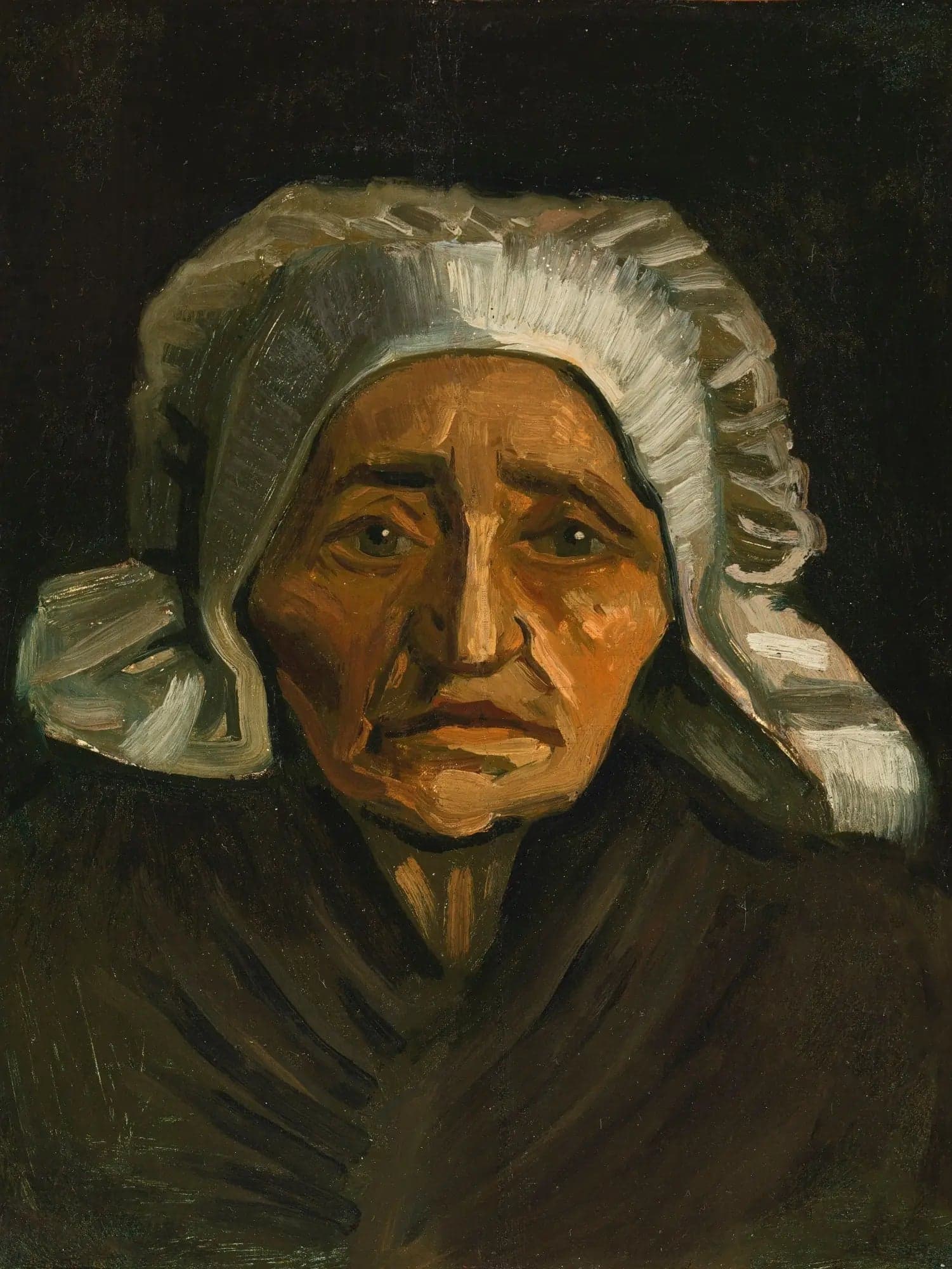
Peasant Woman's Head with White Cap
Scene depicted
This canvas captures the dignity and simplicity of a peasant woman, frozen in a moment of contemplation. The composition of the painting reveals features imbued with wisdom and serenity, while highlighting the striking contrast between the white of the headdress and the natural tones of the face. This portrait tells a story of labor and resilience, reminding us of the lives of humble agricultural workers of the time.
Historical context
Created in 1884, this painting emanates from Nuenen , a village in the Netherlands, emblematic of the artistic movement of realism . It is in this peaceful setting that Vincent van Gogh captured the essence of rural life. To this day, the canvas is not located in a specified museum, but its aura continues to fascinate art lovers. The dimensions of this pictorial work are 26.04 x 33.66 cm.
Place in the artist's career
Tête de paysanne à la coiffe blanche is part of a period of maturity for Van Gogh, where he explores the authentic representation of peasants. Alongside his other works like La Grange and The Potato Eaters , this canvas bears witness to a stylistic evolution towards greater emotional depth, marking the promising beginnings of his unique artistic expression.
Anecdote
“Beauty lies in the simplicity of every face encountered,” said Van Gogh one sunny morning. As he walked through the alleys of Nuenen , his gaze stopped on a peasant woman, her dazzling white headdress shining in the sun. This encounter inspired him to immortalize this touching moment in his masterpiece , Tête de paysanne à la coiffe blanche.