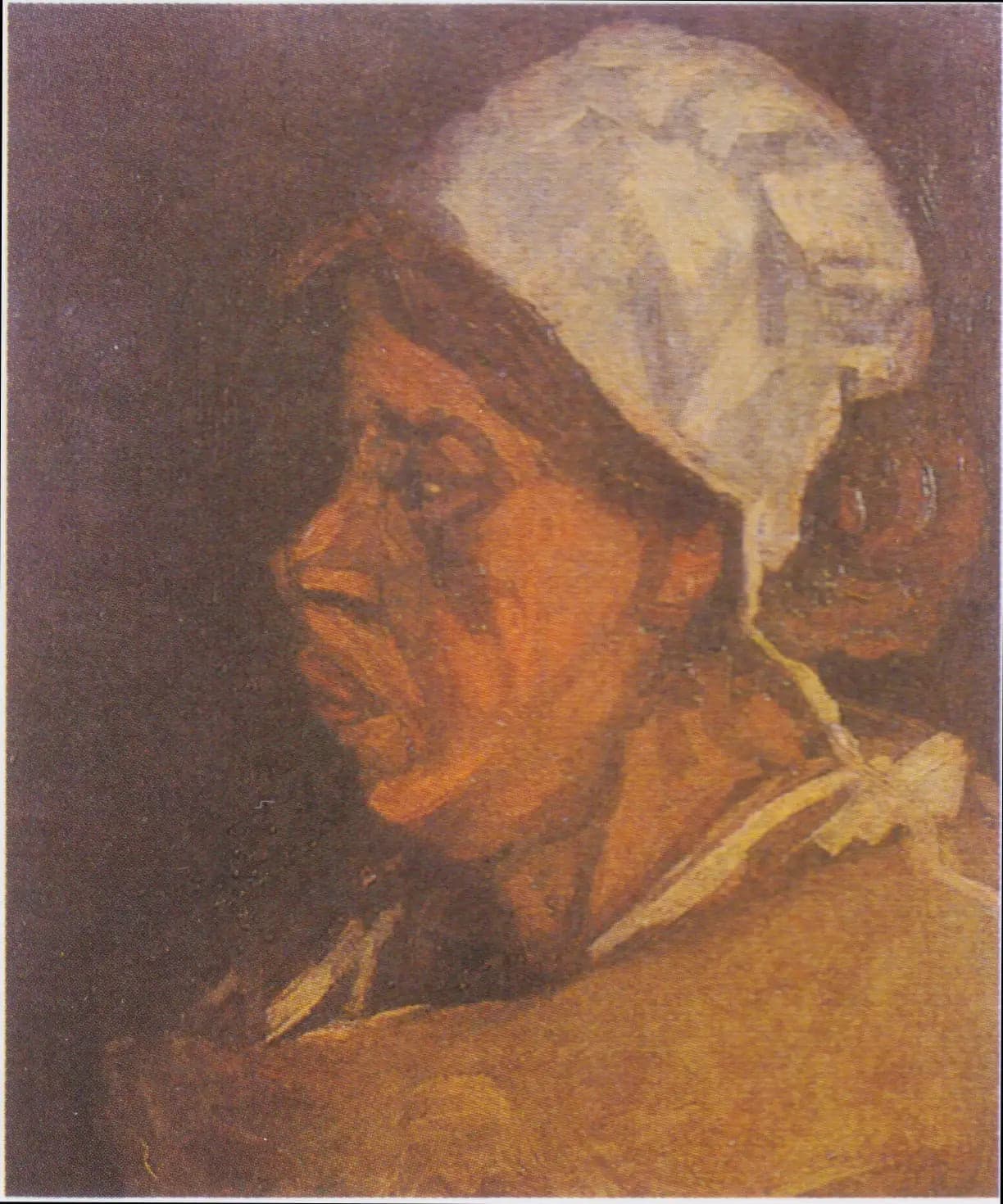
Peasant Woman's Head with White Bonnet
Scene depicted
The canvas “Tête de paysanne au bonnet blanc” captures the serenity and inner strength of a woman, revealing the details of a face marked by labor and resilience. Her frail silhouette is framed by a bonnet that evokes her origins and daily life. The simplicity of the subject is sublimated by the intense gaze she carries, reminding us of the humanity hidden behind every face of those who cultivate the land.
Historical context
Written in 1885, the painting “Tête de paysanne au bonnet blanc” is the result of a significant era, the time of great artistic upheavals in Europe. Created in Nuenen , a village in the Netherlands, this work is emblematic of the post-impressionist movement of which Van Gogh is one of the pioneers. Today, this canvas is preserved at the Woodone Museum of Art , offering a window into the simple and profound soul of 19th-century peasants. Its dimensions of 35 x 41 cm testify to the intimacy of the scene depicted.
Place in the artist's career
This painting marks a significant milestone early in Van Gogh's career, where he explores themes of rural life. Compared to “ The Potato Eaters ” and “ Starry Night ”, we observe an evolution in his technique, moving from a realistic representation to a more expressive and emotional approach. This work foreshadows the great compositions that will follow, laying the groundwork for his inimitable style.
Anecdote
“True art lies in the ability to see beauty in simplicity.” This thought, resonant in Van Gogh's soul, took shape one morning when he crossed the gaze of a peasant woman in a white bonnet. Illuminated by the golden morning light, this fleeting moment awakened in him a deep admiration for the dignity of the humble, a source of inspiration for this masterpiece .