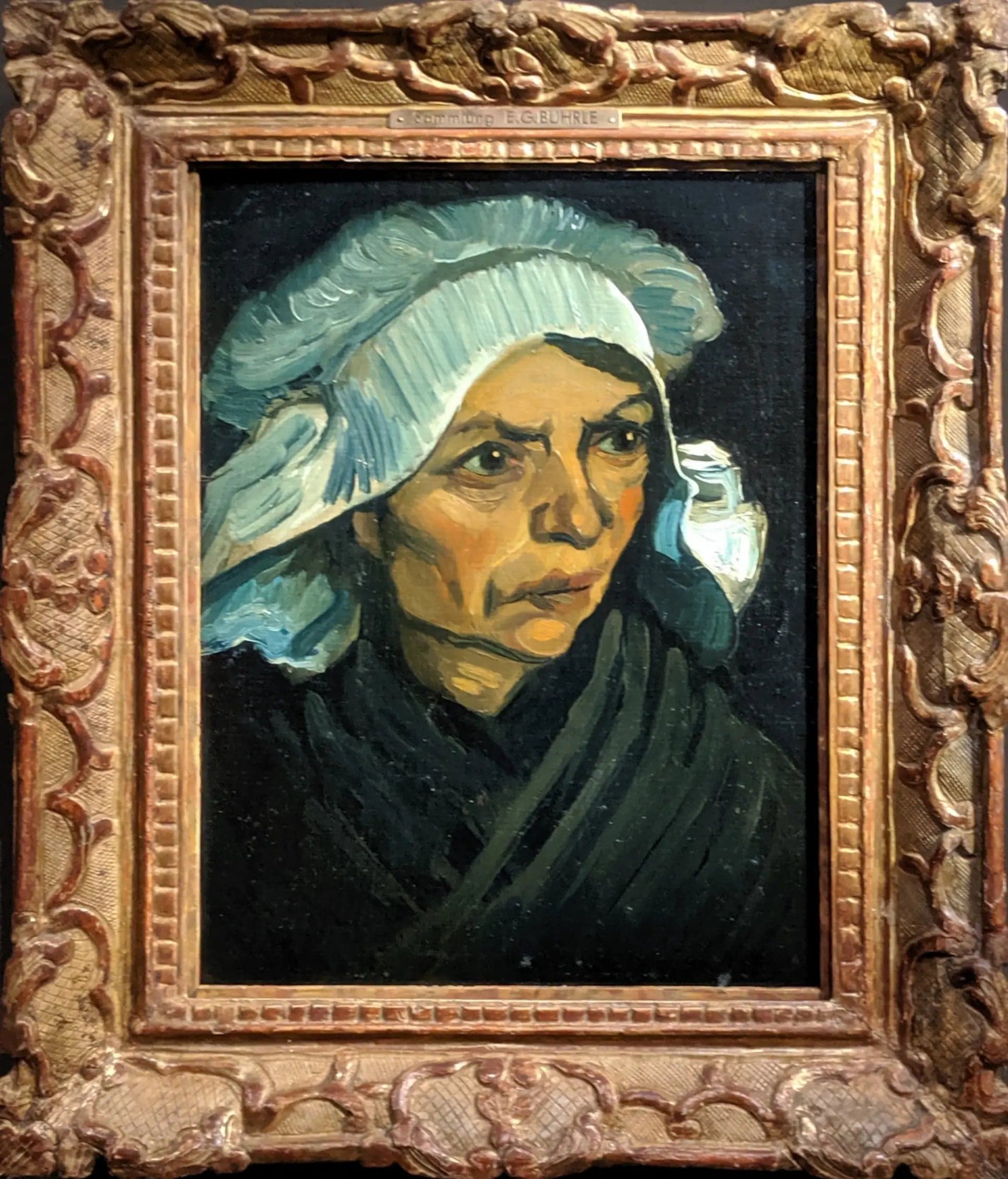
Peasant Woman's Head with White Bonnet
Scene depicted
The painting "Tête de paysanne au bonnet blanc" depicts a striking portrait of a peasant woman wearing a white bonnet, a symbol of her daily labor. The work transcends the simple portrait by offering a glimpse into resilient humanity, marked by the toil of the land and endurance in the face of life's challenges. With a rich and vibrant palette, Van Gogh manages to establish a silent dialogue between the model and the viewer.
Historical context
Created in 1885, this work is the result of the passionate spirit of Vincent van Gogh , in the peaceful region of Nuenen , in the Netherlands. This painting , rooted in the post-impressionist movement, reflects the struggles and hopes of 19th-century peasants. Currently, this canvas is preserved at the Emil G. Bührle Foundation and Collection , where it awakens admiration from visitors around the world. With dimensions of 31.5 x 41 cm, this canvas transcends time and space.
Place in the artist's career
"Tête de paysanne au bonnet blanc" marks an important milestone in Van Gogh's career, symbolizing a shift towards a more emotional and expressive approach. Compared to works such as " The Potato Eaters " and " The Starry Night ", this painting demonstrates the artistic journey towards mastering color and composition, thus translating the artist's deep and personal feelings.
Anecdote
In a moment of pure inspiration, Van Gogh reportedly said: "The beauty of the soul lies in the simplicity of daily gestures." This quote resonates deeply in the evocative power of the painting "Tête de paysanne au bonnet blanc," where each brushstroke captures the essence of a humble life, one spring morning when the light plays on the features of a familiar face.