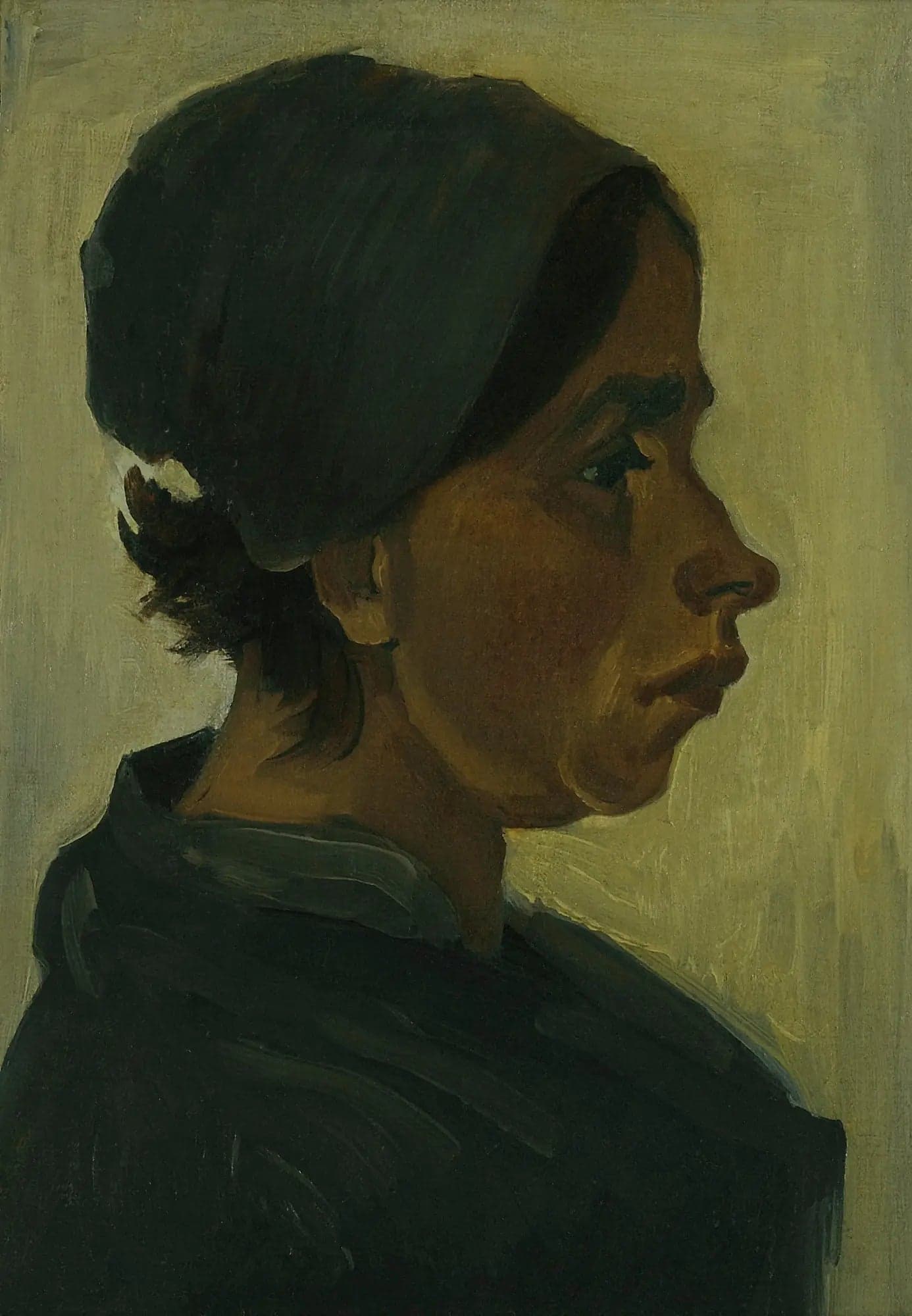
Peasant Woman's Head with Black Bonnet
Scene depicted
The painting “Tête de paysanne au bonnet noir” depicts a woman with a face imbued with silent wisdom, using her black bonnet to unveil her daily life. The gaze of this heroine of the land, filled with labor and hope, captures the essence of a modestly dreamed life, where each wrinkle tells a story. Through this painting, Van Gogh offers us an insistent look at the often-forgotten lives of peasants.
Historical context
Created in 1884 in Nuenen , this painting is emblematic of the artistic movement of realism , a period when artists sought to capture everyday life with precision and authenticity. This canvas , currently exhibited at the North Brabant Museum , measures 30 x 39.5 cm. At that time, Vincent van Gogh was immersed in rural life, seeking to represent the hardworking souls he encountered.
Place in the artist's career
This canvas is situated in Van Gogh's creative maturity, marking a turning point where his themes begin to focus on the workers of the land. In parallel with his other works such as “ The Potato Eaters ” and “ Self-Portrait ”, this composition reflects his evolution towards a more emotional and introspective quest.
Anecdote
“I seek to see not only beauty but also the pain that life imposes,” Van Gogh might have said while painting this masterpiece . Inspired by the face of a peasant woman he met in the early morning, this moment of encounter marked the emergence of a strong connection between the artist and his subject, revealing a raw and profound humanity through the canvas .