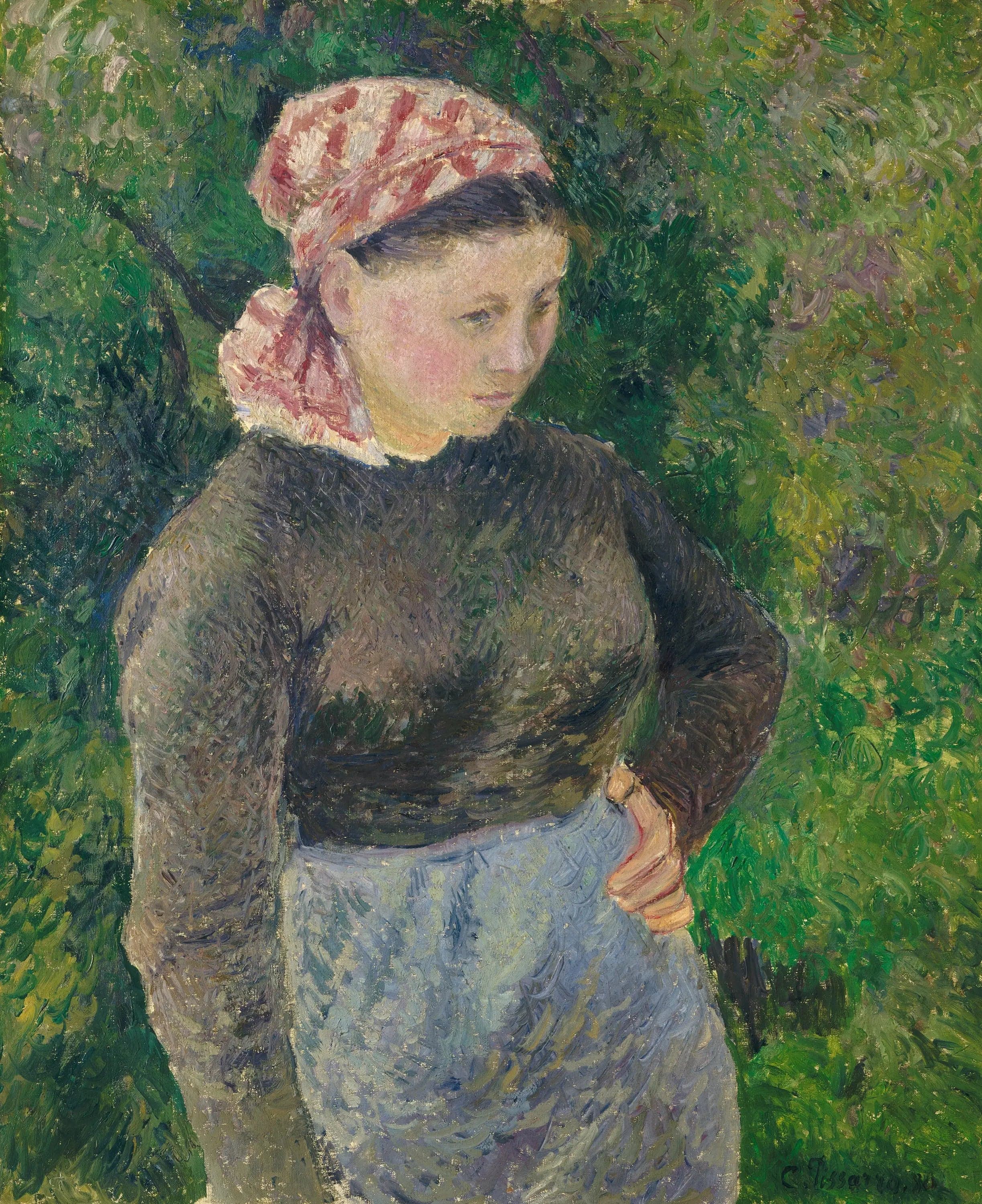
Peasant Woman
- Original dimensions
- 60.4 x 73 cm
- Museum
- National Gallery of Art
- Year
- 1880
Scene depicted
On the canvas, a peasant is busy in a rural landscape, illustrating the beauty of hard work and the harmony between man and nature. The composition reveals the rhythms of a simple life, marked by the seasons. Here, each brushstroke contributes to the story of this daily life, capturing the tranquility of moments passed.
Historical context
Created in 1880, this painting emblematic of Camille Pissarro is part of the Impressionist movement, an artistic current that radically transformed the way light and color are perceived on canvas. This canvas is now located at the National Gallery of Art in Washington D.C., where it continues to inspire visitors with its authenticity and depth.
Place in the artist's career
Considered a milestone in Pissarro's career, this painting represents his artistic maturity. Between The Harvest of Apples and The Gardens of the City Hall, Paris , “Peasant” illustrates the evolution of his style towards increased brightness and palpable human sensitivity.
Anecdote
“Every day, art reveals itself in the simplicity of nature.” In this regard, Pissarro captured the essence of a peasant at work in a field, lost in her thoughts, while a gentle ray of sunshine bathes her, creating a peaceful atmosphere. This painting embodies his commitment to immortalizing scenes of everyday life.