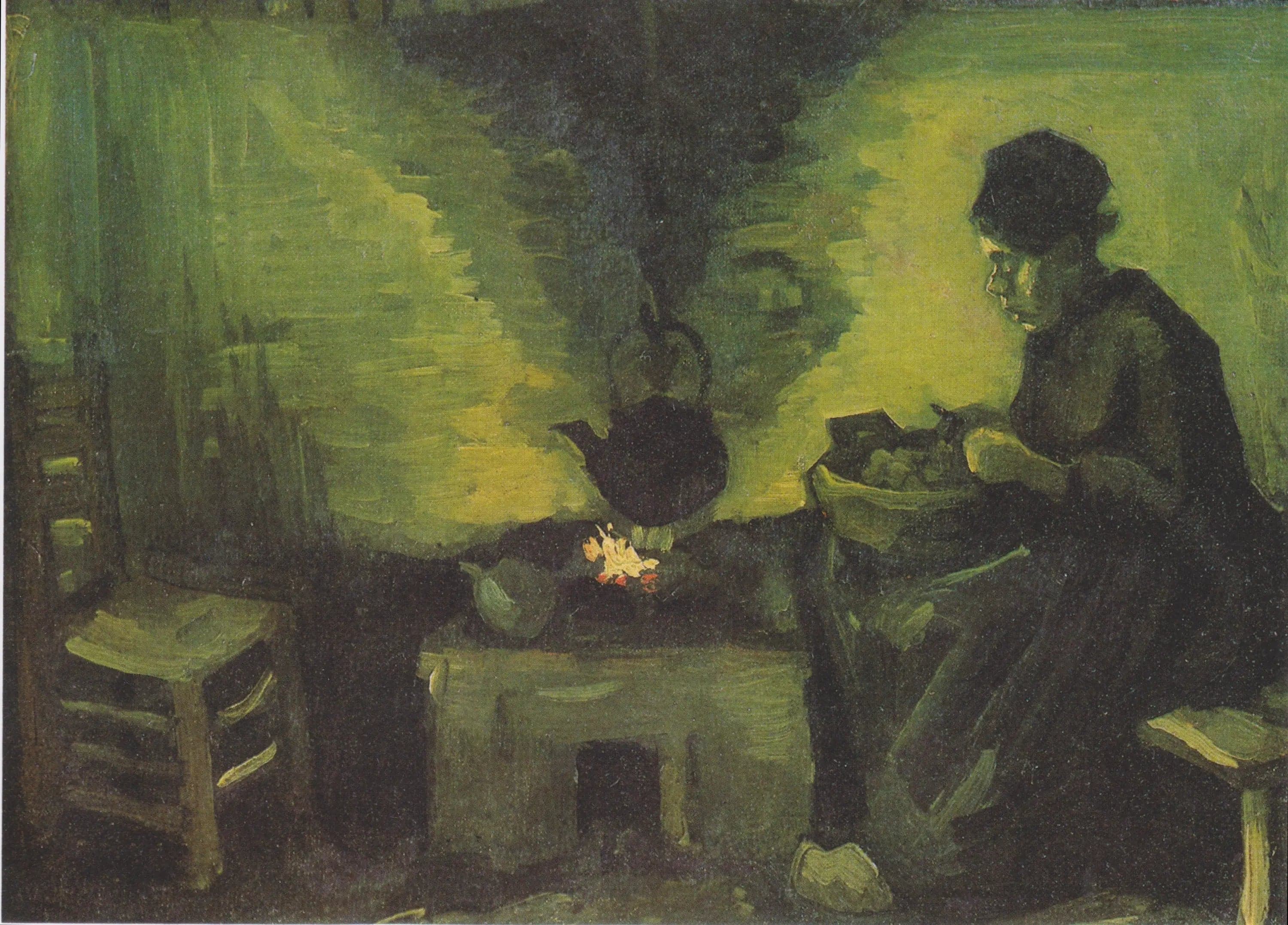
Peasant Woman by the Hearth
Scene depicted
In the painting Peasant by the Hearth , Vincent van Gogh depicts the daily life of a housewife, absorbed in a moment of contemplation by the fire. The composition reveals the intimacy of rural life, where shadows and light interact to create a warm and human atmosphere, conjuring sensations of comfort and refuge.
Historical context
Created in 1885 in Nuenen , the painting titled Peasant by the Hearth is part of the post-impressionist movement, characterizing a time when Vincent van Gogh explored the nuances of rural life. Currently, this canvas is preserved at the Orsay Museum in Paris , and measures 40 x 29.5 cm.
Place in the artist's career
Peasant by the Hearth represents a pivotal period in Van Gogh's career, marking his transition to a more intense and personal expression. Alongside works such as The Potato Eaters , this painting testifies to his deep attachment to peasant life and his technical evolution towards rich and vibrant color.
Anecdote
Van Gogh used to say: “Light is essential to life, it reveals the beauty of simple things.” He found his inspiration on a sunny spring morning when he saw a peasant woman sitting by the fire, warming her spirit by the soft glow of the hearth. This emotion is intensely reflected in the evocative power of the painting .