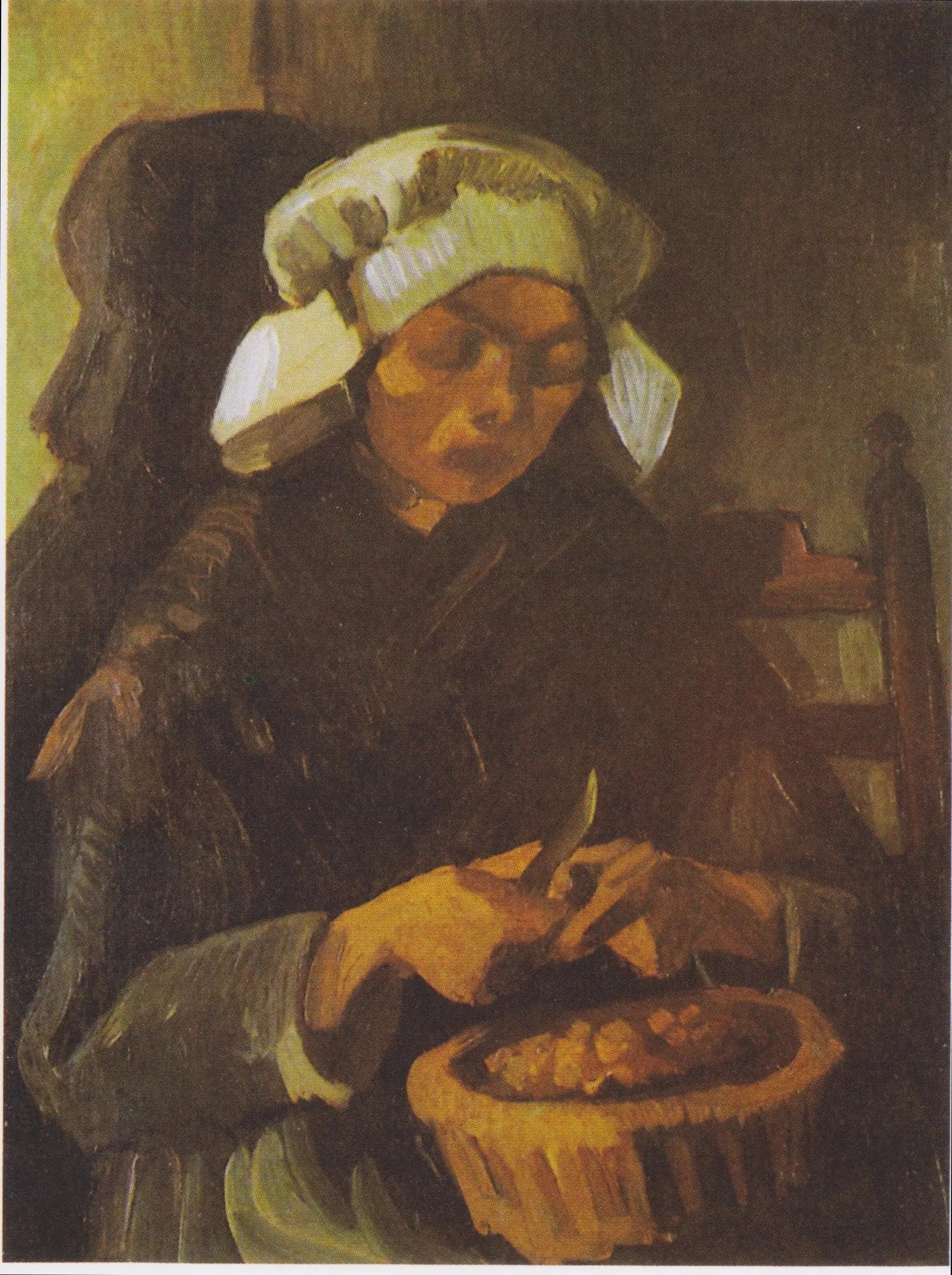
Peasant peeling potatoes
Scene depicted
This canvas materializes a rural scene imbued with humanity and simplicity. We see a peasant woman, focused on her task, absorbed in the repetitive movement of her gestures. Her expression evokes both the fatigue of labor and the pride of work accomplished, paying tribute to the lives of 19th-century peasants. The simplicity of this pictorial work makes it an exemplary masterpiece of the representation of daily life.
Historical context
Created in 1885, in the charming town of Nuenen , this painting is part of the post-impressionist movement. It draws from van Gogh's perspective on rural life and the labor of peasants, a period when the artist finds inspiration at the heart of nature and the people around him. The canvas , depicting a simple yet poignant daily scene, remains to this day in somewhat unclear collections, adding to its artistic mystery. Its modest dimensions of 31 x 43 cm highlight the intimacy of the work.
Place in the artist's career
The painting “Peasant Peeling Potatoes” marks a turning point in van Gogh's career. Situated at a time when the artist begins to develop his distinctive style, it compares perfectly to other works such as “ The Starry Night ” and “ The Sunflowers ”, where one can already feel an emotional pulse within each brushstroke.
Anecdote
“The light of a simple daily gesture can reveal so much beauty” could have been said by Vincent van Gogh . It was on a peaceful morning, immersed in the gentle sounds of nature, that the artist captured this scene of a peasant woman, revealing a silent strength in her daily act of peeling. This emulation of tenderness and labor becomes a true evocative force in the painting “Peasant Peeling Potatoes”.