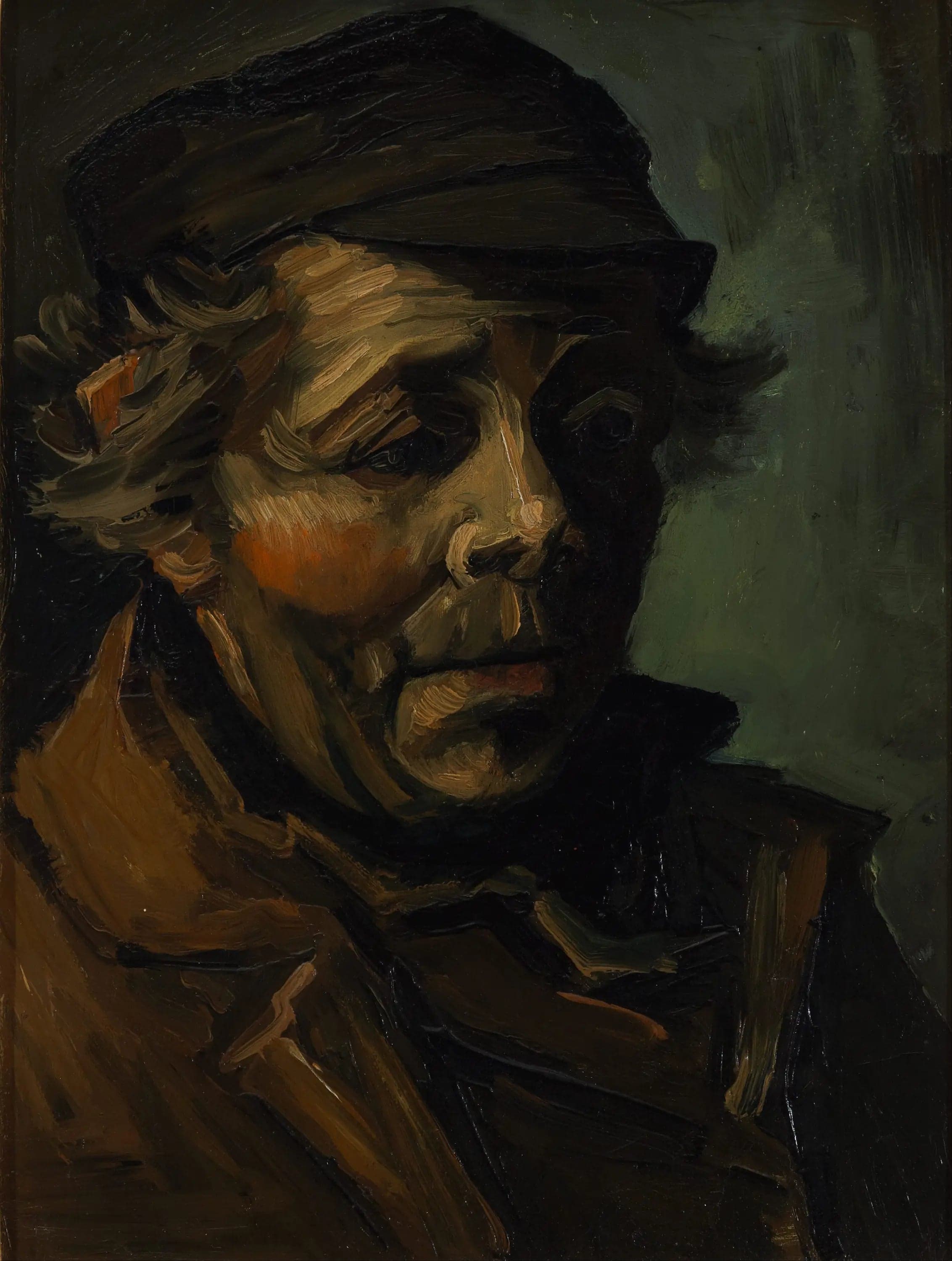
Peasant Head
Scene depicted
In this painting , Vincent van Gogh immortalizes a peasant whose marked features tell the stories of labor and resilience. The composition unfolds with a poignant simplicity, the face of the peasant, bright and expressive, conveying both fatigue and a certain dignity. Each brushstroke resonates with the soul of those who work, highlighting the beauty of rural life.
Historical context
Created in 1884, this painting emblematic comes from Nuenen , a picturesque village in the Netherlands, a time when Vincent van Gogh immerses himself in the values of realism . Peasant Head, representing the labor of farmers, is part of a movement that celebrates simple and authentic lives. Currently, the canvas is located at the Art Gallery of New South Wales , measuring 30.2 x 39.4 cm and testifying to a time of artistic transformation.
Place in the artist's career
Peasant Head is part of a period of maturity for Van Gogh, where he begins to explore a vibrant palette and bolder compositions. Contrasted with The Starry Night and The Sunflowers , this painting illustrates an evolution towards a deeper representation of humanity, highlighting the brutality and beauty of ordinary existences.
Anecdote
Vincent van Gogh once stated: “The painting must speak to the heart.” He finds inspiration on a cool morning when he crosses the face of a peasant in the depths of the fields, and this gives birth to this masterpiece . Peasant Head is an invitation to dive into the laborious soul of a man, capturing authenticity through a canvas vibrant with life.