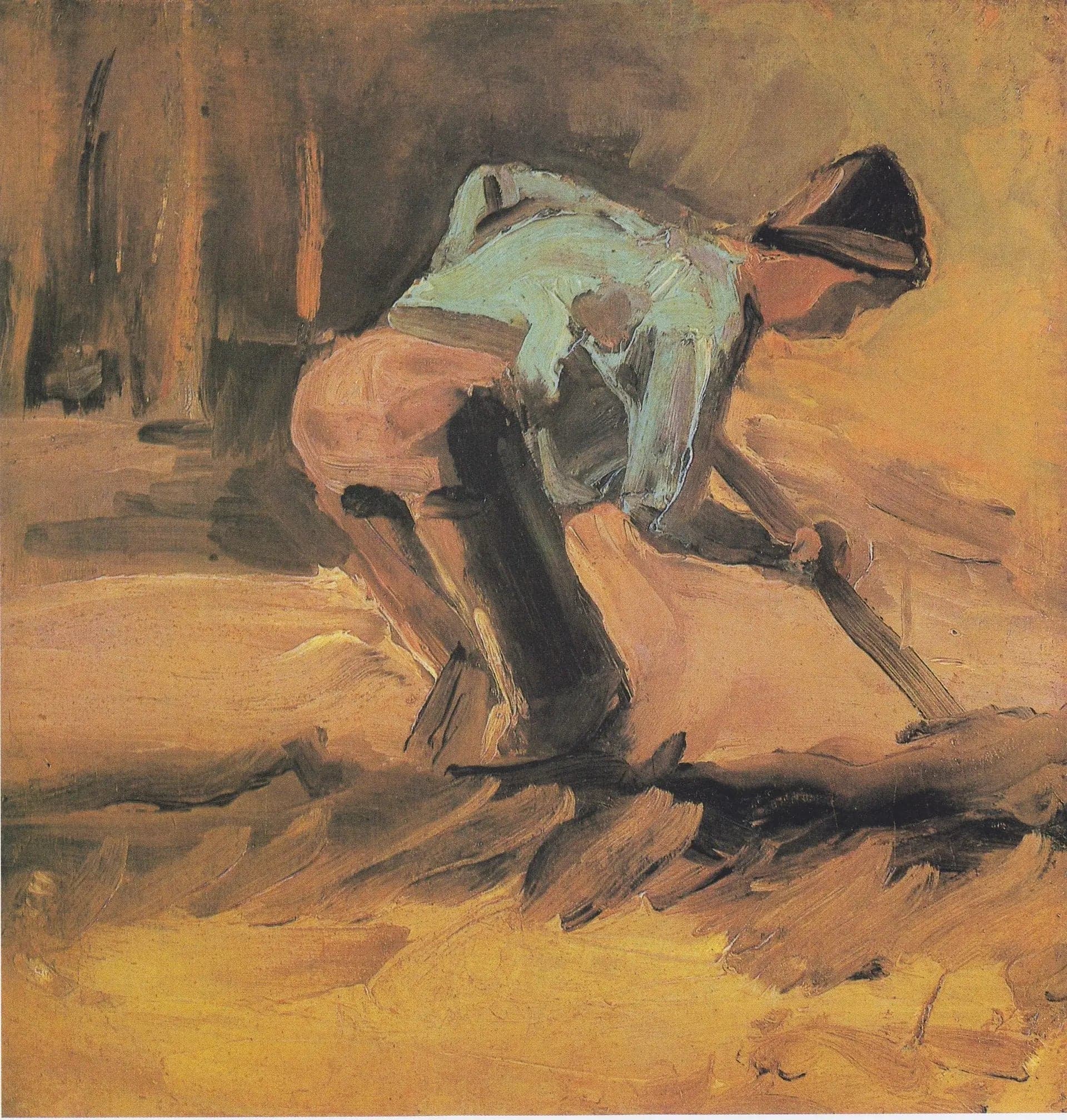
Peasant Digging
- Original dimensions
- 29.5 x 31 cm
- Museum
- private collection
- Year
- 1882
Scene depicted
In this pictorial work, a peasant bent over his labor embodies the hard work of the land. The graceful movement of his shovel depicts a harmony between man and nature. Van Gogh captures a scene imbued with simplicity and dignity, where each brushstroke articulates a story of resilience in daily life. This representation is a tribute to rural life, its slow rhythm, and its modest pleasures.
Historical context
This painting is emblematic, created in the year 1882 in the charming city of The Hague, and is part of the post-impressionist movement that will mark the career of Vincent van Gogh . Emerging from an artistic context of experimentation and emotion, this canvas perfectly summarizes the social concerns of its time. Currently preserved in a private collection, this masterpiece resonates deeply with art lovers.
Place in the artist's career
The masterpiece of van Gogh, "Peasant Digging," marks a crucial milestone in his artistic journey. This painting, created early in his career, foreshadows more mature works like " The Potato Eaters " and " The Starry Night ". It testifies to the stylistic evolution of the master, combining raw emotion and bold technique in his quest for authenticity.
Anecdote
"In every grain of soil, I saw the beauty of hard work." Such could have been the expression of the great master as he drew inspiration from the daily life of peasants. This canvas was born from a peaceful morning, where the sweet song of birds and the earthy smell of seeded fields fertilized his imagination. The echo of this connection to nature is found in the evocative strength of the painting .