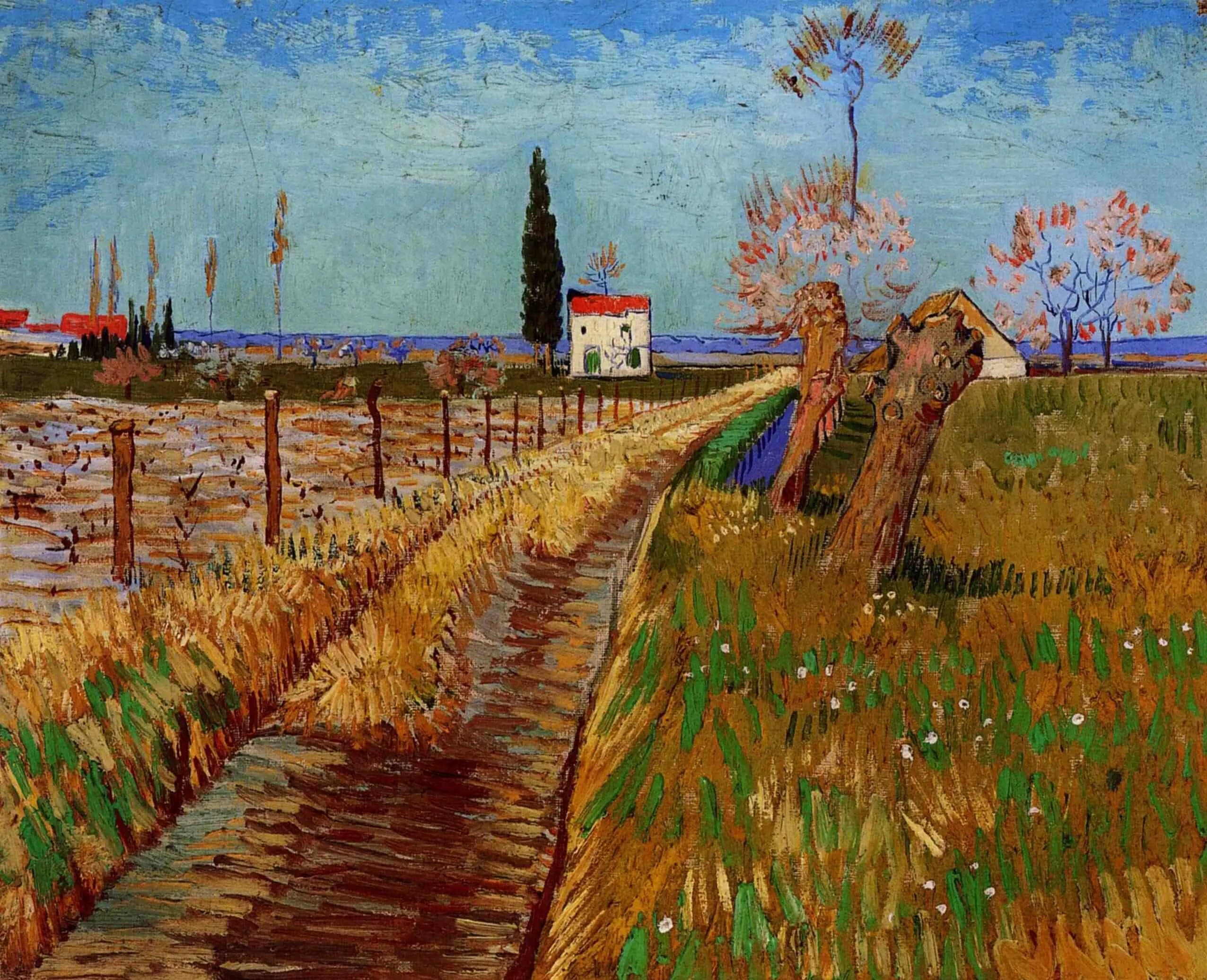
Path through a Field of Willows
- Original dimensions
- 38.5 x 31 cm
- Museum
- Switzerland
- Year
- 1888
Scene depicted
This painting unfolds a striking scene where a winding path is flanked by majestic willows, their heavy branches almost brushing the ground. The play of light and shadow, so dear to van Gogh, creates an atmosphere imbued with tranquility and contemplation. The winding path invites discovery, suggesting a promise of serenity immersed in nature.
Historical context
Created in 1888, this iconic painting , signed by the master Post-Impressionist Vincent van Gogh , comes to life in the charming town of Arles , in the south of France. During this period, van Gogh explores his passion for light and nature, while being part of the artistic movement of Post-Impressionism . Today, this painting is housed in a museum in Switzerland, preserving the legacy of this pictorial work.
Place in the artist's career
This work, during the creative period of Vincent van Gogh, represents a crucial moment in his career. At this time, he begins to master the nuances of color and the dynamics of light. Compared to paintings such as The Starry Night and The Sunflowers , this painting illustrates his transition to a deeper and more emotional expression, paving the way for his future masterpieces.
Anecdote
“Nature is eternal, and each brushstroke is an embrace of the soul,” van Gogh said as he stood, absorbed by the landscape, at the edge of this rural path. It was on a spring morning in Arles , where the song of the birds rivaled the softness of a gentle breeze; the artist draws his inspiration from this harmony, bringing to life a masterpiece that still resonates today.