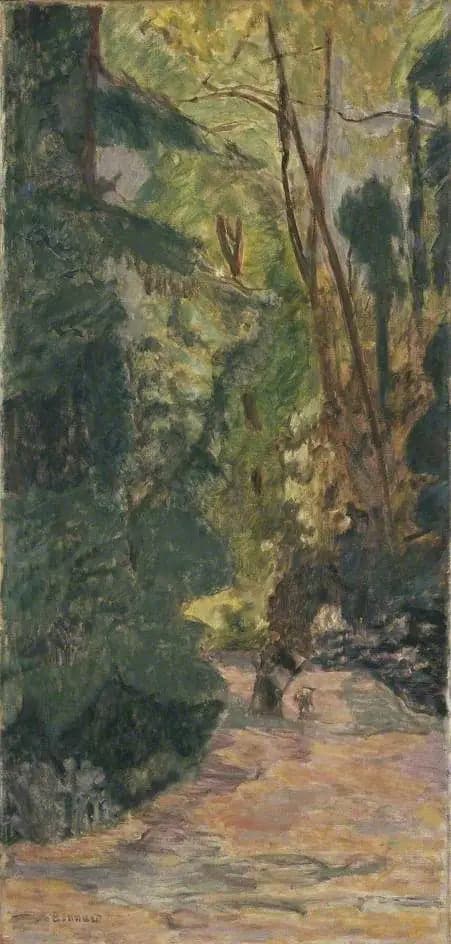
Path in the Forest
- Original dimensions
- 41.5 x 86 cm
- Museum
- Ashmolean Museum
- Year
- 1919
Scene depicted
In this painting , Pierre Bonnard transports us to a forest path imbued with serenity. The dance of the foliage in the wind, the play of shadows and light on the leaf-covered ground create an atmosphere that is both soothing and vibrant. This painting captures the very essence of a walk in the woods, offering an almost dreamlike representation of nature where every detail resonates with the softness of the world.
Historical context
Created in 1919, this majestic painting is set in the post-impressionist context, at a time when Bonnard explores intimate themes. The work, now preserved at the Ashmolean Museum in Oxford, England, testifies to its era where light and color become the protagonists of a delicate composition . Nature, omnipresent in his works, reveals itself here with unmatched elegance through dimensions that invite escape.
Place in the artist's career
“Path in the Forest” is situated at a crucial turning point in Bonnard's career, marked by his desire to merge intimacy and nature. Alongside “The Nude with White Flowers” and “The Terrace at Vernon,” this canvas marks a maturity in his style. A significant evolution is perceived, moving from more figurative works to compositions heavily influenced by light and subjective emotions.
Anecdote
“Art is a path of light, an invitation to feel.” This quote could well summarize the essence of Bonnard, who, during a morning walk on the hillside, found his inspiration for this canvas . The gentle whispers of nature, the scent of blooming flowers, and the song of birds contributed to the awakening of emotions that shine through in this masterpiece .