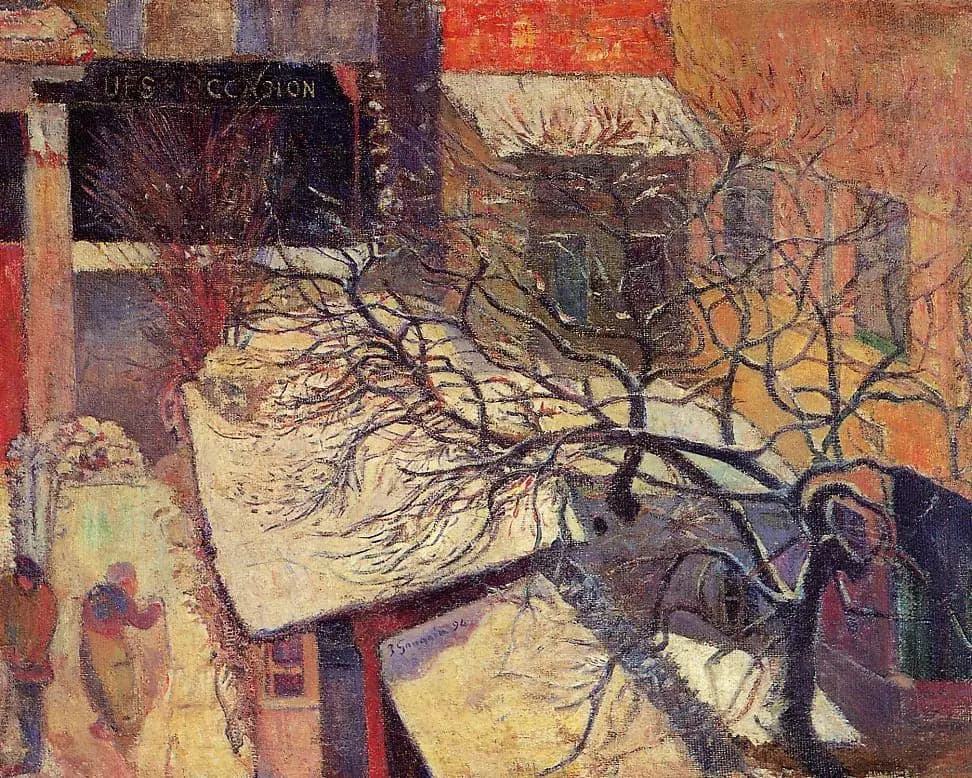
Paris Under the Snow
- Original dimensions
- 88 x 72 cm
- Museum
- Van Gogh museum
- Year
- 1894
Scene depicted
The painting "Paris under the snow" transports the viewer to a tranquil scene where flakes of soft, powdery snow embrace the cobblestones and rooftops of Paris. The magic of the diffused lights in this wintry atmosphere evokes a silent melody, where every detail, from familiar silhouettes to illuminated windows, tells a story of life hidden behind each door.
Historical context
Created in 1894, the painting "Paris under the snow" finds its roots in the Belle Époque, at a time when the French capital was in full artistic effervescence. Paul Gauguin , an iconic figure of post-impressionism , depicts here a winter scene imbued with poetry. Today, this enchanting canvas is preserved at the Van Gogh museum , an art sanctuary located in Amsterdam. With its dimensions of 88 x 72 cm, it stands out in the history of art for its unique approach to light and color.
Place in the artist's career
This canvas illustrates a pivotal phase in the career of Paul Gauguin . As he establishes himself as a pioneer of post-impressionism , "Paris under the snow" is positioned among other significant works, such as "The Viewing" and "The Spirituals," each reflecting his technical evolution. This masterpiece reveals the contemplative and emotional aspect that will mark the rest of his work.
Anecdote
“The snow transforms the city into a living painting, offering a moment of serenity amidst urban turmoil.” This quote from Gauguin perfectly summarizes his inspiration for this pictorial work . While wandering the Parisian alleys on a cold winter morning, he captured a fleeting moment, where the immaculate whiteness of the snow seemed to soothe the clamor of the city.