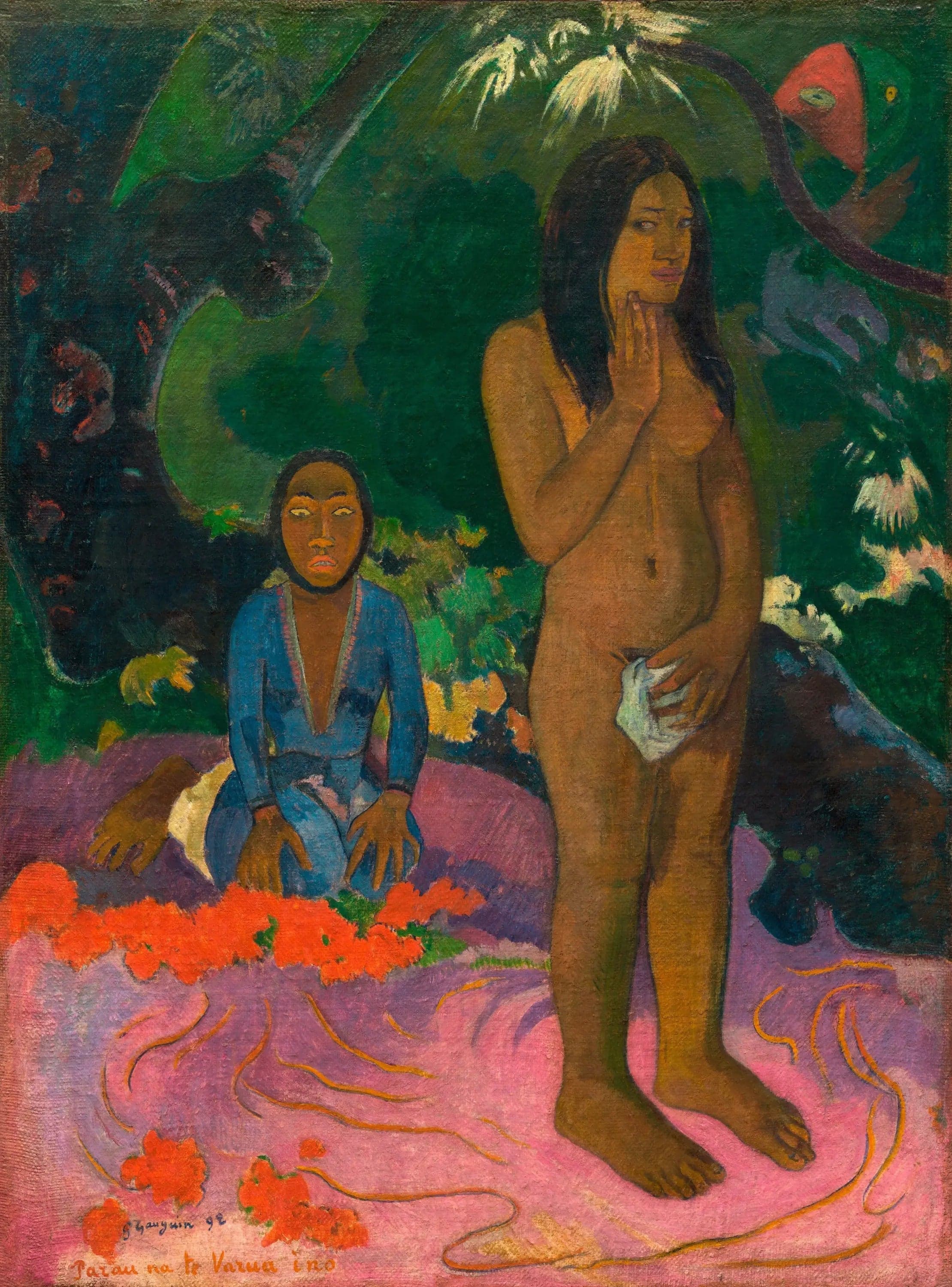
Parau na te varua ino
- Original dimensions
- 68.5 x 91.7 cm
- Museum
- National Gallery of Art
- Year
- 1892
Scene depicted
This painting depicts an intimate scene, where feminine figures, both gentle and powerful, seem to communicate with a spiritual reality. The silhouettes, bathing in warm hues, are surrounded by lush nature, conferring a mystical atmosphere to the canvas . Gauguin here questions the relationship between man and the divine, a theme dear to his work.
Historical context
Created in 1892, this painting is a vial of vibrant colors and meaning, born from the hand of a maestro in Paris, the city of light at the height of post-impressionism . In this rich context where art underwent a radical reshaping, Gauguin forged his unique style, imbued with mysticism and symbolism . Today, the canvas is carefully preserved at the National Gallery of Art , where its generous dimensions of 68.5 x 91.7 cm continue to evoke wonder among visitors.
Place in the artist's career
Parau na te varua ino is situated at the heart of Gauguin's career, marking a transition to a flamboyant artistic maturity. Alongside works such as “The Dream” and “Vision After the Sermon,” this painting bears witness to a notable stylistic evolution, combining vibrant color and incisive symbolism .
Anecdote
“Art is a cry of the soul,” Gauguin is said to have declared in one of his moments of creation. Inspired by the vibrant colors and ancestral cultures of Tahiti, he painted while fully contemplating landscapes sublimated by his imagination. This masterpiece , a true echo of his metaphysical journey, carries within it the breath of the mystery he so wished to capture.
Major exhibitions
Armory Show