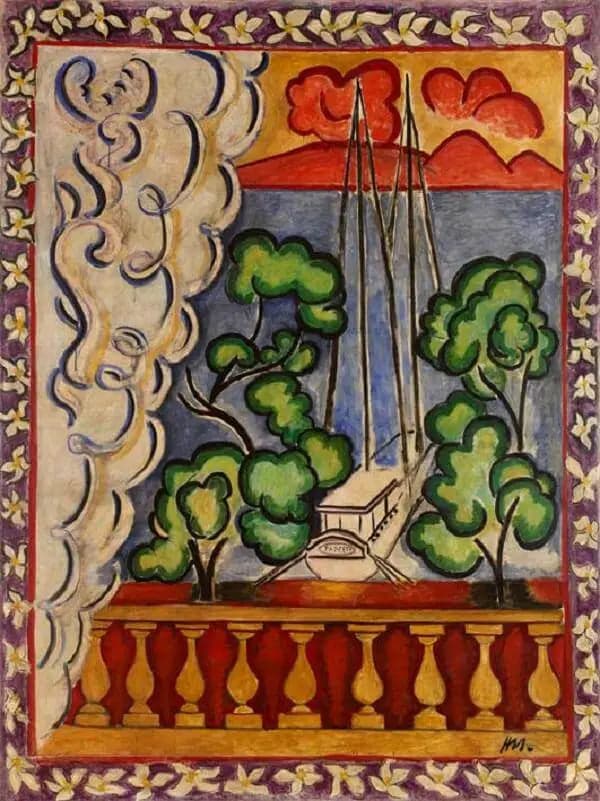
Papeete-Tahiti
- Original dimensions
- 172 x 225 cm
- Museum
- Matisse museum
- Year
- 1935
Scene depicted
This canvas embodies an idyllic scene of a Tahitian landscape, blending turquoise sea with an azure sky, all enhanced by rich tropical greenery. Matisse, through his creative genius, opens a window to this corner of paradise, inviting the viewer to soak in the warm colors and forms playing with light, depicting an atmosphere of serenity and escape.
Historical context
Created in 1935, this painting is set in the vibrational context of the 1930s. Located in the enchanting city of Papeete, on the island of Tahiti, this canvas bears witness to the influences of Fauvism in Matisse's work, offering an enchanting vision of Polynesian landscapes. It is currently housed in the Matisse museum, with impressive dimensions of 172 x 225 cm, capturing the very essence of these places imbued with beauty.
Place in the artist's career
Papeete-Tahiti represents a turning point in Matisse's career, following iconic works like “The Dance” and “The Joy of Life.” This painting illustrates his transition to artistic maturity, where color and composition intertwine to create a bolder and more moving visual language, celebrating the simple yet profound beauty of natural landscapes.
Anecdote
“Color is my religion,” said Matisse, immersed in the bright light of Papeete. Inspired by a tropical morning, where the scent of exotic flowers floated in the warm, humid air, he captured this unique atmosphere in his masterpiece . This painting , like memories of a waking dream, evokes a deep connection between the artist and nature.
Major exhibitions
Matisse. Art notebooks, the turning point of the 1930s