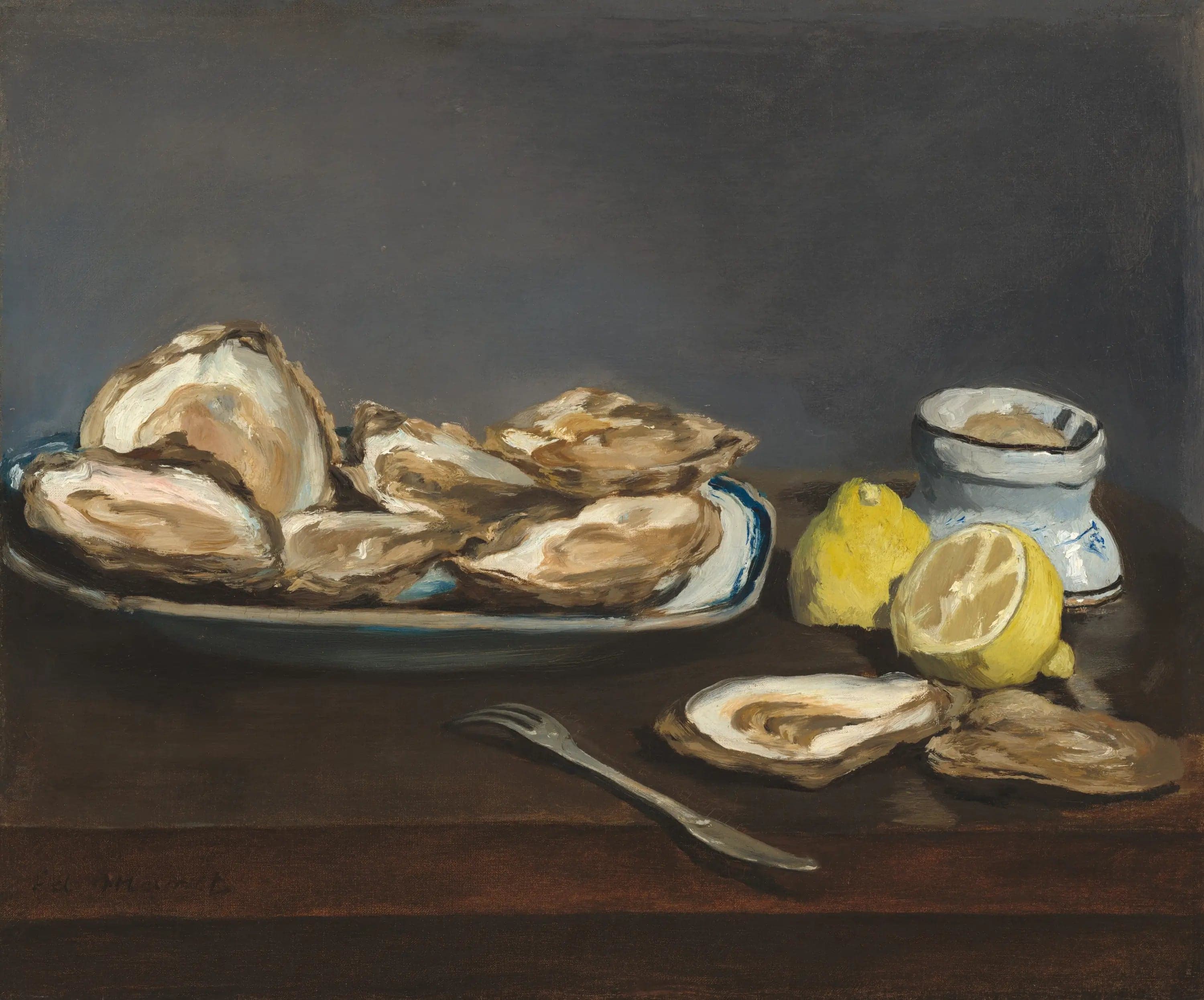
Oysters
- Original dimensions
- 46.8 x 39.2 cm
- Museum
- National Gallery of Art
- Year
- 1862
Scene depicted
The painting "Oysters" unveils a daily scene of exquisite charm. A set of oysters, a symbol of refinement and pleasure, is arranged on a table, while natural light plays upon them, enhancing their textures and colors. This painting celebrates the taste of life and the art of living in the French style, inviting the viewer to immerse themselves in a moment of sharing and conviviality. It illustrates the intimate connection between culinary art and visual art, a total celebration of the senses.
Historical context
Created in the heart of Paris in 1862, the painting "Oysters" is part of the Impressionist movement that was taking shape at that time. This iconic canvas , displayed at the National Gallery of Art , immerses us in the artistic effervescence of 19th century Paris, a time of great change. Manet's bold approach paves the way for a new pictorial vision, abandoning conventions for a more authentic representation of everyday life.
Place in the artist's career
"Oysters" is situated at a decisive turning point in Manet's career. This masterpiece marks a period of maturity where the artist manages to merge classical influences with a modern approach, moving away from traditional representations. In parallel with his other iconic works, such as "Luncheon on the Grass" and "Olympia," one can note an evolution in technique and an increasing affirmation of his artistic identity.
Anecdote
One spring morning, Manet was walking along the Seine. "True art stories are told simply," he said. This quote resonates in the delicate light that bathes the oysters on the skillfully set table, revealing the beauty of ordinary things and fleeting moments. As if a whole universe of meaning emerged in the simplicity of this composition, capturing the very essence of existence.