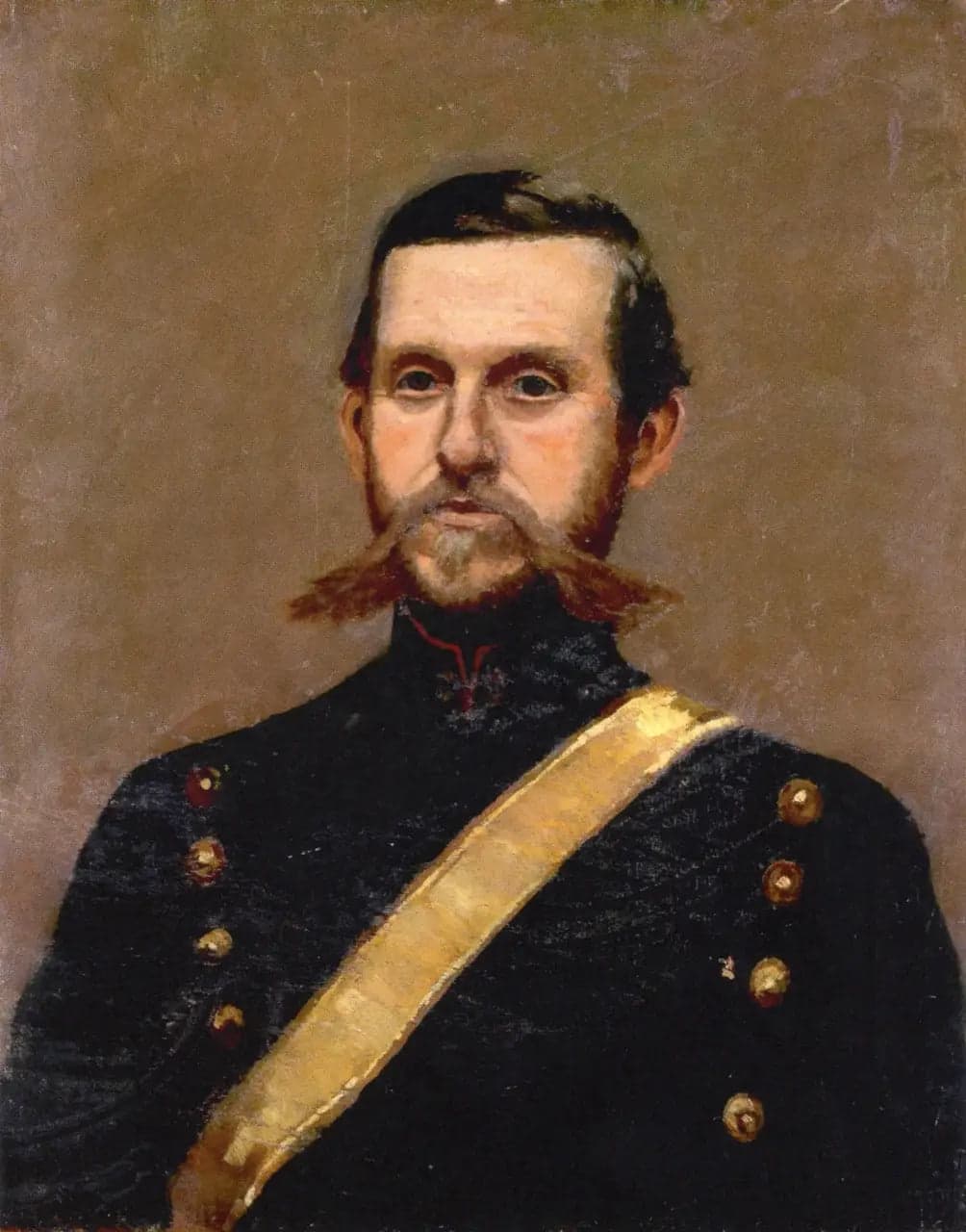
Otto Linthoé
- Original dimensions
- 49.5 x 62.5 cm
- Museum
- Munch Museum
- Year
- 1883
Scene depicted
In the painting "Otto Linthoé," we discover a scene that captures the very essence of individuality and human fragility. Munch transposes an atmosphere of melancholy, where forms blend with a soft light, revealing the inner thoughts of his subject. The pronounced features and subtle palette invite us to explore an emotional depth that resonates through the ages.
Historical context
Created in a troubled artistic context in Oslo, Norway, in 1883, the painting "Otto Linthoé" is part of the avant-garde symbolist movement of its time. At this time, Munch was already distinguished by his quest for inner expression and human emotions, placing this canvas at the heart of an era marked by both stylistic and psychological explorations. Today, this painting is carefully preserved at the Munch Museum, a true sanctuary for the work of this iconic artist.
Place in the artist's career
"Otto Linthoé" represents a significant milestone in Munch's career, marking a stylistic turning point before his most famous works like "The Scream" and "The Madonna." This painting , both intimate and universal, perfectly illustrates the evolution of his style, oscillating between delicacy and power, with a modernity that echoes his other more vibrant compositions.
Anecdote
"Life, for me, is a canvas where every emotion is a color," said Munch. This phrase resonates powerfully with his inspiration for the work, born during a morning walk through the misty streets of Oslo. The faces encountered, the colorful atmospheres of spring gently fell upon his mind, embodying themselves in this masterpiece of unparalleled evocative power.