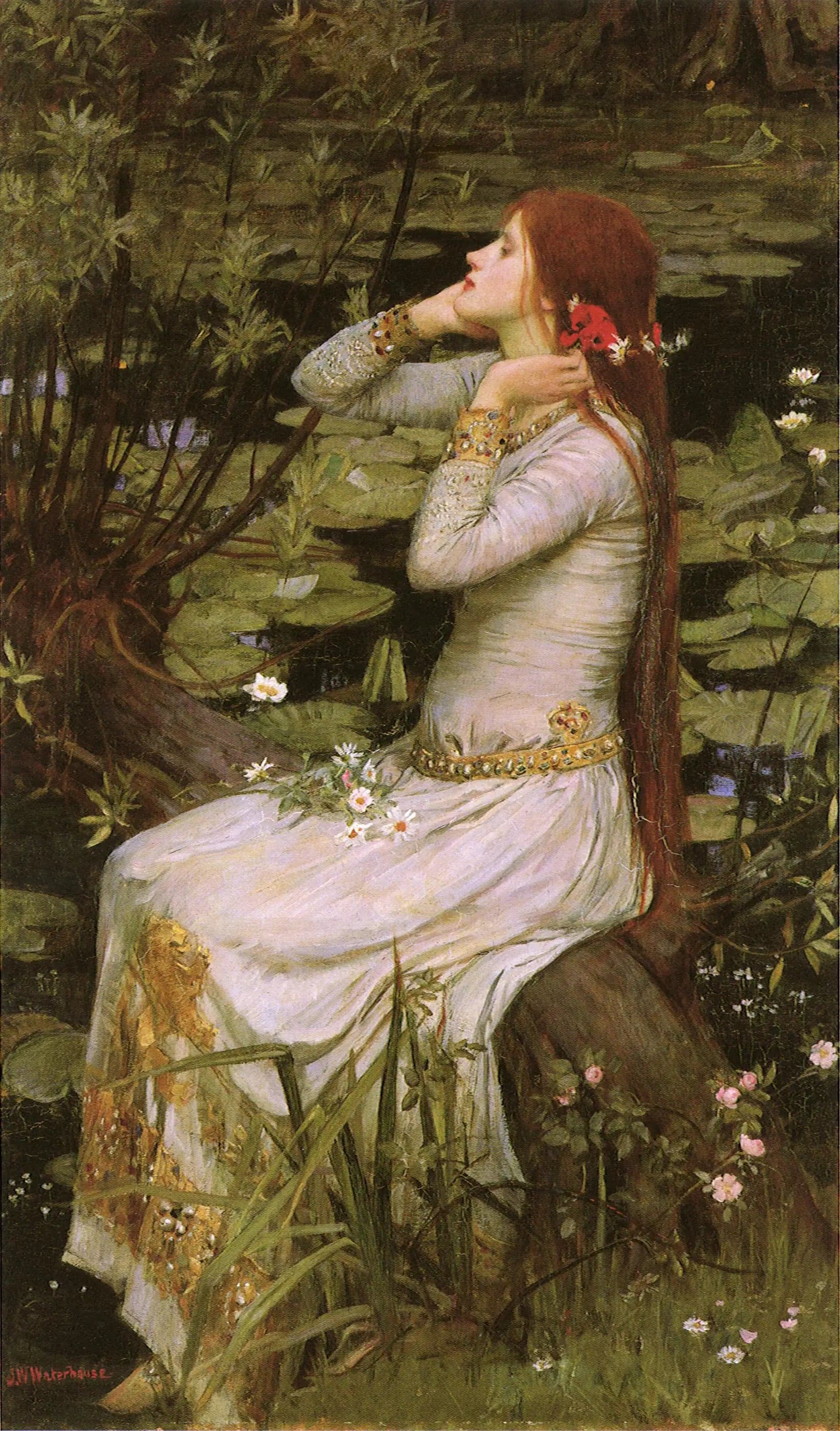
Ophelia
Scene depicted
“Ophelia - John William Waterhouse ” depicts the last moment of the beautiful heroine, floating in the water, surrounded by flowers. The drapery of her dress elegantly mingles with the natural elements, embodying the fusion between life and death. This painting captures the dramatic poetry inspired by mythology and literature, while offering a moment of striking and tragic beauty.
Historical context
Created in 1894 in London, this canvas is part of the Pre-Raphaelite movement, an emblematic movement of the 19th century. The work is currently housed at the Tate Britain , an institution recognized for its collection of British art. This painting with impressive dimensions of 76.2 cm × 101.6 cm captures the very essence of Pre-Raphaelite aesthetics, revealing a tragic and melancholic beauty.
Place in the artist's career
This painting marks a peak in Waterhouse's career, merging refined technique and sentiment. It stands alongside two other major paintings : “Life and Death” and “The Return of Ulysses.” Together, these works testify to his in-depth exploration of themes of death and feminine nature, while using delicate plays of light to intensify emotions.
Anecdote
“Nature is a mirror of our emotions, and this painting merely yields to that reflection.” It is in the soft light of spring, by the edge of a river, that the artist drew inspiration from Shakespeare's work. This fleeting moment, given Ophelia's tragic fate, gives the composition an unparalleled poetic strength.